The Three Girls in the Park
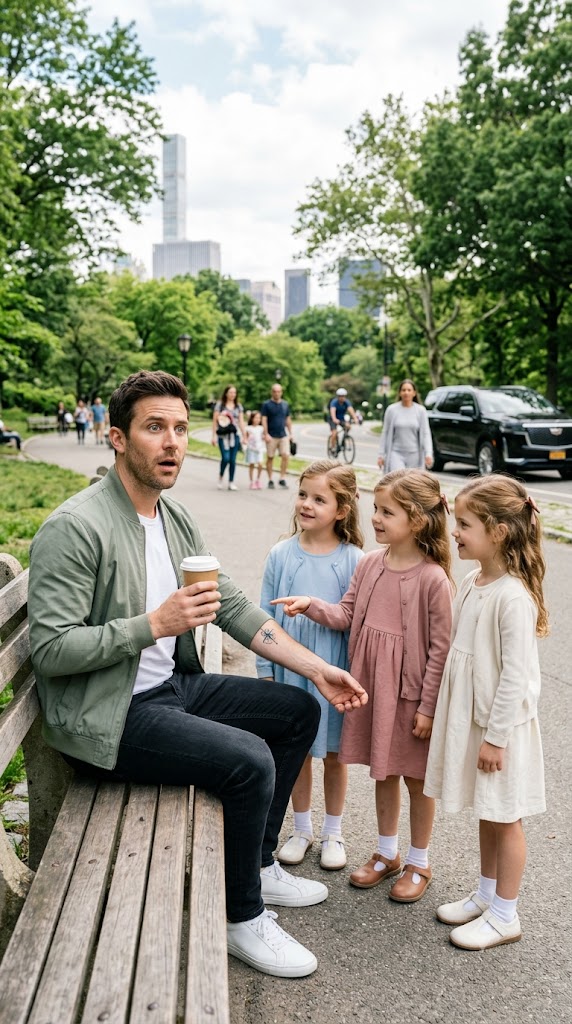
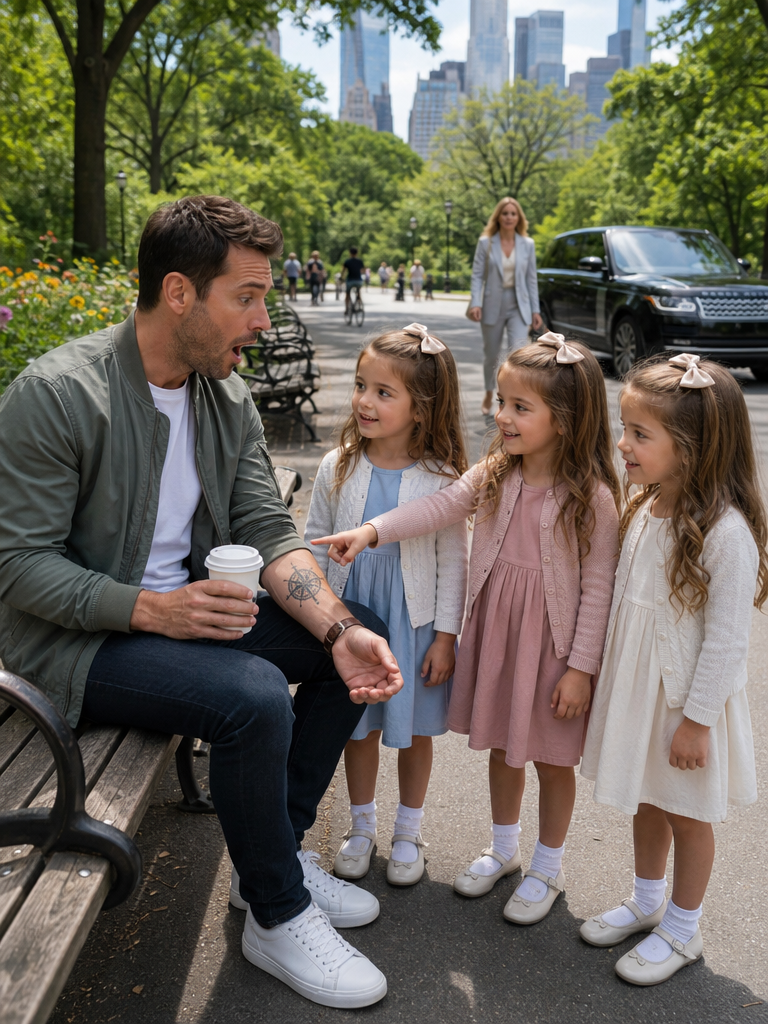
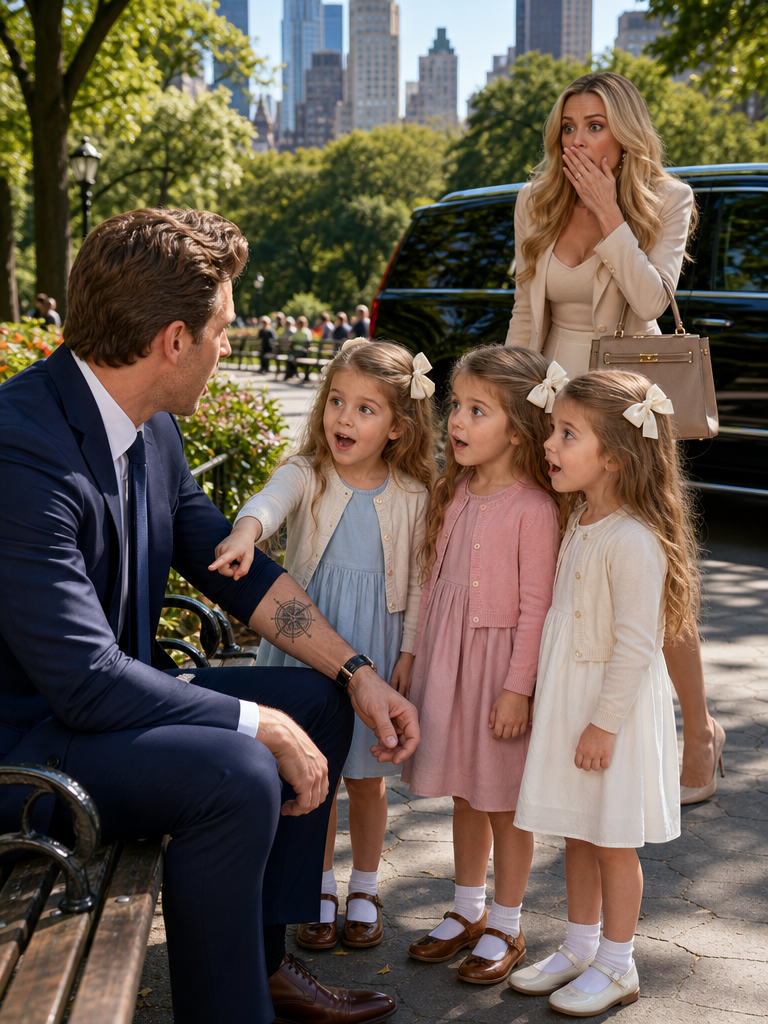
The first time the triplets saw my tattoo, I was sitting alone on a worn wooden bench near the lake in Prospect Park, Brooklyn.
It was late afternoon, the kind of New York afternoon when the sun hung low between the trees and made the whole park look softer than it really was. I had just finished a long shift repairing delivery trucks at a small garage in Red Hook. My hands still smelled faintly of engine oil, and my coffee had gone cold in the paper cup beside me.
I was not thinking about the past.
At least, I was trying not to.
Then three little girls stopped directly in front of me.
They were identical, with soft brown curls, neat cream-colored coats, and matching navy bows tied perfectly at the back of their heads. They looked around seven years old. Maybe a little younger. Maybe a little older. It was hard to tell because they carried themselves with a strange kind of quiet confidence, like children raised inside large rooms where adults spoke carefully.
The girl in the middle tilted her head and stared at my left forearm.
Then she smiled.
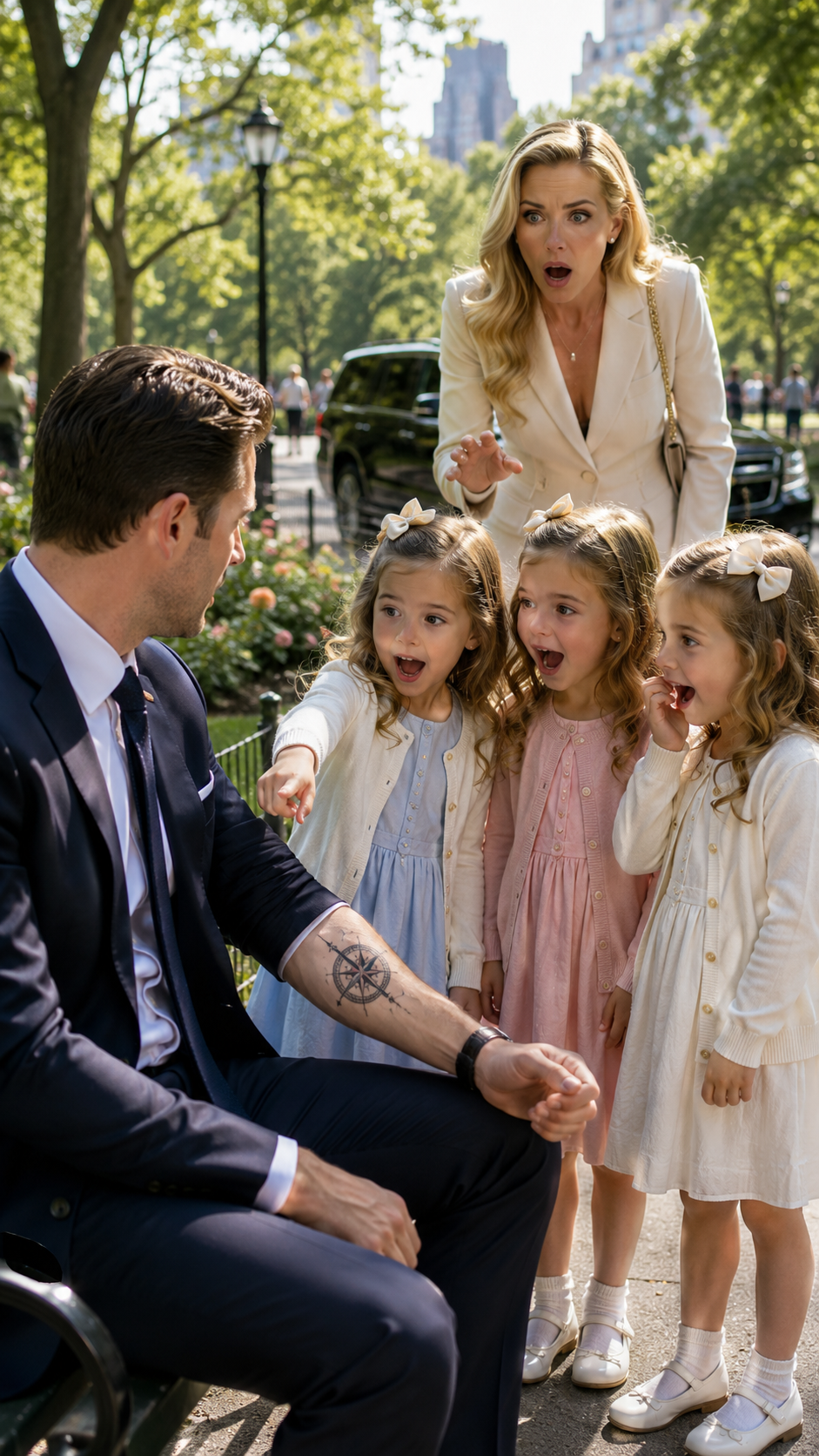
“Hello, sir. Our mother has a tattoo exactly like yours.”
For a few seconds, I did not move.
The noise of the park seemed to drop away. The dogs barking near the path, the children laughing by the playground, the distant traffic on the street—all of it faded until the only thing I could hear was my own heartbeat.
I looked down at my arm.
The faded black ink was still there, worn by time but clear enough to recognize: a broken compass, its needle cracked, its circle unfinished.
It was not a common tattoo. It was not something someone picked from a wall at a tattoo shop.
I had drawn it myself.
Eight years earlier, on a napkin in Seattle.
And only one other person in the world was supposed to have it.
I slowly looked back at the girl.
“What did you say?”
She pointed again, innocent and calm.
“That compass. Mommy has the same one. Hers is on her shoulder.”
The other two girls nodded as if this was the most ordinary thing in the world.
My throat went dry.
“What is your mother’s name?” I asked, trying to keep my voice steady.
Before they could answer, a woman in a gray uniform hurried toward us with panic written all over her face. She looked like a nanny, but she moved like someone who had just broken a very serious rule.
“Clara. Maeve. Sienna. Step away from him right now.”
The three girls turned at once.
The woman took them by the shoulders and pulled them back.
“I am so sorry, sir,” she said quickly. “They should not have spoken to you.”
I stood up, confused by the fear in her eyes.
“They did nothing wrong. I only asked—”
“We need to go.”
Her voice was sharp, but it trembled underneath.
As she guided the girls away, the one named Maeve looked back at me. Her eyes were gray, bright and serious.
I had seen those eyes before.
A black SUV waited near the curb, its windows dark, its engine running. The girls climbed in. Just before the door closed, Maeve pressed her small hand against the glass.
Then the vehicle pulled away.
I stood there with my cold coffee forgotten beside the bench.
Because the woman from Seattle had gray eyes too.
Her name had been Savannah.
Savannah Kingsley.
And I had spent eight years telling myself I would never see her again.
The Night I Tried to Forget
I met Savannah on a rainy Thursday night in Seattle, long before I became a father, long before I learned how heavy silence could feel.
Back then, I was twenty-six and drifting through life with more pride than direction. I had gone to Seattle for a short-term mechanic contract, telling myself I needed a change. The truth was simpler. I was running from grief, from unpaid bills, from a family that had already scattered, and from the quiet fear that I was never going to become the man I wanted to be.
Savannah appeared at a small diner near Pike Place just after midnight.
She was soaked from the rain, wearing a black jacket that looked too expensive for the neighborhood and shoes that were not made for wet sidewalks. She sat two stools away from me and ordered coffee with a voice that sounded calm but tired.
I noticed her because she did not fit.
She noticed my sketchbook.
“Do you always draw broken things?” she asked.
I looked down at the napkin in front of me. I had been drawing a compass with a cracked needle.
“Only when I do not know where I am going.”
She laughed softly, but there was sadness in it.
“Then maybe I need one too.”
We talked until the diner closed. I learned almost nothing useful about her. She said she was passing through. She said her family expected too much. She said she wanted one night where nobody knew who she was.
I should have asked more questions.
I did not.
By sunrise, we had walked through the city, shared stories that were only half true, and ended up at a small tattoo shop where the owner agreed to open early for cash.
Savannah insisted we both get the broken compass.
“So we remember this night,” she said.
“You think we will forget?”
She looked at me for a long moment.
“People forget what is inconvenient.”
I did not understand what she meant then.
A few hours later, I woke up in a cheap motel room alone. Savannah was gone. No note. No number. Nothing but the memory of her perfume on the pillow and the fresh bandage around my arm.
For years, I told myself she had simply wanted the night to remain a secret.
I respected that.
Or maybe I was too afraid to look for her.
A Name Behind Glass
That evening, I went back to my apartment in Brooklyn and tried to make dinner for my son, Jonah.