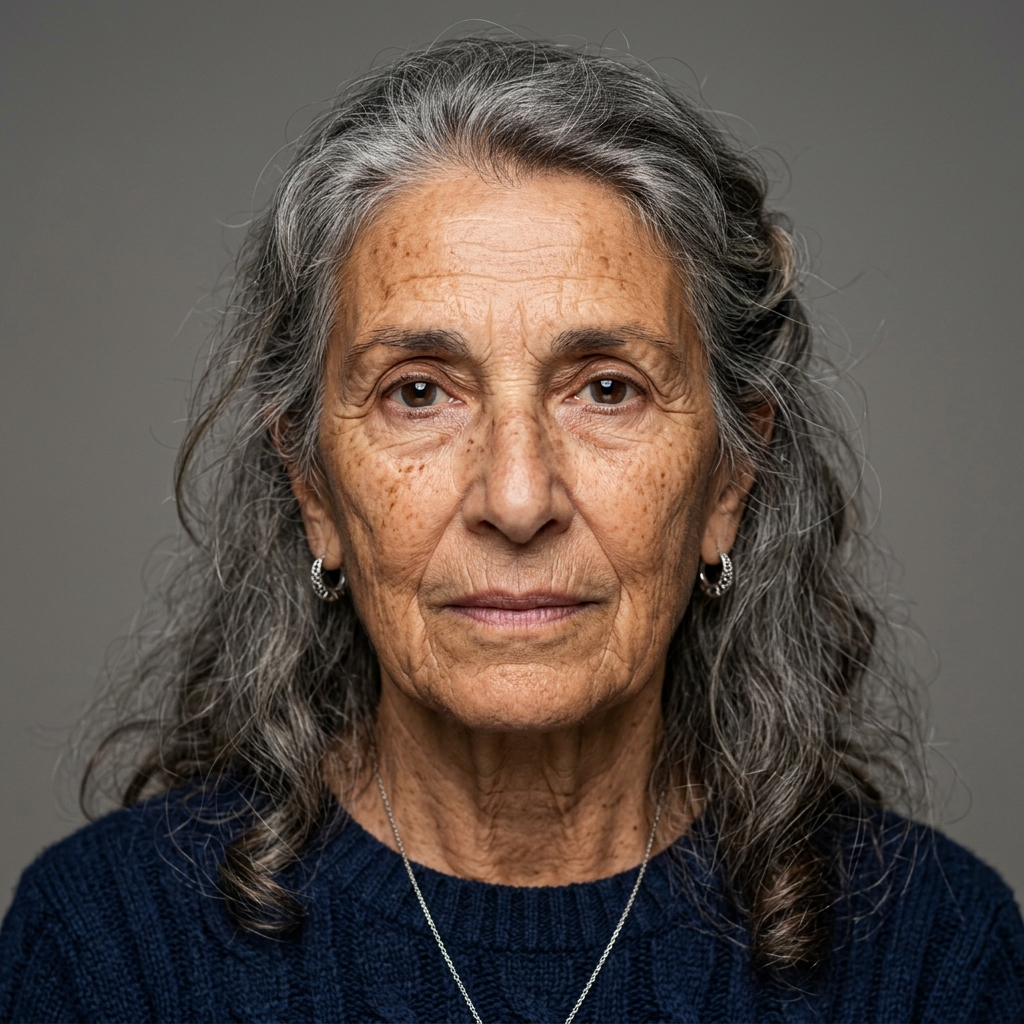
Richard called me a useless fool on a rainy October evening, while I stood in our kitchen holding the ownership certificate to an old garage I had inherited from my grandfather.
Not a house. Not money. Not the New York apartment my sister had received.
A garage.
The paper trembled in my hands as Richard stared at it, first with interest, then with disappointment, and finally with a disgust so naked it seemed to strip 15 years of marriage down to bone.
“Your sister got a 2-bedroom apartment in New York,” he said. “And you got a dump.”
I tried to breathe. The kitchen smelled faintly of dish soap and the soup I had made for dinner. Ordinary things. Domestic things. Things that belonged to the life I thought I still had.

“Grandpa didn’t have to leave us anything,” I said quietly.
Richard’s mouth twisted.
“Shut up, Victoria. I’ve put up with you for 15 years. Fifteen years waiting for you to bring something – anything – to this family. And this is what you bring? A garage?”
His voice hardened.
“Get out.”
I stared at him.
“What?”
“Get out of my house.”
“Our house,” I said. “We bought it together.”
He laughed. It was not amused laughter. It was cold and sharp, the sound of someone finally saying aloud what he had thought for years.
“Your little librarian salary? Those pathetic pennies barely covered utilities. I paid for this house. It’s mine.”
The words struck harder than shouting would have. For 15 years, I had cooked in that kitchen, planted flowers in the garden, folded his shirts, sat beside him through fevers, listened to his complaints, apologized when I had done nothing wrong, and told myself that marriage meant patience.
Now he looked at me as if I were a stain on his floor.
“You have 30 minutes,” he said. “After that, I’m throwing your things into the street.”
He stormed out, slamming the door so hard that our wedding photograph fell from the wall. The glass cracked across his smiling face.
For a moment, I stood there looking at it.
How fitting, I thought.
I packed like someone moving through water. A few clothes. My documents. My bank card. My phone charger. The ownership certificate. The heavy, strangely carved key the notary had given me. My hands folded everything neatly because my mind had no room for chaos. Richard stood in the bedroom doorway watching with a kind of cruel curiosity.
“Where are you going to go?” he asked.
I did not answer because I did not know.
My parents had died 5 years earlier. My sister Julia had never truly liked me, and after the way the inheritance had been divided, she was not someone I could call. My friends had faded over the years, one by one, each dismissed by Richard as foolish, jealous, boring, or beneath us until I stopped seeing them altogether.
He had made my world small and then mocked me for having nowhere to run.
When I left the house, rain was falling harder. I placed the house key on the coffee table, looked once at the rooms I had mistaken for home, and walked out with my suitcase.
I sat on a park bench not far away while the cold soaked into my coat. My bank account held only a few hundred dollars from my last paycheck at the library. A hotel would last 1 or 2 nights, maybe. After that, I had no plan.
Then I remembered the garage.
The old crumbling garage on the edge of town. The inheritance Richard had laughed at. The property Julia had dismissed as a useless shack.
It was mine.
The journey took almost 2 hours by bus. By the time I reached the industrial district, night had settled over the rows of rusted metal doors and cracked pavement. The place looked abandoned, dim streetlights reflecting in puddles as rain ran down the corrugated walls.
Garage 123 stood near the end of the row.
The door was thick with rust. The lock looked as though it had fused shut decades ago. I fitted the old key into the keyhole and tried to turn it.
Nothing.
I tried again, harder. The mechanism groaned but refused to move.
A laugh almost escaped me then, though there was nothing funny about it. Of course. Even my last shelter had a locked door I could not open.
“What did I do to deserve this?” I whispered, pressing my forehead against the cold metal.
Then the lock clicked.
I stepped back.
The key turned smoothly, as if some invisible hand had finally allowed it. The garage doors creaked open, their sound echoing through the empty industrial zone.
My phone flashlight cut through the darkness.
Something metallic gleamed beneath an old tarp.
For a few seconds, I forgot the rain, Richard, my suitcase, and the cold. I stepped inside and pulled the tarp away.
Underneath was a black Ford Thunderbird from the 1950s, perfectly preserved, chrome shining, paint flawless, leather seats uncracked, as though it had driven straight out of another century and waited there for me.
I knew almost nothing about classic cars, but even I understood that this was not junk.
This was treasure.
Grandpa Peter Michael Thompson had once told me about his first car, a black Thunderbird he had bought with his first big bonus in 1954. He always said he sold it when my father was born, trading freedom for practicality. Sometimes, he said, he missed the feeling of the whole world opening when he turned the key.
He had lied.
The car had never been sold.
Behind it stood an old wooden table. On it sat a carved box decorated with the same intricate pattern as the garage key. Inside was an envelope yellowed with age, sealed and marked in my grandfather’s firm handwriting.
Victoria, open when the time comes.
My knees weakened.
How could he have known the time would come tonight?
Inside the envelope was a letter, several pages long, and a small key wrapped in metallic cloth. The key was delicate, with a crown-shaped head.
I unfolded the first page.
My dear Victoria,
If you are reading this, I am gone, and you have found your way to my old garage. You have probably already seen my Thunderbird, the car I never actually sold.
I sat on the edge of an old crate and read with shaking hands.
Grandpa confessed that he had not simply been an engineer and technical college instructor, as we had always believed. That respectable life had been his cover. In reality, he had worked for a secret service department involved in industrial espionage, obtaining foreign technologies, plans, prototypes, and documents. The Thunderbird had been part of his work. It contained hidden compartments where he had carried materials and sometimes even people who needed to disappear.
I looked back at the car, no longer seeing only beauty. Now I saw history. Danger. Secrets.
Then the letter turned toward me.
He wrote that he had chosen me because I was like him in ways I had never understood. Not loud. Not forceful. Not like Julia. But patient. Observant. Capable of seeing good in difficult places. Capable, he believed, of strength that had not yet been tested.
I remembered a summer afternoon years earlier, when I helped him in the garden while everyone else went swimming.
“You have a strong character, Victoria,” he had said.
I had laughed because it sounded impossible.
“You just don’t know it yet,” he added.
Now, sitting in that garage after being thrown out by my husband, the words felt less like comfort and more like preparation.
The letter told me the Thunderbird had a hidden compartment. The small crown key would open it. Inside, he wrote, I would find something that could help me start over. But it was not only a gift. It was a responsibility.
What you find will change not only your life, but the lives of many others. Use it wisely.
And one more thing: never fully trust anyone, especially those who seem closest. Betrayal often comes from where you least expect it.
I did not need him to explain that line.
Richard had already done that.
I found the compartment in the side of the driver’s seat, almost invisible unless you knew to search for it. The crown key turned with a soft click, and a section of the leather shifted aside.
Inside was a metal box.
I opened it and found a passport with my photograph, my date of birth, and a different name.
Victoria Patricia Williams.
There was a driver’s license with the same name, a bank card, a sealed envelope labeled Kodi, a keychain marked with the letter D, and stacks of cash in dollars and euros. There was also a short note.
Apartment at Park Avenue 42, apartment 17. Car in underground parking spot 42. Safety deposit box at Chase Bank on Madison Avenue, number 237. All documents are in order. Lie freely, Victoria. You deserve this.
P.M.
I sat behind the wheel of the Thunderbird with the box in my lap, trying to understand the impossible thing my grandfather had built for me.
He had not left me a garage.
He had left me an escape route.
There was a couch in the corner of the garage, a folded blanket, and a small table. On the table sat a modern thermos and another note.
Mint and lemon balm tea. Always helps calm the nerves. Rest, Victoria. Tomorrow is a new day.
P.M.
The thermos was warm.
Grandpa had been dead 3 months.
I did not know who had placed it there. I did not know whether some old contact of his still watched over the garage, or whether he had arranged everything with such precision that even after death his hand still seemed present.
All I knew was that the tea tasted exactly like childhood.
I drank it wrapped in a blanket that smelled faintly of tobacco, forest, and something safe. For the first time that day, I cried without shame.
That night, I dreamed I was riding in the Thunderbird with Grandpa driving, young again, his hair black instead of white, his blue eyes fixed on the road.
“Where are we going?” I asked.
“To a place where you can be yourself,” he said.
“Does such a place exist?”
He smiled.
“It exists everywhere, Victoria. You only need the courage to see it.”
The next morning, I locked the Thunderbird back inside the garage, tucked the box into my bag, and went to the station.
I bought a ticket to New York.
Not as the frightened wife Richard had thrown away.
As Victoria Williams.
Part 2
The building on Park Avenue looked like something from another life.
Elegant prewar stone, polished brass, tall windows, and an entrance watched by a concierge who knew exactly how to make strangers feel either welcome or exposed. I stepped inside with my suitcase in one hand and my heart pounding hard enough to hurt.
Behind the desk sat an older man with a neatly trimmed gray beard.
“Good afternoon,” I said, trying to sound like someone who belonged there.
He smiled.
“Good afternoon, Victoria. Nice to see you again.”
For a moment, I froze.
He knew me.
Or rather, he knew the woman Grandpa had created.
When he offered to help with my bag, I declined and mumbled something about being out of practice after so long away. He nodded as if that made perfect sense.