“I’m sorry,” she sobbed.
“No.”
“I’m sorry, Daddy.”
“No, baby. No.”
“I didn’t mean to make Mommy mad.”
My eyes found Chris in the doorway.
His face had gone still.
“What did Mommy say?” I asked softly.
Sarah shook her head against me.
“She said I ruined everything.”
Elena turned away.
Chris looked at the ceiling.
I kept my voice steady because Sarah needed a father, not a storm.
“You did not ruin anything.”
“She said you would be mad because now you had to choose.”
“Choose what?”
Sarah’s fingers tightened in my shirt.
“The house or me.”
The room disappeared.
There was only my daughter’s small body shaking against mine and the knowledge that someone had put a price tag on her worth and made her carry it.
I pulled back just enough to look at her.
“Sarah,” I said, “listen to me carefully.”
She looked terrified.
I hated that she looked terrified of my answer.
“There is no house, no money, no paper, no anything in this world that I would choose over you.”
Her chin trembled.
“Promise?”
“I promise.”
“Even if Mommy says I’m bad?”
“You are not bad.”
“Even if Grandma says I’m difficult?”
“You are not difficult.”
“Even if—”
“No,” I said, and my voice broke. “No more even ifs.”
She cried then.
Not the quiet crying Chris had described.
Not the frozen crying of a child afraid to take up space.
She cried like her body had been waiting for permission.
I held her as gently as I could.
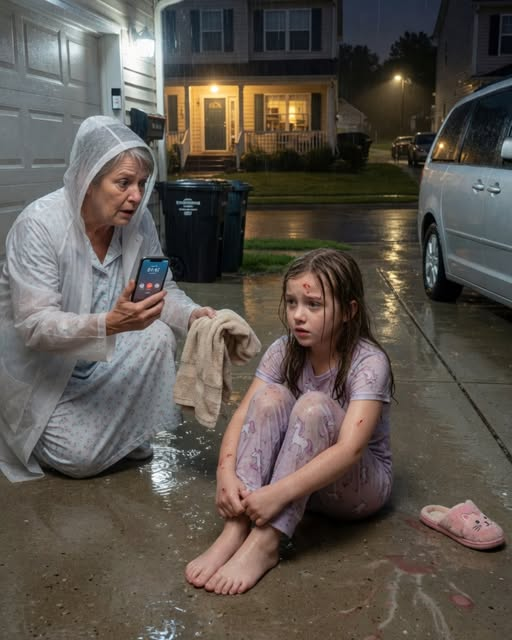
Over her shoulder, I saw the hospital bracelet still loose around her wrist.
I saw the edge of the bandage.
I saw a small dried line near her hairline that the nurses had missed.
Evidence.
Not for court.
For me.
Proof that this had happened to a real child, my child, not a file, not a case, not a motion.
Chris stepped away from the doorway.
Elena closed the hall behind him.
For a while, there was only Sarah breathing against me.
When she finally slept again, I stayed on the floor beside the bed with my back against the wall.
Chris came in carrying two mugs of coffee.
He handed one to me.
It had gone lukewarm by the time I drank it.
“Melissa has been calling,” he said.
I looked up.
“Me?”
“Him. Me. The office. Elena. She left voicemails.”
“What does she say?”
Chris’s mouth twisted.
“She says it got out of hand.”
I laughed once.
No humor in it.
Just air leaving a damaged place.
“She says Norma pushed it. She says she never meant for Sarah to get hurt. She says she panicked.”
“Panicked for five hours?”
Chris did not answer.
He sat on the edge of the chair near the bed.
“She also says you are unstable.”
There it was.
The next move.
Not remorse.
Positioning.
“She says you threatened her before.”
“I never did.”
“I know.”
“She’s going to say I’m dangerous.”
“Yes.”
“She’s going to say that’s why she kept Sarah from me.”
“Yes.”
I looked at my sleeping daughter.
Her lashes rested against bruised skin.
One hand clutched the blanket even in sleep.
“She left Sarah outside and thinks I’m the danger.”
Chris leaned forward.
“Jamie, listen to me. From this point on, you do nothing without talking to me.”
“I want to see Melissa.”
“No.”
“I want to hear her explain it.”
“No.”
“I want—”
“You want justice,” he said. “Not a moment that helps her lawyer.”
That shut me up.
He was right.
I hated that he was right.
“What happens now?” I asked.
“Emergency hearing first. Protective order. Police investigation. Sarah’s forensic interview. Medical follow-ups. Then custody.”
The list sounded endless.
“How do I get her through it?”
Chris looked at Sarah.
Then back at me.
“You tell the truth. You stay calm when everyone expects you not to. You let professionals do their jobs. And every time Sarah asks if you are mad at her, you answer until she believes you.”
That became the work.
Not revenge.
Repetition.
No, baby, I am not mad.
No, baby, you did nothing wrong.
No, baby, you are safe.
No, baby, I choose you.
The emergency hearing happened faster than I thought possible and slower than I could stand.
Chris stood beside me in court wearing the same charcoal suit from the conference room.
Melissa appeared by video.
Norma did not appear at all.
Melissa looked pale.
Smaller than I remembered.
Her hair was pulled back.
Her eyes were red.
For half a second, the old part of my brain tried to recognize my wife.
The woman who packed Sarah’s lunches.
The woman who sang badly in the car.
The woman who cried at animal shelter commercials.
Then the judge read the messages.
If James wants his daughter back, he can sign over the house.
Sarah will survive one night outside.
The courtroom changed when those words were spoken aloud.
Even through a screen, Melissa seemed to shrink.
Her attorney tried to speak about marital conflict.
Chris did not raise his voice.
That was the most terrifying thing about him.
He did not need volume.
He had documents.
He had timestamps.
He had a hospital record.
He had Carolyn’s statement.
He had the video.
The judge watched the porch light come on.
Watched the door open.
Listened to Sarah say, “Please.”
Listened to Norma say, “Stay there until your father learns.”
Listened to Melissa’s voice from inside our house.
“Then close the door.”
Nobody in that courtroom moved.
The judge took off her glasses.
She set them on the bench.
For a moment, she said nothing.
Then she granted emergency temporary custody to me.
She barred Melissa and Norma from contact with Sarah pending further proceedings.
She ordered supervised processes, evaluations, and cooperation with the investigation.
There were more legal words after that.
Important words.
Necessary words.
But I only heard one thing.
Sarah would not go back there.
Not that night.
Not because someone cried on camera.
Not because someone said it was a misunderstanding.
Not because a grandmother wore pearls and called cruelty discipline.
After the hearing, Chris and I stood in the hallway.
I expected to feel victorious.
I did not.
Victory is too bright a word for standing in a courthouse because your daughter was left bleeding in a driveway.
What I felt was oxygen.
Thin.
Painful.
Enough.
Melissa’s attorney approached us with a message.
“She wants to speak to James.”
Chris answered before I could.
“No.”
“She says she wants to apologize.”
“No.”
“She says he needs to hear her side.”
Chris stepped closer.
His voice remained polite.
“He heard her side on the doorbell camera.”
The attorney left.
I leaned against the wall.
My knees felt weak.
Chris handed me a bottle of water from his bag.
“You okay?”
“No.”
“Good,” he said.
I looked at him.
He shrugged.
“Okay would be weird.”
That was the first time I almost laughed.
Almost.
The weeks after that were not clean.
Stories like this never end where people online want them to end.
They want the arrest, the gavel, the villain exposed, the child safe, the father vindicated.
Real life keeps going after the most dramatic scene.
Real life is a child waking up at 3:00 a.m. because she dreamed the porch light went off.
Real life is her refusing to wear the pajama color she wore that night.
Real life is a father learning how to sit outside a therapist’s office without demanding every detail because healing is not a courtroom and children are not evidence.
Sarah started drawing houses.
At first, every house had one window lit and a small figure outside.
Then, slowly, the figure moved closer.
Then onto the porch.
Then inside.
One day, she drew a house with all the lights on.
She gave it to Chris.
He kept it in his office, framed behind his desk.
Under it, Sarah had written in purple marker: Uncle Chris came.
He cried when he thought nobody saw.
I saw.
Carolyn still brings zucchini bread in August.
She also installed two more cameras, which she pretends are for package thieves.
I know better.
Sometimes she sees Sarah in the yard and waves too carefully, like Sarah is made of glass.
Sarah waves back.
Not always.
But more often now.
Melissa eventually tried to explain.
Through attorneys.
Through letters Chris did not let me read until Sarah’s therapist said it would not help anyone.
Through relatives who suddenly cared about “keeping the family together.”
That phrase made me understand how many people confuse silence with peace.
A family is not kept together by hiding what someone did to a child.
That is not unity.
That is camouflage.
Norma’s words became part of the record.
So did Melissa’s.
So did mine.
So did Sarah’s, when she was ready.
I will not write everything Sarah said in those interviews.
Some truths belong first to the person who survived them.
But I will say this.
Children remember who opens the door.
They also remember who closes it.
For a long time, Sarah asked me the same question in different forms.
Would you have come if I was bad?
Would you have come if I cried too much?
Would you have come if Mommy said not to?
Would you have come if it was far?
Every time, I answered.
Yes.
Yes.
Yes.
Five hundred miles, five thousand miles, yes.
One evening months later, she found the original hospital blanket folded in a box of records Chris had returned to me.
She touched it with two fingers.
“That was the blanket from when Uncle Chris came,” she said.
I asked if she wanted me to throw it away.
She thought for a long time.
Then she shook her head.
“No,” she said. “That’s the one from after.”
After.
Not from the driveway.
Not from the door.
Not from the porch light going off.
After.
The blanket from after someone came.
I kept it.
Not as evidence.
Not as a reminder of what Melissa and Norma did.
As proof of what Chris did.
Because when I called my brother, he did not just pick up my daughter.
He took her to the ER.
He documented everything.
He called social workers.
He contacted police.
He pulled doorbell footage.
He filed an emergency motion.
He built a wall around a child before the people who hurt her could build a story around themselves.
I used to think love was the person who says the right thing when you are breaking.
I know better now.
Love is also the person who gathers the papers.
Love is the person who saves the screenshot.
Love is the person who tells you not to make the call that would ruin your case.
Love is the person who walks into the dark and brings your child back wrapped in a hospital blanket.
Sarah is older now.
She still has nights where rain against the window makes her quiet.
She still watches porch lights.
She still likes to know who is picking her up, what time, and from which door.
But she laughs again.
Not all at once.
Not like nothing happened.
Like something living returned by inches.
She runs across the yard in socks even though I tell her not to.
She leaves markers uncapped.
She makes pancakes shaped like countries and insists Illinois looks like a boot if you squint.
Sometimes, when I am on a business trip now, she FaceTimes me before bed and asks me where I am.
I tell her the city.
I tell her the hotel.
I tell her when I am coming home.
Then I say the words before she has to ask.
“No matter where I am, I will come.”
She pretends to roll her eyes.
“I know, Dad.”
But she smiles when she says it.
And every time, I remember that first photo Chris sent me at 2:14 a.m.
Sarah’s small hand wrapped around a hospital blanket.
No face.
No injury.
Just her hand.
Back then, it looked like proof that I had almost lost her.
Now I see it differently.
It was proof that someone had reached her in time.
It was proof that five hours in the dark did not get the final word.
It was proof that the door that mattered most was not the one Melissa and Norma closed.
It was the one my brother opened.