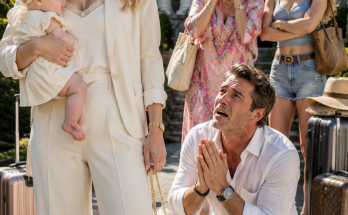
The next morning, he signed the lease. Vanessa refused at first. She sat across from me at the kitchen table with dark circles under her eyes, the Maui trip apparently less glamorous now that her parents knew the beach hotel had been funded with money taken from a lie. “This is humiliating,” she said. I slid the pen toward her. “No. Humiliating is being told your birthday does not matter in your own kitchen.” Julian had already signed. His signature looked shaky, but it was there. Vanessa stared at him. “You’re really choosing this?” He looked tired. Older. “I’m choosing to pay for where I live.” She laughed bitterly. “Your mother did a number on you.” “No,” he said. “She stopped paying for the number you did on me.” I looked at him then. Not with pride exactly. Not yet. But with the first small breath of hope I had allowed myself in months. Vanessa picked up the pen. Her hand trembled as she signed. When she finished, I took the papers, placed them in a folder, and clipped the folder shut. “Rent is due on the first. Utilities are due with it. Your exterior access code will remain active as long as payments are current and house rules are followed. Your guests are your responsibility. My kitchen, laundry room, office, and living spaces are private.” Vanessa’s eyes flashed. “You’re enjoying this.” “No,” I said. “I enjoyed my birthday yesterday. This is administration.” Julian almost smiled. Almost. Vanessa pushed back from the table and went upstairs without another word. A week later, Richard and Elaine returned from Maui sunburned, dissatisfied, and apparently shocked to learn that oceanfront hotels charge for nearly everything. Vanessa did not bring them downstairs. I saw their rental car from the front window and kept reading my book. The first rent payment arrived on the first of the month. Direct deposit. On time. The utilities followed. Julian began stopping by my office on Wednesdays after work. Not to ask for money. Not to complain. At first, he came because Marcus made him sign the car paperwork in person. Then he stayed for coffee. Then he asked questions about the business. Not greedy questions. Real ones. “How did Dad know that warehouse would be worth something?” “He didn’t,” I said. “He guessed. I checked the zoning map.” Julian smiled faintly. “I always thought Dad was the business brain.” I looked over my glasses at him. “Most people did.” He sat with that for a while. Then he said, “I’m sorry.” I did not rush to forgive him. Rushed forgiveness is often just another way mothers clean up after everyone else. “I know,” I said. His eyes watered. “I should’ve defended you.” “Yes.” “I was scared of the fighting.” “I was, too.” That surprised him. I leaned back in my chair. “Courage isn’t not being scared, Julian. It’s deciding which person deserves your silence and which person deserves your voice.” He nodded slowly. For months, Vanessa remained upstairs, quieter than before. She did not become sweet. People like Vanessa do not transform because a lease exists. But she became careful, and careful was enough for the peace of my home. She paid her part. She stopped touching my things. She stopped speaking to me like I was a slow child in a grocery aisle. One evening in early summer, I came home to find a small envelope on the kitchen table. For a second, I thought it was another bill. Inside was a birthday card. Late by almost three months. The front had watercolor flowers. Inside, in Julian’s handwriting, were seven words. I should have made the table bigger. I sat down and read it twice. Then I placed it on the mantel beside Edward’s photo. Not because it fixed everything. It didn’t. But because it was the first time my son had admitted there had been a table, and that he had let me be pushed away from it. That mattered.
Related Posts