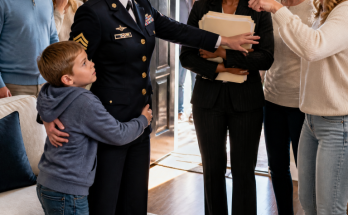
When I slapped my husband’s mistress, he broke my 3 ribs
By the time I was lying on the basement floor unable to breathe properly, with one bar of service flickering on a cracked phone screen, I called my father and said the ugliest sentence I had ever spoken aloud.
“Dad, don’t let a single one of the family survive.” Even now, I remember how cold my voice sounded.
Not loud.
Not dramatic.
Just finished.
My father, Vincent Moretti, had spent most of his life building a reputation that made grown men lower their eyes when he walked into a room.
I had spent most of mine trying to stay as far from that reputation as possible.
I married Evan because he seemed like the opposite of everything I grew up around.
He wore expensive suits, spoke gently in public, sent flowers for no reason, and made a point of telling me he admired that I wanted a quieter life.
My father never trusted him.
“Too polished,” he said the first Christmas Evan came to dinner.
“Men who are real don’t need to sand every edge off themselves.” I called it paranoia.
I told myself my father saw danger everywhere because danger had been his trade.
Eight years later, I understood something I should have learned sooner: men who hurt you rarely arrive looking dangerous.
For the last three months of our marriage, Evan had been changing in small ways that were easy to explain if I wanted to stay comfortable.
He guarded his phone.
He worked later.
He canceled dinners and blamed clients.
He kissed my cheek without really looking at me.
His mother, Janice, started calling more often, asking strange questions about my personal accounts, about the trust my grandmother left me, and about whether I had considered giving Evan more authority “for convenience.” Every time something felt off, I found a softer interpretation.
That was my mistake.
Suspicion only hardened into certainty the day I decided to surprise him at La Mesa Grill.
I can still see the restaurant exactly as it was: amber lights, polished wood, the sharp smell of citrus and grilled meat, waiters weaving through the lunch crowd with plates balanced on their arms.
Evan sat in a corner booth, jacket off, leaning forward in that attentive way he used when he wanted someone to feel chosen.
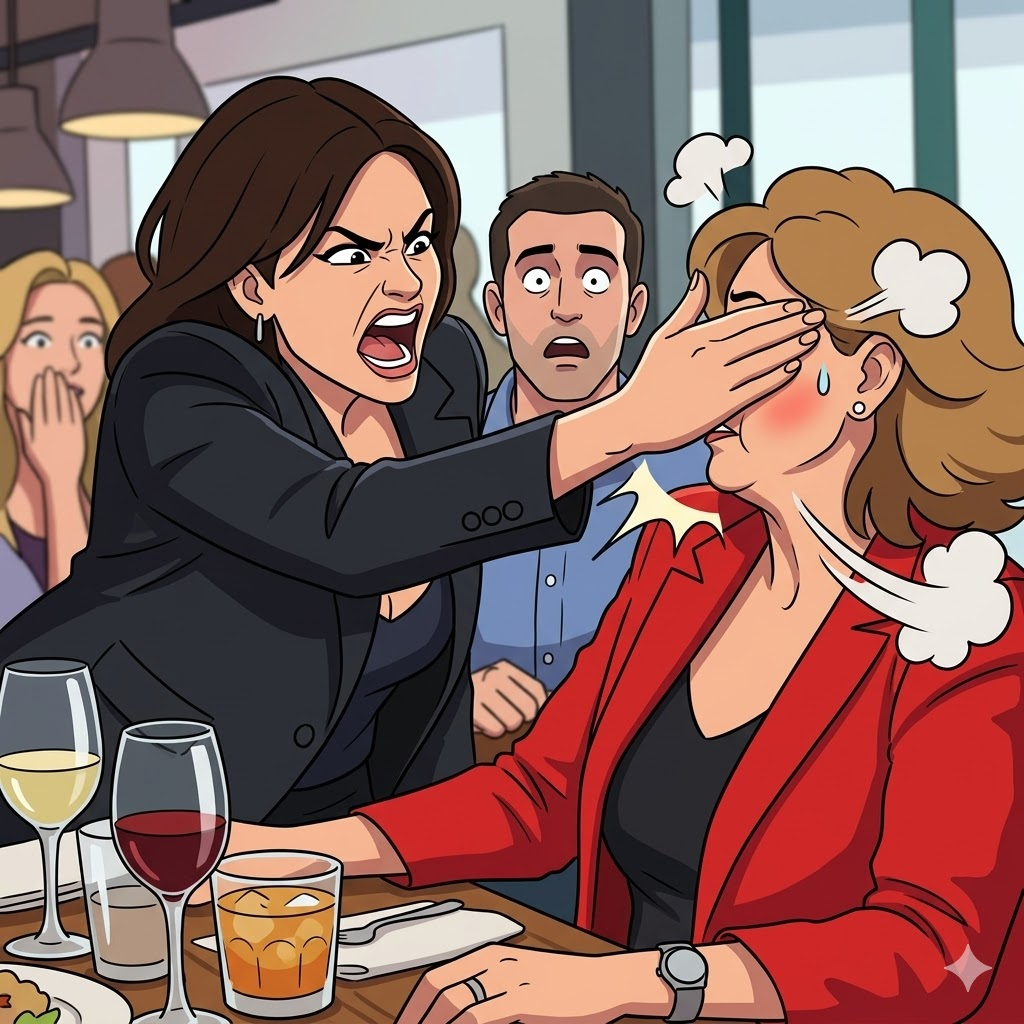
Across from him was a woman in a red blazer with sleek dark hair and a smile that seemed practiced down to the millimeter.
Her hand rested lightly on his wrist.
Not flirtatious.
Familiar.
Intimate in the most confident way.
When I said his name, I expected guilt.
He gave me annoyance instead.
The woman turned before he did.
She looked me over once, took in my face, my coat, the takeout bag in my hand, and said, “You must be Claire.
Evan’s mentioned you.” The line was so smooth, so casual, that for a second I couldn’t move.
Evan didn’t even deny anything.
He just exhaled as though he were tired.
Something hot and humiliated rose through me faster than reason.
I asked him to come outside.
He stayed seated.
The woman gave me that little smile again, the one that suggested she had already won.
My palm connected with her cheek before my mind caught
up.
The crack turned every head in the room.
Evan was on his feet instantly.
He didn’t yell.
That was what frightened me later when I replayed it.
A man shouting can still lose control of himself.
A man speaking quietly while crushing your arm is choosing every second of what he does.
He dragged me through the restaurant, through the parking lot, and into the car with a grip that left bruises before we even got home.
The whole drive, he said nothing.
I kept waiting for the explosion.
It came the moment the front door shut behind us.
He slammed me into the hallway wall so hard that pain flashed white across my vision.
When I tried to twist away, he hit me again.
I heard something pop deep inside my side, a wet, sickening sound I will never forget.
I dropped to my knees because I couldn’t get air into my lungs.
I remember clutching the edge of a table and hearing myself make these small, broken sounds I didn’t recognize.
Evan stood over me breathing hard, but his face had already gone calm again.
He looked less like a furious husband than a man tidying up a problem.
When I gasped that I needed a doctor, he laughed once under his breath.
Then he hauled me toward the basement door by my wrist.
Each concrete step jarred my ribs until I thought I might black out.
He threw me onto the floor, tossed my phone after me, kicked it under a shelf, and locked the door.
“Reflect,” he said through the wood.
“Think about what happens when you embarrass me.”
The basement smelled like damp cement, dust, and old paint thinner.
There were holiday decorations stacked in plastic bins, a rusted treadmill, shelves of canned food we never touched.
I lay there on the cold floor counting my breaths because counting was the only thing keeping panic from swallowing me.
In the dark, memories came in strange order.
My father’s voice teaching me how to spot a lie.
My mother’s funeral.
Evan promising on our wedding day that I would always be safe with him.
That promise was what haunted me most.
My father had frightened a lot of people in his life, but he had never once laid a hand on me.
The man I had called civilized had done it without blinking.
After what felt like hours, I nudged my phone out from under the shelf with my foot.
The screen was shattered, but it lit up.
One bar.
I didn’t waste time thinking about pride or consequences.
I called my father.
He answered on the second ring.
“Claire?” I tried to say his name and instead I cried.
That frightened him more than if I had screamed.
I told him Evan had broken my ribs.
I told him I was locked in the basement.
Then, because pain strips you down to whatever is most primitive inside you, I whispered, “Dad, don’t let a single one of the family survive.” There was a pause.
When he spoke, his voice was calm enough to freeze water.
“Give me the address anyway,” he said.
“And do not hang up.”
I had barely repeated the address before footsteps crossed the kitchen above me.
The deadbolt clicked.
The
basement door opened a few inches and kitchen light sliced through the darkness.
Evan came down holding a glass of water and an ice pack, like he wanted to play concerned husband after burying me alive.
He crouched in front of me and told me I had overreacted, that I had forced his hand, that none of this would have happened if I had behaved like an adult at the restaurant.
Then he reached into his jacket and pulled out a folder.
Even through the pain, I recognized Janice’s handwriting on the tabs.
Bank forms.
Transfer authorizations.
A limited power of attorney.
“Sign these,” he said quietly.
“We’ll tell people you fell.
We’ll get you help for your temper, and we can still save what matters.”
That was the moment something in me went colder than fear.
This wasn’t just adultery or rage.
It was a plan.
Janice had been pushing financial paperwork at me for weeks.
Arthur, Evan’s father, had suddenly started inviting me to family dinners where he kept talking about legacy and smart asset protection.
Even the woman at La Mesa Grill clicked into place.
She wasn’t random.
She was leverage, bait, maybe both.
They had expected me to react.
Maybe not exactly like that, maybe not in public, but enough to call me unstable.
Enough to paint Evan as the patient husband managing a difficult wife with access to a large inheritance and voting shares in one of my father’s legitimate companies.
The affair was real.
So was the setup.
I kept my face blank and hid the phone against my thigh.
The line was still open.
I knew because I could hear faint breathing on the other end.
Evan leaned closer and told me that if I refused to cooperate, his parents would back his version of events and nobody would believe mine over his.
Then tires rolled over the gravel outside the house.
Evan heard them too.
He stiffened.
A car door slammed.
Another.
Then the front door upstairs opened without a knock.
My father’s voice carried through the house, low and lethal.
“Evan,” he said, “step away from my daughter before I come downstairs myself.” I had never seen a man’s face drain of color so quickly.
What happened next was fast, but not chaotic.
That was my father at his most dangerous: controlled, never rushed.
Two of his men came down first, not touching Evan, just positioning themselves so he couldn’t get past them.
My father followed, took one look at me on the floor, and the air in the room seemed to change.
He shrugged off his coat and wrapped it around my shoulders before he said another word.
Then he picked up the unsigned papers, scanned them once, and smiled without warmth.
“So that’s what this is,” he said.
Evan tried to talk.
My father lifted a finger and Evan shut up.
Upstairs, I could hear Janice’s voice, shrill now, and Arthur barking at someone to get out of his house.
It was not his house.
It was mine.
The deed had been in my name for two years.
Evan had never told his parents that.
My father did what Evan had refused to do: he got me medical care immediately.
Not a quiet family doctor hidden in the background,………………………….
not some shady arrangement.
An ambulance.
A hospital.
X-rays confirmed three broken ribs and a cracked one that had narrowly missed becoming a punctured lung.
The attending physician documented bruising around my arms, wrists, and shoulder.
By morning, my father’s attorney was in the room with a recorder, and a detective from the domestic violence unit was taking my statement.
My father stood by the window the entire time, saying very little.
He didn’t need to.
The open phone line had captured enough of Evan’s basement speech to bury him before the paperwork even surfaced.
When the detective left, my father finally turned to me.
“You asked me not to let a single one of their family survive,” he said.
His face looked older than it had the night before.
“I am not giving you a body count you’ll have to carry for the rest of your life.
But their name? Their power? Their money? That can die.” I cried harder at that than I had in the basement.
Pain had made me cruel.
My father, of all people, was the one refusing to let my worst moment become my future.
He kissed my forehead and told me to rest.
Then he went to work.
Once I stopped trying to protect my marriage in my own mind, the red flags lined up so neatly they made me nauseous.
Evan had pushed for joint access to accounts I had kept separate.
Janice had insisted on introducing me to her preferred financial adviser, who turned out to have handled shell entities for Arthur’s real estate group.
Arthur had quietly used my name in loan conversations I knew nothing about.
Even the house renovations Evan kept postponing made sense later; he had been waiting until he controlled my signatures.
My father already had people looking into the Hawthornes because, as he admitted later, he never believed Evan married me for love alone.
What he hadn’t known was how impatient they had become.
The woman in the red blazer turned out to be named Lydia Serrano, and she wasn’t just Evan’s mistress.
She was the outside accountant who had been helping Arthur move money between struggling properties and cleaner businesses.
When detectives leaned on her with the restaurant footage, the timeline, and evidence from Evan’s phone, Lydia made the smartest selfish decision available to her: she talked.
She gave them emails, deleted messages, and a memo Janice had written about establishing a pattern of “emotional volatility” around me before filing for emergency control over marital assets.
In one message, Arthur joked that if I ever resisted, Evan might have to “put her someplace quiet until she remembers who feeds her.” Reading that text felt worse than the broken ribs.
Evan was arrested first: felony domestic assault, unlawful imprisonment, coercion, and attempted fraud.
He cried at arraignment.
That surprised me more than the affair had.
He cried not because he was sorry, but because consequences had finally arrived and he could no longer charm them away.
Janice and Arthur were arrested two weeks later on conspiracy and financial fraud charges after bank subpoenas opened up years of falsified documents.
Their real estate company went from respectable to radioactive in less than a month.
Lenders froze credit lines.
Partners bailed.
A local paper got hold of
the court filings and ran a story that turned their family name into a punchline.
In the city they had spent years trying to impress, people stopped taking their calls.
I saw Evan one last time before the divorce was finalized.
It was in a conference room, with lawyers on both sides and a brace still tight around my ribs.
He looked smaller than I remembered, as if the version of him I had married had depended entirely on my willingness to believe it.
He tried one final trick.
He said he had been under pressure from his parents.
He said he never meant for me to get hurt that badly.
He said the basement was only supposed to be for a few hours so I could calm down.
I let him finish.
Then I told him the most frightening thing about that sentence was how normal he thought it sounded.
My lawyer slid the recording transcript across the table.
Evan did not look at me again
He eventually took a plea deal that included prison time, restitution, and a permanent restraining order.
Arthur lost his licenses and most of his holdings.
Janice avoided prison because of her health, but she ended up under house arrest in a condo she used to describe as “temporary housing for lesser people.” Lydia disappeared into witness protection in another state, which felt fitting.
She had built her life around secrets and ended it by surviving through one.
The Hawthorne family was not dead in the literal way I had begged for from a basement floor.
But the thing they worshiped most, their status, their image, the illusion of control, did not survive at all.
As for me, recovery was slow.
Ribs heal in tiny humiliations.
You learn how many ordinary things require pain to move through: laughing, coughing, sleeping, reaching for a cup on a high shelf.
I moved into an apartment my father owned under some forgettable company name and spent months relearning what safety felt like when it wasn’t attached to fear.
He never once said, “I told you so.” He just sent soup, guards I pretended not to notice, and a locksmith who changed my doors before I even asked.
The strangest part was realizing that the man everyone called a monster had shown me more restraint that night than the husband who once claimed to love me.
Sometimes people ask, carefully, whether I regret slapping Lydia.
I regret giving them a moment they hoped to use against me.
I regret every warning sign I explained away because Evan wore politeness like a tailored suit.
But I don’t regret the phone call.
I don’t regret finally saying, out loud, that what happened to me mattered more than protecting a marriage that had already become a trap.
The biggest red flag was never the mistress in the red blazer.
It was the complete absence of shock on Evan’s face when he hurt me.
Looking back, that’s the part that still chills me most, how easily he stepped into the truth of who he had been all along.
Continuing from your uploaded story.
The Family That Thought Fear Was A Contract
For three days after my father opened that basement door, I lived between pain medication, police questions, and the sound of my own breathing.
Broken ribs teach you humility quickly.
You learn that breathing is not automatic anymore.
You negotiate with every inhale.
You measure laughter like danger.
You fear a sneeze like a bullet.
The hospital room smelled like antiseptic, plastic tubing, and the soup my father kept sending even though I could barely eat.
Every time I closed my eyes, I saw Evan’s face above me in the basement.
Not angry.
Not frantic.
Calm.
That was the part that kept returning.
The calm.
The way he carried the ice pack and water downstairs like props in a play.
The way he crouched beside me with financial forms in his hand while I could barely breathe.
The way he said we could still save what mattered.
What mattered.
Not me.
Not my ribs.
Not my terror.
The paperwork.
The inheritance.
The shares.
The version of me that could still sign.
My father stood by the window most of the time.
Vincent Moretti had spent his life making dangerous people cautious, but in that hospital room he was not the man the city whispered about.
He was my father.
Tired.
Silent.
Angry in a way that made his stillness feel heavier than shouting.
The first morning, Detective Alvarez came back with a recorder.
She was sharp-eyed, careful, and kind without being soft.
She asked me to tell the story again.
From La Mesa Grill.
From the red blazer.
From the slap.
From the car ride home.
From the hallway.
From the basement.
From the folder.
From the call.
I told it slowly.
Every sentence hurt.
Sometimes physically.
Sometimes somewhere worse.
When I reached the part where I said, “Dad, don’t let a single one of the family survive,” I stopped.
Shame burned through me.
Detective Alvarez did not blink.
My father looked down at the floor.
“I didn’t mean kill them,” I whispered.
The detective nodded.
“I know.”
“I was in pain.”
“I know.”
“I was scared.”
“I know.”
My father finally spoke.
“She asked for rescue.”
His voice was quiet.
“Not murder.”
Detective Alvarez looked at him.
“I understand that, Mr. Moretti.”
He nodded once.
But his eyes stayed dark.
Because we both knew there were people who would hear that sentence and try to make me the dangerous one.
The injured woman.
The locked woman.
The woman with broken ribs.
The woman who called her father while her husband stood over her with fraud papers.
They would say:
Look how violent her words were.
Look how emotional.
Look how unstable.
They would try to make my worst sentence louder than Evan’s worst actions.
That was exactly how families like the Hawthornes survived.
They did not erase harm.
They rearranged attention.
By noon, my father’s attorney, Clara Bellini, arrived with a leather briefcase and the expression of a woman who had ruined men politely for thirty years.
She placed three things on the hospital tray in front of me.
The open-line call transcript.
Photographs of my injuries.
Copies of the financial forms Evan had brought into the basement.
“Claire,” she said, “this is no longer only domestic assault.”
I looked at the papers.
Limited power of attorney.
Transfer authorization.
Spousal asset consolidation request.
Voting proxy.
My name appeared on every page.
Blank signature lines waited beneath it like open mouths.
Clara tapped the voting proxy.
“This is what I’m most interested in.”
“My father said they wanted access to one of his legitimate companies.”
“Yes,” she said.
“But not directly through him.”
I looked at her.
“Through me.”
“Through you.”
My father crossed his arms near the window.
His jaw tightened.
Clara continued.
“Your grandmother’s trust holds a minority voting interest in Moretti Logistics.
Small enough to look harmless.
Large enough to matter during a board dispute.”
I stared at her.
“Evan knew?”
“Someone knew.”
“Janice?”
“Likely.”
“Arthur?”
“Almost certainly.”
“And Lydia?”
Clara smiled without warmth.
“The accountant mistress with access to shell entities and transfer schedules?”
I closed my eyes.
“God.”
That one word hurt my ribs.
Clara softened her voice.
“This was coordinated.”
I looked toward the window.
My father’s reflection stood dark against the glass.
“Did you know?”
He turned.
“Not enough.”
“That isn’t an answer.”
“No,” he said.
“It isn’t.”
For the first time since the hospital, I heard guilt in his voice.
Real guilt.
Not theatrical guilt.
Not the kind Evan tried to wear when consequences arrived.
My father sat beside the bed carefully.
“I knew Evan was greedy.
I knew his family was ambitious.
I knew Janice had started asking questions through people who should have known better than to answer.”
My throat tightened.
“And you didn’t tell me?”
“I tried.”
“No.”
My voice cracked.
“You warned me like a father who disliked my husband.
You didn’t tell me they were circling money.”
Pain flashed across his face.
I had never spoken to him like that.
Not really.
But pain strips politeness down to truth.
He deserved some of it.
Maybe not all.
But some.
“I thought if I pushed too hard,” he said, “you would defend him.”
I looked away.
Because he was right.
And I hated that he was right.
For years, I had translated his warnings into control.
I had said:
Dad, stop.
Dad, Evan is not one of your men.
Dad, not every polished person is hiding something.
Dad, I need a life that is mine.
And because my father loved me, he had backed away just enough for Evan to move in.
That is one of the cruelest things about abusive marriages.
The victim is not the only person trapped.
The people who love her stand outside the glass, trying to decide whether knocking harder will help or shatter everything.
Clara cleared her throat gently.
“We need to focus on what happens next.”
I wiped my face.
“What happens next?”
“The Hawthornes will split the story.”
“What does that mean?”
“They will make Evan’s violence emotional and the paperwork administrative.
They will say one has nothing to do with the other.”
My father said:
“They are already doing it.”
Clara nodded.
“Arthur’s attorney called this morning.”
My stomach dropped.
“What did he say?”
“That Evan suffered a marital breakdown after Claire assaulted a third party in public.”
The red blazer.
Lydia.
Of course.
I shut my eyes.
“They’re using the slap.”
“Yes.”
“I know I shouldn’t have done it.”
“No one here is defending the slap,” Clara said.
“But a slap in a restaurant does not explain broken ribs, unlawful imprisonment, coercion, forged financial documents, or a folder carried into a basement.”
I opened my eyes.
That sentence steadied me.
Not because it excused me.
Because it put things in proportion.
Evan’s family would try to make the story begin with my hand across Lydia’s face.
But the real story began weeks earlier.
Months earlier.
With Janice asking about financial convenience.
With Arthur discussing legacy.
With Evan guarding his phone.
With Lydia preparing papers.
With my name typed into forms I had never requested.
The slap was the spark they would display.
The plan was the gasoline they wanted hidden.
That afternoon, Lydia Serrano requested counsel.
By evening, she requested protection.
By the next morning, she requested a deal.
My father laughed once when Clara told us.
“Accountants always know where the bodies are buried.”
Clara gave him a look.
“Vincent.”
“Figuratively,” he said.
“Mostly.”
I was too tired to smile.
Lydia’s statement arrived in pieces.
First, she admitted she had been involved with Evan for seven months.
Then she admitted Janice knew.
Then she admitted Arthur had asked her to prepare “contingency documents” in case I became “emotionally uncooperative.”
Emotionally uncooperative.
I repeated those words until they stopped sounding like language and started sounding like a cage.
Lydia also admitted something that made the hospital room go silent.
La Mesa Grill had not been an accident.
Evan had chosen the place.
Lydia had warned him it was too public.
Janice had told him public was useful.
My stomach turned.
“They wanted me to find them,” I whispered.
Clara said nothing.
My father’s face had gone still.
Lydia’s written statement explained:
Mrs. Hawthorne believed Claire Moretti would react emotionally if confronted with evidence of infidelity.
The reaction could support future claims of volatility.
Future claims.
They had planned my humiliation like a legal exhibit.
They had not expected Evan to break my ribs.
Maybe.
Or maybe they had not cared how far he went once the story had been baited.
That was the question that kept me awake.
Not whether Evan was guilty.
He was.
Not whether Janice was involved.
She was.
But how much violence had they considered acceptable if it helped them call me unstable?
Two days later, Janice came to the hospital.
Not into my room.
She was not allowed.
But she came to the hallway wearing a cream coat, pearls, and a face arranged for sympathy.
My father saw her through the glass before I did.
The temperature of the room changed.
“Dad.”
He did not move.
“Dad, don’t.”
He looked at me.
“I won’t.”
But he stepped into the hallway anyway.
Clara followed immediately.
So did the plainclothes officer outside my door.
Janice stopped ten feet away.
Her eyes flicked toward the officer, then Clara, then my father.
“Vincent,” she said softly.
“I came to see my daughter-in-law.”
My father’s voice was calm.
“You do not have a daughter-in-law.”
Her mouth tightened.
“I know emotions are high.”
“Choose your next words carefully.”
Janice inhaled.
“I understand Claire is hurt.”
Through the glass, I watched my father’s shoulders stiffen.
Hurt.
Such a small word for ribs broken by a man who then locked me underground.
Janice continued.
“But this family has already suffered enough public embarrassment.”
There it was.
Not concern.
Not remorse.
Embarrassment.
My father stepped closer.
The officer shifted.
Clara put a hand slightly forward.
My father stopped himself.
That restraint made Janice more afraid than if he had shouted.
He said:
“You sent your son into a basement with papers and called it family.”
Janice’s face changed.
Only for a second.
But I saw it.
So did Clara.
“I don’t know what Evan did after the restaurant,” Janice said.
“But Claire has always had a dramatic temperament.”
I laughed from the hospital bed.
It hurt so badly I gasped.
Everyone turned toward the glass.
I lifted one hand weakly and pointed to the door.
“Let her in.”
Clara said:
“No.”
My father said:
“Absolutely not.”
I said:
“I want her recorded.”
That changed the room.
Clara looked at me carefully.
Then nodded once.
Janice entered three minutes later under conditions.
Officer present.
Clara present.
My father present.
Recording visible on the tray table.
She looked at the recorder like it was vulgar.
Good.
Truth often looks vulgar to people who prefer whispers.
She stood near the foot of my bed.
Not too close.
Her perfume filled the room.
Gardenia.
Powder.
Money.
“Claire,” she said.
“I am sorry this became so ugly.”
I stared at her.
“Became?”
Her eyes softened.
Fake softness.
Practiced softness.
“You were injured.”
“Your son broke three of my ribs.”
“That is what you are alleging.”
My father moved.
Clara touched his sleeve.
I kept my eyes on Janice.
“Did you tell Evan to bring papers to the basement?”
“No.”
“Did you prepare them?”
“No.”
“Did Lydia?”
“I cannot speak for Lydia.”
“Did you know Evan was having an affair?”
Janice paused.
One second too long.
“No.”
I smiled slightly.
It hurt.
“I slapped his mistress because I was unstable.
But you did not know she existed.”
Janice’s face hardened.
“You see?
This is exactly the tone I worry about.”
There it was.
The trick.
Make me angry.
Then call anger proof.
But this time, I saw the move before stepping into it.
I let my voice go quiet.
“You wanted me angry at La Mesa.”
She said nothing.
“You wanted witnesses to see me react.”
Nothing.
“You wanted Evan to look like the embarrassed husband managing a volatile wife.”
Janice’s nostrils flared.
“You humiliated my son.”
“Your son locked me in a basement.”
“You struck a woman in public.”
“Your son tried to make me sign away financial authority while I could barely breathe.”
Her mouth closed.
For the first time, she looked at the recorder.
Good.
She remembered it was there.
I looked at Clara.
“Ask her about the memo.”
Janice’s eyes flicked sharply.
There it was.
She knew exactly which memo.
Clara smiled faintly.
“What memo, Mrs. Hawthorne?”
Janice said:
“I have no idea.”
But her face had already answered.
After she left, Clara replayed the moment twice.
The eye movement.
The pause.
The change around the mouth.
“Not evidence by itself,” she said.
“But useful.”
My father looked at me.
“You did well.”
“No,” I whispered.
“I did angry.”
“Sometimes angry is the first honest thing after fear.”
That evening, Detective Alvarez returned with news.
They had searched Evan’s office.
Not just our home office.
His private office at Hawthorne Properties.
Inside his locked file cabinet, they found copies of my trust statements, draft authorizations, correspondence with Lydia, and a folder labeled:
C.M. VOLATILITY.
My initials.
Volatility.
Inside were printed screenshots of texts where I sounded upset.
Calendar notes from arguments.
Photos of me crying after one of Evan’s late nights.
A list of “incidents” written in Janice’s language.
Raised voice after family dinner.
Refused to discuss asset planning.
Left table abruptly.
Emotional at restaurant.
Emotional at restaurant.
That one had been added the day of La Mesa.
Before he broke my ribs.
Before the basement.
Before my father arrived.
They had not needed the full event to call me unstable.
They had only needed a label ready.
Detective Alvarez placed one more copy on the tray table.
A handwritten note.
Janice’s handwriting.
Claire must appear dangerous before Evan appears protective.
I stared at it until the letters blurred.
There it was.
The whole marriage.
The whole trap.
The whole machine in one sentence.
Claire must appear dangerous before Evan appears protective.
My father turned away from the bed.
For a moment, I thought he might leave the room.
Instead, he placed both hands on the windowsill and lowered his head.
I realized then that he was not only furious.
He was grieving.
Not because he had lost the version of me before this.
Because he understood how close they had come to making me disappear while I was still alive.
That night, I asked for the full file.
Clara hesitated.
My father said:
“No.”
I said:
“Yes.”
They looked at me.
I was exhausted.
Bruised.
Bandaged.
Barely able to breathe without counting.
But I was done letting everyone else read the story written about me.
If Janice had built a file to make me dangerous, I wanted to see every page.
Clara brought it the next morning.
C.M. VOLATILITY.
The file was thick.
Thicker than it should have been.
Inside were things I recognized and things I did not.
Arguments turned into incidents.
Tears turned into instability.
Boundaries turned into hostility.
Questions turned into paranoia.
Every time I had resisted control, they had translated it into symptoms.
I read until I felt sick.
Then I reached the last section.
A draft petition.
Emergency spousal intervention request.
Grounds:
Risk of self-harm.
Financial impulsivity.
Association with criminal family influence.
Potential threat to marital assets.
My father’s name appeared on page three.
Vincent Moretti’s influence has intensified subject’s paranoia and resistance to reasonable marital guidance.
I laughed once.
Flat.
Dead.
“They were going to use you against me.”
My father sat beside the bed.
“Yes.”
“And me against you.”
“Yes.”
“And both of us against my own credibility.”
“Yes.”
The final page contained a proposed treatment plan.
Private facility.
Ninety-day evaluation.
No outside contact except approved family.
Approved family meant Evan.
Janice.
Arthur.
Not my father.
Not my lawyer.
Not anyone who would ask why a woman with broken ribs needed psychiatric containment instead of protection.
I closed the file slowly.
For a long moment, I said nothing.
Then I looked at Clara.
“Can they still try this?”
She met my eyes.
“They can try.”
My father said:
“They won’t get far.”
I looked at him.
“No.
I don’t want reassurance.
I want strategy.”
Something in his face changed.
Pride maybe.
Pain too.
Clara leaned forward.
“Then we make the file public in court before they can use it selectively.”
My father said:
“That exposes personal material.”
“It is already weaponized,” Clara replied.
“We either let them swing it in pieces or we show the judge the machine.”
The machine.
That was the word.
Not family.
Not marriage.
Not misunderstanding.
Machine.
Evan was one gear.
Janice another.
Arthur another.
Lydia another.
Money turned all of them.
And I had been fed into it as wife, asset holder, daughter of Vincent Moretti, woman who slapped a mistress, woman who could be made to look dangerous if her pain was edited properly.
I looked at the file again.
“No more pieces.”
Clara nodded.
“Then we bring the whole machine.”
The emergency hearing was scheduled for Monday.
Evan’s assault charges were moving.
The fraud investigation was widening.
Lydia was cooperating.
Arthur had stopped answering questions.
Janice had hired separate counsel.
That last part mattered.
Clara explained it.
“When families start hiring separate lawyers, the house is already burning.”
I thought of Evan in the basement.
Reflect.
Think about what happens when you embarrass me.
I wondered whether he was reflecting now.
By Monday morning, the courthouse had reporters outside.
Not many.
Enough.
The Moretti name drew attention.
So did the Hawthorne name.
So did the phrase broken ribs.
So did the rumor that my father had personally walked into Evan’s house and carried me out.
That part was not true.
The paramedics carried me.
My father carried something else out:
proof.
I arrived in a wheelchair because walking still hurt too much.
For a moment, shame burned through me.
Then I saw Evan near the courtroom door.
His eyes went to the wheelchair.
Then to my father.
Then to the file in Clara’s hands.
He looked away.
Good.
Let him see what his hands had done.
Janice stood beside Arthur near the back wall.
She wore navy.
Arthur looked older than I remembered.
Lydia was not there.
Witness protection or lawyer protection.
Either way, absent.
The hearing began with Evan’s attorney trying to separate the assault from the financial documents.
Just as Clara predicted.
“This was a marital dispute that unfortunately escalated,” he said.
“The financial paperwork was unrelated estate planning.”
Clara stood.
“Your Honor, the evidence will show the violence and the paperwork were part of the same coercive event.”
Then she placed the folder on the table.
C.M. VOLATILITY.
Janice’s face changed.
Not fear.
Rage.
Tiny.
Controlled.
But there.
Clara opened the file.
And for the first time, the words they had written about me were read aloud in a room where I could answer.
Raised voice.
Refused asset planning.
Emotionally reactive.
Excessive attachment to father.
Criminal family influence.
Restaurant volatility.
The judge listened.
Then Clara placed the basement transcript beside it.
Evan’s voice:
Sign these.
We’ll tell people you fell.
We’ll get you help for your temper.
Then the medical report.
Then Lydia’s statement.
Then Janice’s note:
Claire must appear dangerous before Evan appears protective.
The courtroom became very quiet.
Evan looked smaller with every page.
Janice looked colder.
Arthur looked at the exit.
My father sat beside me, one hand on my wheelchair, silent.
The judge finally looked at Evan’s attorney and said:
“Counsel, are you asking this court to believe the respondent’s mental state required intervention before or after she refused to sign financial documents while injured?”
Evan’s attorney did not answer quickly enough.
That was the first victory.
Small.
Procedural.
Beautiful.
The judge granted expanded protective orders.
She barred Evan and his family from contacting me directly or indirectly.
She froze disputed transfers.
She ordered preservation of Hawthorne family business records connected to my trust, Moretti Logistics voting rights, Lydia Serrano, and any mental health or intervention planning.
Then she said something that made Janice’s mask tighten:
“This court is deeply concerned by the apparent use of psychological labeling as a tool of financial coercion.”
Psychological labeling.
Tool.
Financial coercion.
The machine had a legal name now.
That mattered.
After the hearing, Evan tried to speak to me in the hallway.
Of course he did.
Men like him always think one private sentence can undo public exposure.
“Claire.”
My father moved instantly.
So did a deputy.
Evan raised both hands.
“I just wanted to say I’m sorry.”
I looked at him.
His face was bruised from sleeplessness, not violence.
His suit fit badly today.
Or maybe he had shrunk inside it.
“You’re sorry there was a recorder,” I said.
His mouth opened.
Closed.
Janice spoke from behind him.
“Do not engage.”
Evan turned on her.
“Shut up, Mother.”
The hallway froze.
For the first time in all the years I had known them, Evan had spoken to Janice with open contempt.
Not rebellion.
Panic.
Janice looked at him like he had vomited on marble.
Arthur stepped between them, whispering fiercely.
Reporters turned cameras.
Clara leaned toward me and murmured:
“There it is.”
“What?”
“The split.”
She was right.
The Hawthornes had survived by moving together.
Now every person was looking for a different exit.
That evening, back at the hospital, my father brought soup again.
This time I ate a little.
He sat beside me and watched the city lights through the window.
“You were right,” I said.
He looked at me.
“About Evan.”
His face softened.
“I wish I hadn’t been.”
“I should have listened.”
“No.”
He turned toward me fully.
“That is not how this works.”
I swallowed.
“I defended him.”
“You loved him.”
“I ignored signs.”
“You hoped.”
“I slapped Lydia.”
“That was wrong.”
I looked down.
He continued:
“And it still did not give him permission to break your ribs, lock you in a basement, or force papers into your hands.”
Tears filled my eyes.
My father’s voice became very quiet.
“Do not let their file become your voice.”
That sentence saved me more than once later.
At 11:30 p.m., Clara called.
Her voice was alert.
Not frightened.
Alert.
“Claire, we have a problem.”
My father sat up.
“What happened?”
“Hawthorne Properties attempted an emergency records transfer tonight.”
“To where?”
“A newly formed entity.”
My stomach tightened.
“What entity?”
Clara paused.
Then said:
“Red Blazer Holdings.”
For a second, I thought I had misheard.
Then I understood.
Lydia.
The woman at La Mesa.
The bait.
The mistress.
The accountant.
The witness.
Her name was not on it.
But the message was clear.
Arthur was moving assets through something tied to the very scene they had staged against me.
Clara continued:
“The transfer was blocked because of the preservation order.”
My father’s expression hardened.
“And who signed it?”
“Arthur.”
“Anyone else?”
Another pause.
“Yes.”
I closed my eyes.
“Janice?”
“No,” Clara said.
“Evan.”
The room went still.
Evan had tried to apologize in the hallway.
Then signed a records transfer at night.
Not sorry.
Cornered.
Clara’s voice dropped.
“There’s more.”
Of course there was.
“What?”
“The transfer packet included a death-benefit valuation.”
My blood went cold.
“Whose death?”
Clara did not answer fast enough.
My father stood.
“Whose death, Clara?”
Her voice was quiet.
“Claire’s.”
The hospital room seemed to disappear around me.
Broken ribs.
Basement.
Financial papers.
Volatility file.
Private facility.
Now death-benefit valuation.
My father’s face changed into something I had never seen before.
Not rage.
Not restraint.
War.
Clara said:
“It may be standard insurance language.”
But none of us believed that.
Not after everything.
Not after the basement.
Not after Evan told me nobody was coming.
My father walked to the window and looked out at the night.
When he spoke, his voice was calm again.
Too calm.
“Clara.”“Yes.”
“I want every policy, every beneficiary form, every corporate insurance document, every estate planning memo, every valuation, every signed authorization.”
“I’m already filing.”
“And Clara?”
“Yes?”
His eyes met mine in the reflection.
“No one touches my daughter again.”
The line went quiet.
Then Clara said:
“That is the plan.”
My father ended the call.
I sat frozen in the hospital bed while the machines hummed softly around me.
For the first time, I understood that this story had never been about a slap.
It had never been only about an affair.
It had never even been only about money.
The Hawthornes had not just planned to control me.
They had calculated what I was worth if I disappeared.
Continuing Part 2 from your uploaded story.
Red Blazer Holdings
For one full minute after Clara said the death-benefit valuation had my name on it, nobody in the hospital room spoke.
The machines beside my bed kept humming.
The hallway outside stayed ordinary.
A nurse laughed softly somewhere near the station.
A cart rolled past with squeaking wheels.
Life continued with insulting calm while I sat there realizing my husband’s family had not only measured my money.
They had measured my absence.
Death-benefit valuation.
The phrase sounded clinical enough to belong in a file cabinet.
That was what made it terrifying.
It did not say murder.
It did not say widow.
It did not say what happens if Claire stops breathing.
It said valuation.
As if my life were a line item.
As if my ribs, my fear, my father’s voice on the phone, my body curled on the basement floor, all of it could be translated into a number useful to men in offices.
My father stood by the window with his back to me.
He was so still that for a moment he looked carved out of the dark city beyond the glass.
I had seen Vincent Moretti angry before.
I had seen men go pale when he entered rooms.
I had seen him lower his voice and make an entire table stop breathing.
But I had never seen him afraid.
Not until that night.
He was not afraid of Evan.
Not of Arthur.
Not of Janice.
Not of the Hawthorne attorneys.
He was afraid because the threat had become too clear to ignore and too ugly to misunderstand.
His daughter was worth money alive.
She was worth money controlled.
And now, apparently, she had been worth something dead.
“Dad,” I whispered.
He did not turn immediately.
When he did, his face had changed.
The gangster boss everyone whispered about was gone.
So was the restrained father who had spent three days telling lawyers to do their jobs.
What remained was older than both.
A man who had once learned violence from violent men and then spent decades deciding when not to use it.
His restraint had always been a choice.
Now I could see how much that choice cost him.
“I need you to promise me something,” I said.
His jaw tightened.
“No.”
“You don’t even know what I’m asking.”
“I know.”
Pain pulsed through my ribs when I tried to sit higher.
“Promise me you won’t do anything that gives them a way to make this about you.”
His eyes darkened.
“They already made it about me.”
“No,” I said, breathing carefully.
“They tried.
They wrote your name in their file.
They called you criminal influence.
They wanted the judge looking at you instead of Evan’s hands.
Don’t help them.”
He looked away.
That frightened me more than if he had argued.
Because my father was a man of direct answers.
When he avoided one, it meant the truth inside him was dangerous.
“Dad.”
He closed his eyes.
“I found you on a basement floor.”
“I know.”
“He broke your ribs.”
“I know.”
“He locked you underground.”
“I know.”
“They calculated a payout if you died.”
My throat tightened.
“I know.”
His voice cracked on the next sentence.
“I am your father before I am anything else.”
That broke me.
Not loudly.
I was too injured for loud grief.
But tears slid down my face, hot and helpless.
“I need you to be my father in court,” I whispered.
“Not in prison.”
He stared at me.
The words landed.
I saw them land.
For years, people had warned me about my father’s enemies.
I had never thought I would need to warn him about his love.
He walked back to the bed slowly and sat beside me.
His hand, rough and warm, covered mine.
“I will not give them your father as a distraction,” he said.
It was not exactly the promise I asked for.
But from Vincent Moretti, it was close enough to breathe around.
The next morning, Clara arrived before sunrise.
She wore the same black suit from the hearing, her hair pinned back tighter than usual, her briefcase so full it looked ready to burst.
She had not slept.
Neither had my father.
Neither had I.
Pain medication had blurred the hours, but every time I drifted close to sleep, the phrase returned.
Death-benefit valuation.
Death-benefit valuation.
Death-benefit valuation.
Clara placed a fresh stack of papers on the tray table.
“I filed emergency motions at 3:40 a.m.”
My father asked, “What did you get?”
“Temporary freeze on all Hawthorne Properties transfers connected to Red Blazer Holdings.
Preservation order expanded to include insurance policies, executive benefit plans, estate instruments, spousal beneficiary designations, and communications involving Claire’s health, incapacity, disappearance, or death.”
The word disappearance made my stomach twist.
Clara saw my face.
“I know.”
“Was that word in their documents?”
“Yes.”
My father stood.
Clara lifted a hand.
“Vincent.”
He stopped, but barely.
She continued.
“One memo referenced adverse marital outcome scenarios.”
I stared at her.
“What does that mean?”
“In normal corporate language, it can mean divorce, incapacity, death, scandal, anything that affects financial exposure.”
“And in Hawthorne language?”
Clara’s mouth tightened.
“It means they were preparing to profit no matter which version of harm worked.”
I looked down at my hands.
My wedding ring was gone.
A nurse had removed it because my fingers were swollen.
For three days, its absence had felt strange.
Now it felt like oxygen.
Clara pulled out another document.
“This is the death-benefit valuation summary.”
My father said, “No.”
I looked at him.
“I want to see it.”
“No.”
“Dad.”
“You do not need that in your head.”
“It already is.”
He looked at Clara.
Clara looked at me.
Then she handed it over.
The paper was clean.
Professional.
Printed on Hawthorne Properties letterhead.
Subject: Contingent Spousal Benefit Exposure — C.M.H.
C.M.H.
Claire Moretti Hawthorne.
My married initials.
The document listed insurance policies I did not remember signing.
One tied to a business loan.
One tied to an executive spouse benefit program.
One tied to estate planning.
One supplemental policy with Evan as primary beneficiary.
Arthur’s company as contingent beneficiary.
I read that line twice.
Then a third time.
“If Evan didn’t get the money, Arthur’s company did?”
Clara nodded.
“Under certain conditions.”
“What conditions?”
“Death during active marital status.
Death before asset separation.
Death before trust revocation.”
My mouth went dry.
Before.
Before.
Before.
They had built deadlines around my breathing.
My father turned away again.
This time, I let him.
Clara pointed to the final page.
“Here.”
I read the number.
Then I stopped.
The room seemed to tilt.
My death had been valued at more than my life had ever felt worth inside Evan’s house.
That was the obscenity of it.
Not only that they had calculated it.
That the number was so large.
Large enough to tempt.
Large enough to plan around.
Large enough to make a basement door feel different in memory.
I thought of Evan standing over me while I struggled to inhale.
Had he known?
Had he thought about it?
When I begged for a doctor, had he heard pain or opportunity?
I pressed the heel of my hand to my mouth.
Clara’s voice softened.
“Claire, we do not yet know that they intended physical harm beyond what happened.”
I looked at her.
She did not believe her own sentence.
She was saying it because lawyers must leave room for proof.
My father did not have that limitation.
“They knew,” he said.
Clara did not argue.
At 8:15 a.m., Detective Alvarez arrived with two officers and a federal agent named Marisol Keene.
That was when I understood the case had crossed another border.
Domestic violence had become fraud.
Fraud had become organized financial crime.
Organized financial crime had become something federal enough to bring a woman in a navy coat who introduced herself without smiling.
Agent Keene asked permission to speak with me.
My father started to object.
I said yes.
Clara stayed.
The agent placed a recorder on the tray table.
“Mrs. Hawthorne, I’m sorry to ask these questions while you’re recovering.”
I almost corrected the name.
Mrs. Hawthorne.
Not for much longer.
But I let it pass.
She opened a folder.
“Do you recall signing any life insurance documents in the last eighteen months?”
“No.”
“Any executive spouse benefit forms?”
“No.”
“Any estate planning revisions?”
“No.”
“Did Evan ever ask you to sign routine HR or loan paperwork?”
“Yes.”
“When?”
I closed my eyes, trying to remember through medication and pain.
“Last winter.
He said his company needed spouse acknowledgments for refinancing.
I signed two pages.”
Clara’s pen stopped.
My father’s face went cold.
Agent Keene asked:
“Did you read them?”
Shame rose hot in my throat.
“No.”
“That is common.”
“It was stupid.”
“It was exploited,” she said.
The correction was quiet.
It mattered.
She slid a page toward me.
“Is this your signature?”
I looked.
It looked like mine.
Too much like mine.
“Yes.”
“Do you recognize the document?”
“No.”
“Do you recognize the notary?”
I looked at the stamp.
My stomach dropped.
Janice Hawthorne.
Notary Public.
My mother-in-law had notarized a document I did not remember signing.
Or had watched me sign something else and attached my signature to this.
Agent Keene watched my face.
“You didn’t know she notarized it.”
“No.”
“Did she ever notarize documents for you in person?”
“Once.
Maybe twice.
She said it was easier than going to a bank.”
My father muttered something under his breath in Italian.
Clara gave him a warning look.
Agent Keene turned the page.
“This policy made Evan primary beneficiary.
Hawthorne Properties contingent beneficiary.
It was activated nine months ago.”
Nine months.
I thought back.
Nine months ago, Evan had taken me to dinner at a rooftop restaurant and told me he wanted us to start fresh.
Nine months ago, Janice had hugged me longer than usual at Sunday lunch.
Nine months ago, Arthur had joked that family should always protect family.
Nine months ago, I had mistaken ceremony for affection.
Agent Keene continued:
“We also found correspondence between Arthur Hawthorne and a risk consultant discussing payout timing if a spouse died before divorce filing or trust separation.”
The room went silent.
I felt my father’s hand on the back of my chair.
Not touching me.
Anchoring himself.
“Risk consultant,” I repeated.
“Yes.”
“What kind of risk?”
Agent Keene looked at Clara.
Clara nodded once.
The agent said:
“Financial exposure risk.
Reputation risk.
And personal event risk.”
Personal event.
Another clean phrase for dirty imagination.
I laughed once.
It hurt so badly I gasped.
A nurse stepped in immediately.
My father moved to help.
I waved him off, breathing in shallow pieces until the pain dulled from lightning to fire.
Agent Keene waited.
That patience was kinder than comfort.
When I could speak again, I said:
“They really had a word for everything except what they were doing.”
Agent Keene’s expression softened by a fraction.
“Yes.”
By noon, Arthur Hawthorne was brought in for questioning.
By two, Janice’s notary records were subpoenaed.
By three, Evan’s jail calls were restricted after he tried to contact a family associate.
By four, Lydia’s cooperation agreement expanded.
By five, Red Blazer Holdings became the headline on every local business site.
HAWTHORNE PROPERTIES LINKED TO EMERGENCY ASSET TRANSFER AFTER DOMESTIC ASSAULT ARREST
They used my name.
Claire Moretti Hawthorne.
They used Evan’s.
They used Arthur’s.
They used Lydia’s.
They did not use Janice’s yet.
That annoyed me more than it should have.
Janice had always known how to stand one step behind the men while guiding where they placed their feet.
That evening, Clara brought more news.
“Lydia gave them the internal nickname.”
“For what?”
“The plan.”
My father’s eyes narrowed.
“It had a nickname?”
Clara nodded.
“The Red Room.”
I stared at her.
“La Mesa?”
“Yes.”
Because of Lydia’s red blazer.
Because of the restaurant.
Because of the scene they staged.
Because my humiliation had been organized like a theater set.
The Red Room.
I thought of the amber lights, the polished wood, the way Lydia smiled when she said Evan had mentioned me.
I thought of my palm cracking across her face.
I thought of every head turning.
The audience they needed.
The reaction they wanted.
The beginning they hoped the world would remember.
“What was the purpose?” I asked.
Clara’s voice was careful.
“To establish public volatility before the intervention petition.”
“The private facility?”
“Yes.”
“And if I signed in the basement?”
“Then they might not need the facility.”
“And if I refused?”
“Then they would use the restaurant, the volatility file, your father’s reputation, and the injury aftermath to argue emergency control.”
I swallowed.
“And if I died?”
No one answered.
That was answer enough.
My father walked out of the room.
Clara started to follow.
I stopped her.
“Let him.”
Through the glass, I watched him stand in the hallway, one hand against the wall, head bowed.
People think dangerous men do not break.
They do.
They just learn to do it where fewer people can see.
A few minutes later, he returned.
His face was composed again.
But his eyes were red.
He sat beside me.
“I should have pulled you out sooner.”
“No.”
“Yes.”
“No,” I said again, stronger.
“You could have dragged me out of that marriage and I would have gone back.”
The truth hurt both of us.
But it was truth.
“I had to see it.”
“You almost died seeing it.”
“I know.”
He covered his mouth with one hand.
For the first time in my adult life, my father looked helpless.
Not powerless.
Helpless.
There is a difference.
Power can move men, money, lawyers, cars, doors.
Helplessness is watching your child defend the person hurting her because she has not yet accepted the harm.
I reached for his hand.
It hurt my ribs, but I did it anyway.
“I called you.”
He looked at me.
“When it mattered, I called you.”
His face crumpled for half a second.
Then he squeezed my hand carefully.
“Yes,” he whispered.
“You did.”
The next morning, Janice tried to turn herself into a victim.
Her attorney released a statement.
Mrs. Janice Hawthorne is devastated by the false and inflammatory allegations surrounding a private marital tragedy.
She has always acted as a stabilizing force in her family and has never knowingly participated in any unlawful conduct.
Stabilizing force.
I read that phrase three times.
Then I asked Clara for a pen.
“What are you doing?” my father asked.
“Making a list.”
On the back of Janice’s statement, I wrote:
Stabilizing force =
Asked about my accounts.
Pushed financial adviser.
Notarized policy.
Wrote volatility note.
Knew about Lydia.
Came to hospital about embarrassment.
Prepared intervention language.
Clara watched me.
“That list is good.”
“It’s angry.”
“Good lists often are.”
Then I wrote one more line:
A woman can smile while building a cage.
That became the sentence I carried into the next hearing.
Two days later, I was discharged from the hospital into my father’s apartment building under police-approved security.
The apartment was on the twelfth floor, with wide windows, quiet carpets, and locks that looked serious enough to survive a siege.
My father called it temporary.
I called it breathing space.
The first night there, I could not sleep in the bedroom.
Too many doors.
Too much silence.
I ended up on the couch, propped with pillows, the city lights spread below me.
My father sat in the armchair across the room pretending to read.
“You can go home,” I said.
“I am home.”
“This is my apartment.”
“It is in my building.”
“That is not the same thing.”
“It is tonight.”
I did not argue.
At 2:13 a.m., my phone buzzed.
Unknown number.
My whole body went cold.
My father was on his feet before the second buzz.
Clara had told me not to open unknown messages without screenshotting.
I took a screenshot first.
Then opened it.
No words.
Just a photograph.
La Mesa Grill.
The corner booth.
Empty.
A red blazer draped over the seat.
Then a second message appeared.
You should have stayed quiet after lunch.
My father took the phone from my hand.
His face became unreadable.
A third message arrived.
Your father cannot guard every room.
I stopped breathing properly.
My ribs punished me immediately.
My father called Clara.
Then Detective Alvarez.
Then Agent Keene.
No one told me it was probably nothing.
No one insulted me with that.
Within twenty minutes, patrol was downstairs.
Within thirty, the number was being traced.
Within forty, Clara called back.
“The message did not come from Evan’s jail account.”
“I know.”
“It did not come from Arthur’s known phones.”
“Janice?”
“Unknown.”
My father said:
“Lydia?”
Clara hesitated.
“She is in protective custody.”
“Protective custody leaks.”
“Yes,” Clara said.
“But the red blazer reference is interesting.”
Interesting.
I hated that word now.
It meant dangerous but not yet proven.
Agent Keene arrived at 3:30 a.m.
She looked at the photograph and said nothing for a long moment.
Then:
“This was taken tonight.”
“How do you know?”
“The restaurant has a new floral arrangement.
It changed yesterday.”
My father stared at her.
“You know the restaurant flowers?”
“I know staged messages.”
That was when I realized Agent Keene had seen families like this before.
Maybe not exactly.
Maybe not with my father, my ribs, my inheritance, my husband’s mistress.
But she knew the pattern:
the symbol,
the threat,
the reminder of humiliation,
the attempt to pull the victim back into the first scene.
She asked:
“Who would have access to Lydia’s clothing?”
I looked at her.
“Lydia?”
“Yes.”
“Evan?”
“Maybe.”
“Janice?”
My father said:
“Janice would never touch another woman’s blazer unless she wanted someone to know she had.”
Agent Keene nodded slowly.
“That sounds right.”
By morning, the restaurant confirmed a woman matching Janice’s general description had entered after closing with a key provided by one of the owners.
The owner was a Hawthorne donor.
Of course.
The blazer was not Lydia’s.
It was a new one.
Same color.
Same style.
Purchased that afternoon with cash.
Janice had recreated the scene.
Not because it helped legally.
Because she wanted me back inside the feeling.
Humiliation.
Exposure.
Loss of control.
She wanted to remind me that she could still stage rooms.
That she could still arrange props.
That she could still make my pain feel public.
But this time, the room had cameras.
This time, the message was evidence.
This time, the red blazer did not make me look unstable.
It made Janice look obsessed.
Clara filed the message under witness intimidation.
Agent Keene added it to the federal case.
Detective Alvarez requested an emergency warrant for Janice’s communications.
My father said nothing for a long time.
Then he looked at me.
“She is not going to stop.”
“No,” I said.
“She is going to make mistakes.”
That surprised him.
It surprised me too.
But I meant it.
Janice believed elegance was armor.
She believed calm language could disinfect any act.
She believed everyone else’s reaction would always look worse than her provocation.
That had worked for years.
It had worked on Evan.
On Arthur.
On Lydia.
On me.
But now her provocations had nowhere private to land.
Every move entered a file.
Every symbol became a timestamp.
Every polished cruelty became another page.
Three days later, the warrant came through.
Janice’s phone.
Janice’s laptop.
Janice’s notary records.
Janice’s home office.
The search began at 6:00 a.m.
By 7:10, Clara called.
Her voice was sharp.
“They found the original Red Room memo.”
I sat up too quickly and gasped.
My father reached for the pillows.
“What does it say?”
Clara paused.
Then read:
Objective:
Establish public emotional volatility by controlled exposure to marital infidelity.
Secondary objective:
Prompt subject to physical confrontation or verbal escalation.
Use response to support intervention petition and asset protection filings.
My hands went numb.
Controlled exposure.
They had written my heartbreak like an event plan.
Clara continued:
“There is a handwritten note at the bottom.”
“Janice?”
“Yes.”
“What does it say?”
Clara inhaled.
“If Claire does not react, Evan must create urgency at home.”
The room went silent.
Evan must create urgency at home.
Not comfort.
Not discussion.
Urgency.
That was the hallway wall.
That was the fist.
That was the basement.
That was the folder.
That was my ribs.
My father’s voice was barely human.
“Read it again.”
Clara did.
Each word entered the room like a nail.
If Claire does not react, Evan must create urgency at home.
Janice had not only expected harm.
She had instructed escalation.
Maybe she had not written break three ribs.
Maybe she had not written lock her in basement.
Maybe she had not written bring water and fraud papers like a stage husband in a nightmare.
But she had written enough.
Enough for conspiracy.
Enough for coercion.
Enough for the mask to fall.
By noon, Janice Hawthorne was arrested.
Cameras caught her leaving the estate in a pale gray coat, chin lifted, lips pressed together.
A reporter shouted:
“Mrs. Hawthorne, did you plan the restaurant confrontation?”
She said nothing.
Another shouted:
“Did you tell Evan to create urgency at home?”
For the first time, Janice’s face cracked.
Only slightly.
But enough.
The clip played all day.
By evening, every news outlet had frozen that frame:
Janice Hawthorne, stabilizing force, caught between elegance and exposure.
I watched it once.
Then turned it off.
My father looked surprised.
“You don’t want to see?”
“I saw enough.”
And I had.
I had seen Evan’s calm.
Janice’s smile.
Arthur’s calculations.
Lydia’s red blazer.
The basement ceiling.
The folder.
The valuation.
The file.
The machine.
Now I wanted to see something else.
I wanted to see a room where nobody was staging me.
That night, I slept in the bedroom for the first time.
Not well.
But in the bed.
With the door open.