
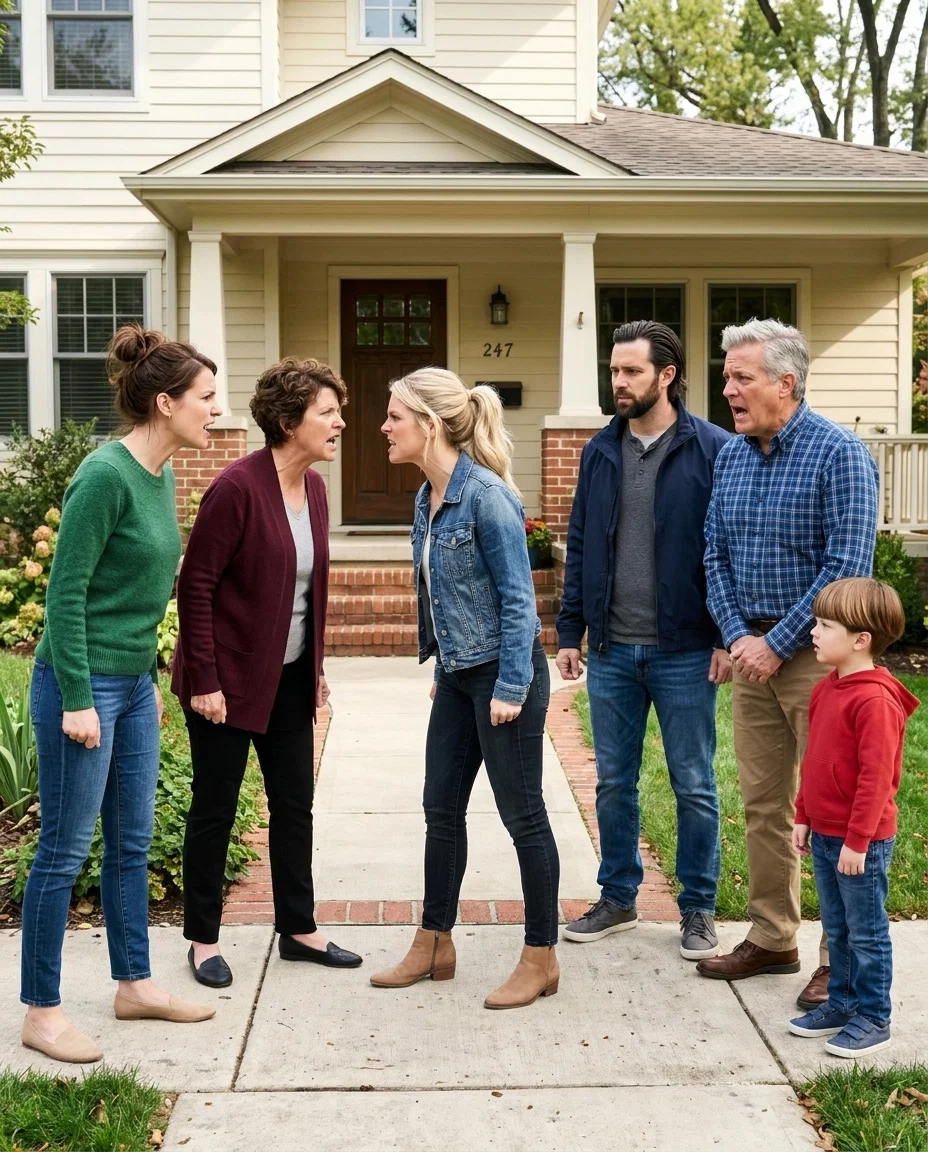
Right after I finished paying off my house mortgage after twenty years, my sister announced that the house was now “family property.”
I had just framed the payoff letter.
Twenty years of overtime shifts, canceled vacations, microwave dinners, and constantly telling myself no so eventually the bank could finally say paid in full. My little white house in Vermont wasn’t luxurious, but every floorboard carried my name inside it. I bought it after my divorce, raised my daughter there, planted the maple trees with my own hands, and paid every single dollar alone.

Two weeks later, my sister Marlene arrived with her husband Keith, his mother, his grown son, and two moving trucks.
At first, I thought somebody had died.
Marlene walked onto my porch carrying a folder.
“We consulted a lawyer,” she announced with a smile. “And it’s already decided.”
“What’s decided?”
“This house is family property now.”
I stared at her. “No, it isn’t.”
Keith brushed past me carrying a cardboard box.
I stepped directly in front of the doorway. “Put that down.”
He laughed casually. “Don’t be dramatic, Diane.”
Marlene opened the folder and removed a printed document. It wasn’t a court order. It wasn’t a deed. It was some ridiculous “family occupancy agreement” they apparently typed themselves, claiming that because Mom lived with me for eight months before she died, the house “morally belonged to all surviving children.”
Morally.
Not legally.
Marlene lifted her chin proudly. “Mom always said this house should stay in the family.”
“Mom stayed here because I took care of her while you lived in Florida.”
“That doesn’t make you special.”
Keith’s mother was already dragging a suitcase toward my guest room.
I called the police first.
They removed everyone that same afternoon, but Marlene returned the following morning with locksmiths, insisting I had “invited them.” Luckily, I had cameras. I had the deed. I had twenty years of mortgage statements.
So I didn’t hesitate.
I took them to court.
Marlene laughed when she received the lawsuit papers.
“You’re suing your own sister over a house?”
“No,” I answered calmly. “I’m suing trespassers who attempted to steal one.”
The result arrived much faster than they expected.
The judge looked at their so-called agreement for less than ten seconds.
Then he asked, “Who drafted this?”
Keith awkwardly raised his hand halfway.
The judge removed his glasses and sighed. “Sir, this is not a legal document. This is a wish list.”
Marlene’s smile disappeared instantly.
And that was only the beginning…
Part 2
The courtroom was quiet enough to hear Marlene’s bracelet tapping nervously against the table.
My attorney, Laura Bennett, presented the facts one by one. The deed belonged solely to me. The mortgage belonged solely to me. The taxes, insurance, repairs, utilities, and renovations had all been paid through my accounts alone.
Then Laura displayed the footage from my security cameras.
Keith carrying boxes toward my front door. His mother dragging a suitcase directly across my flower beds. Marlene standing in the driveway directing movers like she already owned the property.
The judge’s expression hardened visibly.
Marlene’s attorney looked exhausted. I suspected he had originally believed a softer version of the story — maybe that we inherited the home together, maybe that I promised shared ownership. But paperwork doesn’t care about emotional speeches.
Keith interrupted twice.
The judge warned him twice.
Finally, Marlene stood and burst into tears.
“Our mother lived there,” she cried. “That house holds memories for all of us.”
The judge turned toward me. “Did your mother contribute toward the mortgage?”
“No, Your Honor.”
“Did your sister contribute toward the mortgage?”
“No.”
“Property taxes?”
“No.”
“Repairs?”
“No.”