Emma has always had the kind of heart that notices things other people walk past.
She notices when the crossing guard looks tired and offers her the last granola bar from her backpack. She notices when our elderly neighbor struggles with grocery bags and runs to help before I can even put my keys in the door. She notices silence, too—the heavy kind. The kind people wear when life is hurting them.
Maybe that’s because she’s known pain herself.
My husband, Daniel, died when Emma was six. A drunk driver ran a red light and ended our life as we knew it in a single, brutal night. Grief hollowed us out. But somehow, even after losing her father, Emma didn’t grow hard. She grew softer. More careful with people. More determined to be kind.
That’s why, when I found her pink piggy bank shattered on the rug beside her bed, I didn’t get angry.
I just stood in her doorway and said, “Emma? What happened here?”
She turned from her desk so fast I could tell she’d been hoping I wouldn’t notice yet. For a second she looked guilty, then nervous, then strangely brave.
“I broke it on purpose,” she said.
I stepped into the room and crouched beside the bed. Coins were still scattered under her nightstand, and a few crumpled bills lay folded in a neat stack beside her math book.
“You broke your piggy bank on purpose?” I asked gently.
She nodded.
“Why?”

Emma twisted the sleeve of her sweatshirt around her fingers, a habit she had when she was trying very hard not to cry.
“I needed the money.”
“For what?”
At first she didn’t answer. Then she looked up at me with those serious brown eyes that were so much like her father’s and said quietly, “I saw Caleb taping up his shoes again.”
I blinked. “Caleb? The new boy in your class?”
She nodded again.
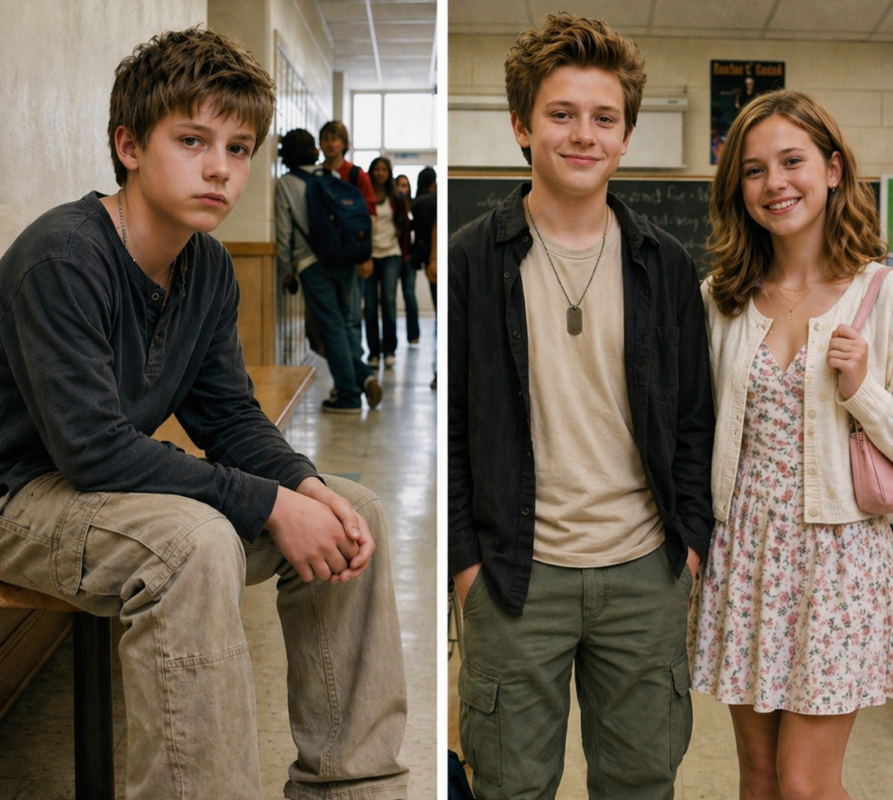
I knew a little about Caleb only because Emma had mentioned him a few times at dinner. He had transferred in midyear. He was quiet, good at science, terrible at dodgeball, and always sat alone unless Emma invited him to join her. From bits and pieces, I’d gathered that things at home weren’t easy for him.
Emma took a breath. “His shoes are falling apart, Mom. Like… really falling apart. The bottom is peeling off. Yesterday in the hallway, he used gray tape to hold one side together. He pretended it was funny, but it wasn’t.” Her voice dropped. “A couple boys laughed.”
I felt something pinch inside my chest.
“So,” she went on, glancing down at the money, “I used what I saved.”
“All of it?”
She gave a small shrug. “Mostly.”
I sat beside her on the bed. “Emma, what exactly did you do?”
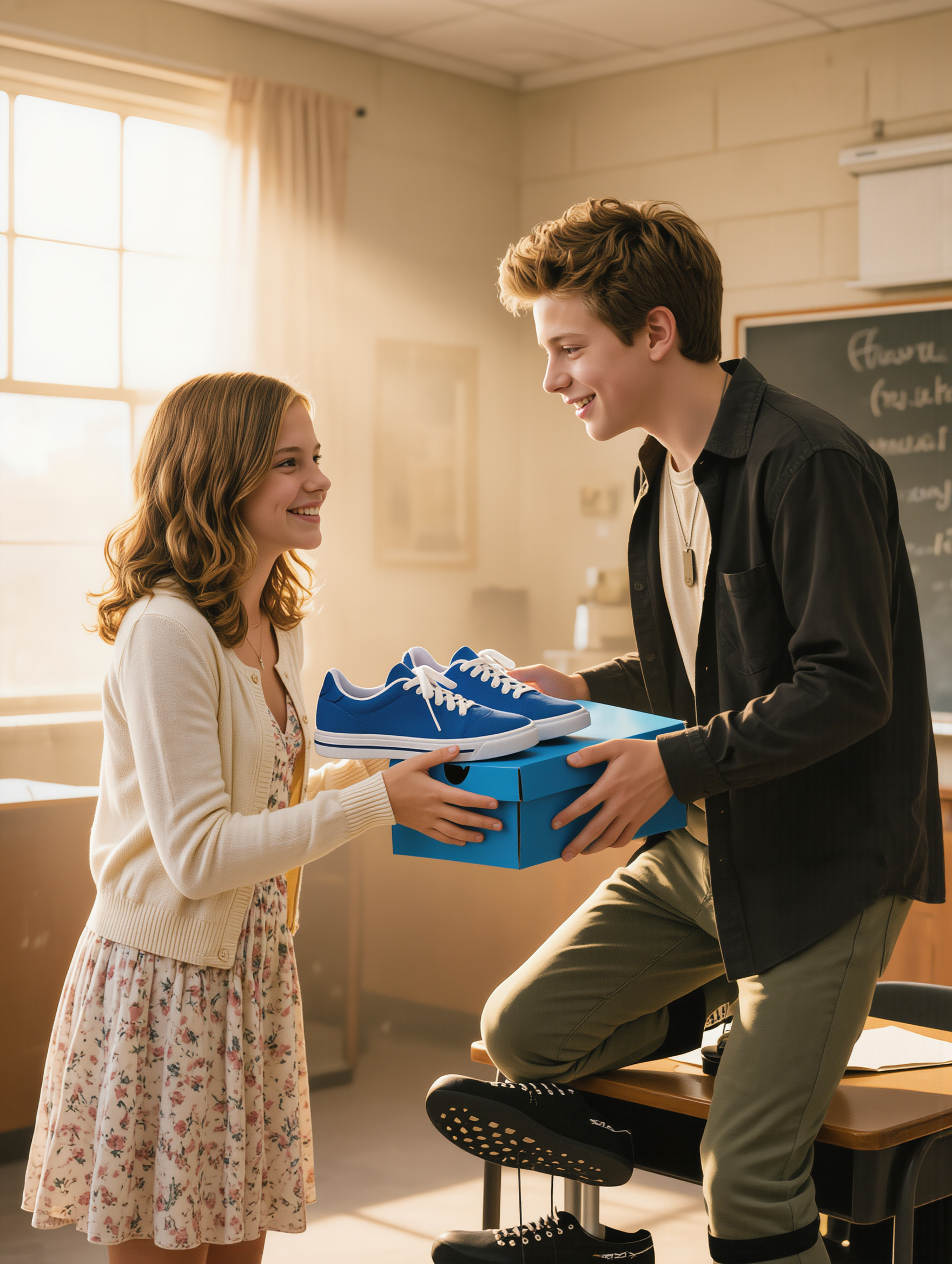
Her face softened, just a little. “I bought him new sneakers online. They’re not expensive-expensive. I checked the size by looking at his gym shoes when they were lined up near the bleachers.” She rushed the next part. “I used birthday money and chore money and the ten dollars Grandma put in my Valentine’s card and some of the money I was saving from not buying snacks after school.”
I stared at her.
All this time, I had assumed she was just being unusually disciplined with money. I had no idea she was quietly building a little fund for someone else.
“You’ve been saving for this?” I asked.
She nodded.
“For how long?”
“Since October.”
It was March.
Something in me cracked wide open.
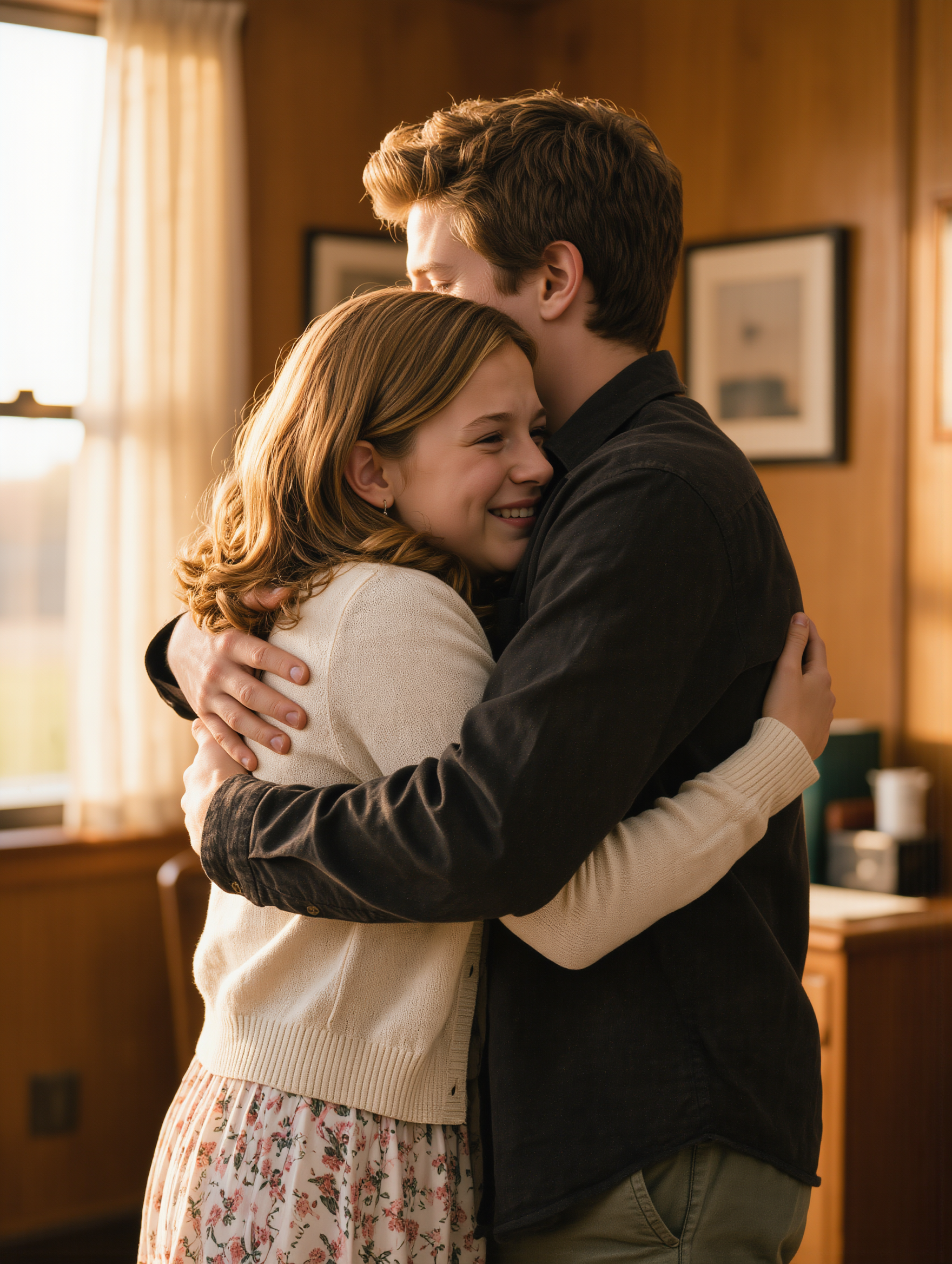
I pulled her into my arms so fast she made a tiny surprised sound. “Oh, sweetheart.”
“I know I should’ve told you,” she murmured into my shoulder. “I just wanted to do it myself.”
I leaned back and held her face in both hands. “I am not upset. Do you hear me? I’m proud of you. So proud it almost hurts.”
Her eyes filled instantly.
I laughed through my own tears. “You can always come to me for help. But Emma… this was beautiful.”
The next morning, she left for school glowing in a way I hadn’t seen in months. She had tucked the sneakers into a gift bag with a note that simply said: For gym class. From a friend.

At noon, my phone rang while I was shelving inventory in the back office at work.
“Hello?”
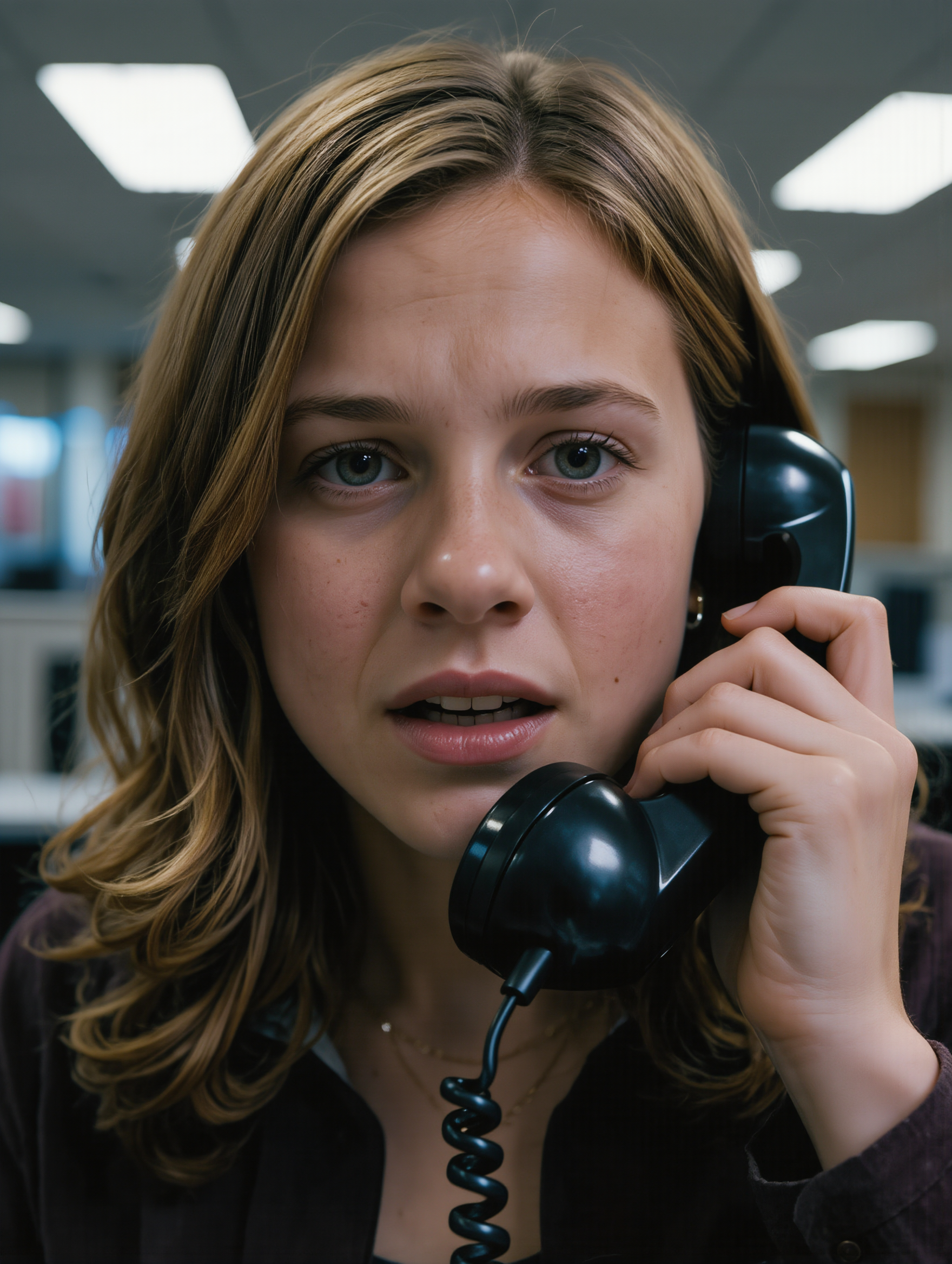
“Good afternoon.” The voice was strained, formal, wrong. “This is Principal Harris from Brookfield Middle School. Please come to the school as fast as you can. Something has happened, and Emma is involved.”
For a moment I forgot how to breathe.
My hand tightened around the phone. “What happened? Is she hurt?”
“She is not physically injured,” he said, but his voice shook enough to terrify me. “Please just come immediately.”
I don’t remember hanging up. I remember grabbing my purse. I remember telling my manager, “My daughter. School.” I remember red lights that lasted too long and my heart pounding so hard it made me nauseous.
By the time I ran into the school building, I was half convinced I’d find Emma in an ambulance or suspended or worse.
Principal Harris was waiting in the hallway outside his office. He looked pale.
“Where is she?” I demanded.
“She’s all right,” he said quickly. “She’s with the school counselor for the moment.”
“What happened?”
He swallowed. “There was an incident at lunch. Caleb wore the sneakers your daughter gave him. Another student accused him of stealing them. There was a confrontation. Emma stepped in and admitted she’d bought them. When some boys started making comments about charity and handouts, she—” He paused, almost like he couldn’t decide whether to be disapproving or impressed. “She climbed onto a bench and told the whole cafeteria that if anyone laughed at Caleb’s shoes, they should be ashamed of themselves.”
Despite the panic still clawing at me, I almost smiled.
“She did what?”
His mouth twitched. “Very loudly.”
That sounded exactly like Emma. Quiet until it mattered.
“But that’s not all,” he said, and the color drained from his face again. “There’s someone here to see Emma. He’s inside my office now, waiting for you.”
A cold wave swept through me.
“What do you mean someone is here? Who?”
The principal looked down. “He didn’t give his name at first. Only said you know him.”
My heart thudded once, hard.
There are moments when the body remembers a person before the mind does. A voice, a posture, the shape of a shadow behind frosted glass. As Principal Harris opened the office door, I already knew.
And when I saw the man standing beside the window, tall and silver-haired, turning slowly to face me in his dark overcoat, the room tilted.
I stopped dead.
My voice came out like a shout torn in half. “WHAT ARE YOU DOING HERE?! THIS CAN’T BE REAL!”
Frank Mercer—my late husband’s father—flinched.
I hadn’t seen him in six years.
Not since the funeral.
Back then, grief had made everyone cruel in different ways, but Frank had been the worst. He had blamed the world, the driver, himself, and eventually me. He’d said terrible things in a church parking lot while I stood there in black heels holding my six-year-old daughter’s hand.
If Daniel had listened to me…
If he’d stayed in the family business…
If it weren’t for the life he chose…
He never said this is your fault exactly.
He didn’t need to.
After that, he disappeared from our lives. No birthday cards. No calls. No explanation. Emma asked about him for a while, then stopped asking, which somehow hurt even more.
And now he was standing in the principal’s office like a ghost with polished shoes.
“Rebecca,” he said quietly.
“Do not say my name like we’re old friends.” My whole body was shaking. “Why are you here?”

Before he could answer, the office door opened again and Emma stepped inside with the school counselor.
She saw me first. “Mom.”
Then she saw Frank.
Her brows pulled together. She looked from him to me. “Who is that?”
Frank’s face crumpled.
I had never seen that man look small. Not once in all the years I’d known him. But in that moment, he did.
He took one slow breath. “Emma,” he said, voice rough, “I’m your grandfather.”
The room went silent.
Emma stared at him. “My dad’s dad?”
He nodded.
She looked at me, confused, a little wary. “I thought… I thought he didn’t want to know us.”
There are truths children understand without anyone explaining them. That was one of them.
Frank closed his eyes briefly, as if the sentence struck him in the chest.
“I didn’t deserve to know you,” he said. “That’s the truth.”
I folded my arms. “Then why now?”
He looked at Emma, then at me. “Because this morning I was at a district meeting. Harris told us about a student who had used her own savings to buy shoes for a classmate. He said her name was Emma Mercer.”
Emma glanced at me. She still used Daniel’s last name at school.
Frank continued, “I knew there couldn’t be many Emmas with my son’s surname in this town. Then I heard what she said in the cafeteria. I watched the security footage.”
His voice broke.
“She sounded like Daniel.”
I said nothing.
He turned fully toward Emma. “I have spent six years being a coward. After my son died, I let grief turn into blame. And blame turned into pride. I told myself I was too angry to reach out, then too ashamed, then too late. But seeing you today…” He swallowed. “A child with every reason to be bitter chose kindness instead. I don’t know how to explain what that did to me.”
Emma was very still.
Frank reached into his coat pocket and pulled out a folded envelope, then set it on the principal’s desk.
“I already spoke with Principal Harris,” he said. “Caleb’s family will have grocery support and clothing vouchers through the community fund, no publicity, no embarrassment. And the school is starting a student closet for shoes and winter coats. It’ll be anonymous. In Emma’s father’s memory, if that’s acceptable.”
I blinked, caught off guard.
Then he looked at me—really looked at me—for the first time in years.
“I also came to say I was wrong. About you. About everything. You were raising our girl alone, and instead of helping, I vanished. I am more sorry than I can say.”
Tears burned hot behind my eyes, but anger was still there too, old and deep and earned.
“You don’t get to walk back in because you had a revelation in a school office.”
“I know,” he said.
“You missed birthdays. Christmases. School plays. Her first year without her father. Her second. Her third.”
“I know.”
Emma’s voice cut through the room, small but steady. “Why didn’t you come before?”
Frank looked at her as if he might never forgive himself for the answer.
“Because I was weak,” he said. “And because every day I waited, it became harder to admit I should’ve come the day before.”
No one spoke.

Then Emma, my impossible, brave child, took one careful step forward.
“Caleb said people don’t help because helping makes things awkward,” she said softly. “But I think not helping is worse.”
Frank bowed his head.
I let out a breath I felt I’d been holding for six years.
Forgiveness is not a door that swings open all at once. Sometimes it is only a crack. Sometimes it is simply deciding not to slam it shut.
I looked at Frank and said, “One meeting. That’s all. No promises.”
His eyes filled. “I’ll take it.”
Emma slipped her hand into mine. “Can Caleb still keep the shoes?”
Principal Harris, who had wisely stayed silent through most of this, finally cleared his throat. “Yes,” he said, almost smiling. “Caleb can definitely keep the shoes.”
Emma nodded, relieved, as if that had been the most important thing all along.
Maybe it was.
That night, after dinner, she sat at the kitchen table doing homework while I washed dishes. The house felt different somehow—still ours, still marked by old grief, but lighter around the edges.
“Mom?” she said.
“Yeah?”
“Do you think Grandpa really meant it?”
I looked at her. “I think he did. But meaning it and proving it are two different things.”
She considered that seriously, then nodded.
A week later, Frank came to Emma’s soccer game. He stood awkwardly near the fence holding two hot chocolates and looking like a man applying for a job he wasn’t sure he deserved. Emma accepted one. Not a miracle. Just a beginning.
Caleb got his sneakers, the school opened its donation closet, and life—messy, painful, ordinary life—kept moving.
But sometimes the biggest things begin with something small.
A broken piggy bank.
A pair of shoes.
A girl who refused to let someone be humiliated for being poor.
And a man who finally understood that kindness is not weakness.
It is courage.
And my daughter, at twelve years old, had more of it than most grown people I’d ever known.
Note: This story is a work of fiction inspired by real events. Names, characters, and details have been altered. Any resemblance is coincidental. The author and publisher disclaim accuracy, liability, and responsibility for interpretations or reliance. All images are for illustration purposes only.