I was nine years old when the world as I knew it ended in a sterile office filled with the smell of floor wax and old coffee. My mother sat me down, her hands shaking as she lit a cigarette she wasn’t supposed to have inside. She told me she couldn’t “handle me anymore.” She used the word “temporary” like a bandage over a bullet wound. She left me with a social worker named Martha and walked out the glass doors without looking back.
I waited. For two years, I stayed by the window of my first foster home, convinced every passing sedan was hers. At eleven, I spent three weeks’ allowance on a birthday card with a glittery butterfly on the front. I mailed it to our old apartment. Two weeks later, it arrived in my hands, unopened, stamped with three cold words in red ink: RETURN TO SENDER. Martha told me my mother had moved and left no forwarding address. I asked, “Will she come back?” Martha didn’t answer. She just looked at me with a pity so profound it felt like a sentence. By thirteen, after my third foster home and a string of “temporary” placements that felt like permanent rejections, I stopped hoping. I stopped asking “why.” I buried the nine-year-old boy in a shallow grave inside my chest and decided to build a life out of the scraps I had left.
Twenty years passed. At twenty-nine, I had managed the impossible: I was stable. I was married to Sarah, a woman whose kindness felt like a warm blanket, and we had a four-year-old daughter, Maya. I had a mortgage, a career in architecture, and a Friday night routine. I had successfully convinced myself that I didn’t have a past—only a present.
Then came the Tuesday afternoon that changed everything.
Sarah was at work, and Maya was napping. A sharp, rhythmic knock sounded at the front door. I wasn’t expecting anyone. I opened the door, bracing for a salesman or a neighbor, but the world stopped spinning the moment I saw her.
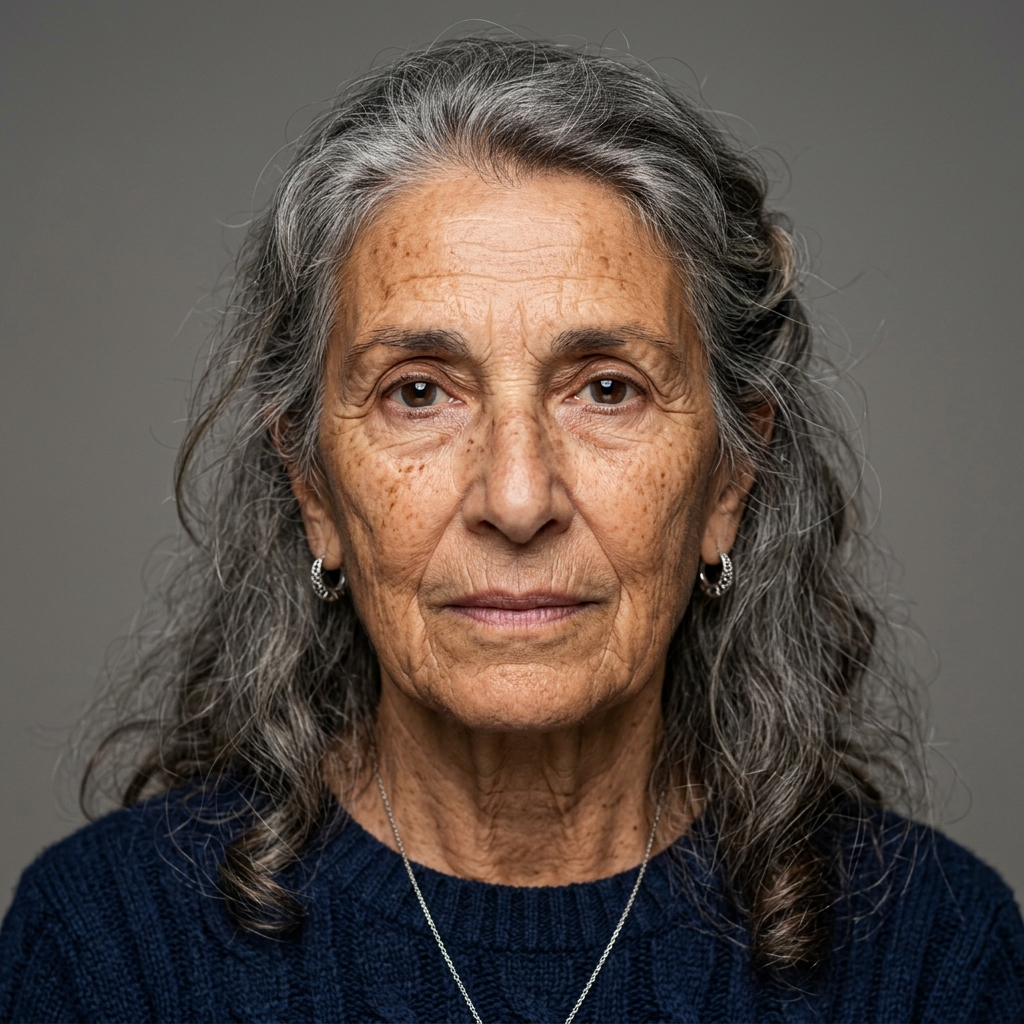
She was older, her hair a frazzled silver, her skin etched with the hard miles of two decades I hadn’t witnessed. But she had my eyes. The exact same amber-flecked brown. She was holding a crinkled brown grocery bag that smelled faintly of cinnamon.
“Hi,” she said, her voice raspy and thin. She looked at my nice house, my polished hallway, and then back at me. Her eyes welled up, and she thrust the bag toward me. “YOU HAVE TO… you have to let me explain.”
I didn’t move. I didn’t reach for the bag. The cookies inside—I could see them through the top—were the cheap, store-bought kind with the hardened frosting. The kind of thing you buy when you’re trying to apologize for a missed afternoon, not twenty years of silence.
“Explain?” I whispered. The word felt like broken glass in my throat. “You left me in a room with a stranger and a coloring book. You didn’t even open the card I sent.”
“I was sick,” she stammered, stepping onto the porch as if she still had a right to my space. “I was in a bad way, David. I thought you’d be better off. I thought if I stayed away, you’d forget me and find a real family.”
“I did find a real family,” I said, my voice gaining a terrifying, cold edge. “I found them in spite of you, not because of you. I spent a decade wondering if I was unlovable. I spent my teens thinking I was a burden that needed to be ‘handled.’ Do you know what that does to a kid?”
She started to cry—the messy, ugly crying of someone who realized they had arrived at a house that was already full. She reached out to touch my arm, but I flinched back.
“I brought your favorites,” she gestured to the bag. “From the bakery on 4th. Remember?”
“I’m thirty years old,” I said. “I don’t even like those anymore. And I don’t know who you are.”
At that moment, I heard a small voice from the top of the stairs. “Daddy? Who’s at the door?”
Maya was standing there, rubbing her eyes, wearing her dinosaur pajamas. My mother’s eyes locked onto her. Her jaw dropped. “Is that… is that my granddaughter?”
The air in the room felt heavy, like it was made of lead. I had a choice. I could open the door, let this ghost inside, and risk letting her chaos touch the perfect, fragile world I’d built for Maya. Or, I could do exactly what she did to me twenty years ago. I could choose my own peace over her presence.
I looked at the woman with my eyes. I saw the desperation, the regret, and the grocery bag of cookies that were twenty years too late.
“No,” I said firmly, stepping outside and closing the front door behind me so Maya couldn’t see. “She isn’t your granddaughter. She’s my daughter. And you’re a stranger who has the wrong house.”
“David, please,” she sobbed.
“I hope you find whatever it is you’re looking for,” I said, and for the first time in twenty years, I felt the weight lift. I wasn’t the nine-year-old boy waiting by the window anymore. I was the man who owned the house. “But you can’t find it here.”
I walked back inside and locked the deadbolt. I didn’t look through the peephole. I went upstairs, picked up my daughter, and held her so tight she giggled.
Later that night, after Sarah came home and we put Maya to bed, I went to take out the trash. Sitting on the top step of the porch was the brown paper bag. I picked it up. I took one cookie out, looked at it, and then dropped the entire bag into the bin.
Some things are temporary. But some things, once broken, stay that way—and that’s okay.
The air between us was thick, vibrating with twenty years of unspoken questions. I looked at the grocery bag, the cheap paper crinkling under her trembling grip, and then back at her eyes—those eyes that I saw every morning in the bathroom mirror.
My instinct was to slam the door. My pride demanded it. But as I looked at the gray in her hair and the way she seemed to shrink under my gaze, a different feeling took hold: a heavy, exhausted curiosity.
“Come in,” I said. The words felt like they belonged to someone else.
She sat at my kitchen table, looking small against the backdrop of my organized, successful life. She placed the grocery bag between us like a peace offering.
“You said I ‘have to’… what?” I asked, leaning against the counter, my arms folded tight across my chest.
“You have to know I didn’t just leave,” she whispered, her voice cracking. “I went to rehab, David. The first time, I failed. The second time, I stayed clean for a year, and I came back for you. I went to the social services office, and they told me you’d been moved to a closed adoption track because I’d missed too many check-ins. They told me if I loved you, I’d let the new family have you without a fight.”
She reached into the bag and pulled out a stack of envelopes, yellowed at the edges and bound by a thick rubber band. “I wrote. Every month. I sent them to the agency. I didn’t know they weren’t giving them to you. I thought you were just refusing to answer because you hated me.”
I reached out and touched the top envelope. My name was written in her looped, messy cursive. The postmark was from fifteen years ago.
“Why now?” I asked. “Why show up today?”
“I got sick,” she said simply. “Not the old kind of sick. The kind where the doctors start talking about ‘remaining time.’ I spent my whole life being a coward, David. I couldn’t leave this world being a coward one last time. I needed you to know that ‘temporary’ was the truth—at least in my heart. I just got lost on the way back to you.”
The anger didn’t vanish—it was too old and too deep for a single conversation to erase—but the shape of it changed. It shifted from a sharp weapon into a dull ache. I realized that while I had been imagining her out there living a life of indifferent freedom, she had been living in a prison of her own regret.
Just then, the pitter-patter of feet sounded on the stairs. Maya wandered in, clutching her stuffed rabbit, her hair a bird’s nest of sleep. She stopped, staring at the stranger at the table.
“Daddy? Who’s the lady?”
My mother froze. She looked at Maya, and for a moment, the twenty years of grief seemed to wash off her face, replaced by a raw, naked wonder. She didn’t reach out; she knew she hadn’t earned that right. She just looked.
I looked at my daughter, then at the woman who had given me life and then abandoned it. I thought about the cookies in the bag—dry, sweet, and crumbling.
“This is…” I paused, the word catching. “This is a guest, Maya. An old friend. She brought cookies.”
I didn’t call her ‘Grandma.’ We weren’t there yet. Maybe we would never be. But as I sat down at the table and finally opened the bag, I realized that for the first time in two decades, I wasn’t waiting for the door to open anymore. I was the one who had opened it.
“Tell me about the letters,” I said, sliding a chair out for my daughter. “Tell me everything.”