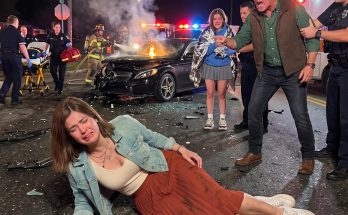
The first thing I registered after the crash was not the pain. It was the scent of rubbing alcohol, the mechanical hiss of a ventilator
“Save Daniel first,” Martha Bennett snapped. Her voice, usually carefully modulated for country club luncheons, was sharp and frantic just beyond the thin fabric of the trauma bay curtain. “She has always been expendable. Just keep her heart beating long enough.”
I could not open my eyes. The darkness was absolute, heavy, and terrifying. Every forced breath scraped the inside of my chest like crushed glass. Somewhere to my left, a monitor shrieked a warning. Wheels rattled over
“Take whatever he needs from her,” my mother whispered, the words slipping out like venom. “Blood, tissue, organs. I don’t care. Our son has a future.”
Their son. Their golden boy.
I was their daughter, Claire Bennett, thirty years old, a senior forensic accountant who had paid their mortgage for six years, covered Daniel’s catastrophic gambling debts twice to keep his knees unbroken, and still received a twenty-dollar supermarket gift card every birthday while he received imported sports cars.
The memory
And now, standing over my shattered body, my parents were trying to strip me for parts.
A doctor
My father lowered his voice, dropping into the smooth, negotiated cadence he used to close real estate deals. “Doctor, perhaps you aren’t understanding the stakes. Daniel’s liver is failing. He’s bleeding internally. We have a signed document. A Do Not Resuscitate order for Claire. She… she wouldn’t want extraordinary measures. If her heart stops, let her go. Then, we can make a very generous donation to this hospital’s endowment.”
Even trapped in the paralyzing fog of trauma, a cold dread coiled tightly in my gut. I knew I had never signed a DNR. They had forged it. They weren’t panicking in the face of tragedy; they were negotiating my murder.
From behind the opposite curtain, Daniel groaned. It was a weak, pathetic sound, but it was enough to send my mother into hysterics. She began sobbing his name, weeping as if I were already a corpse cooling on the steel table.
A nurse brushed against my arm. I felt the warm pressure of her fingers checking my pulse. I summoned every ounce of willpower I possessed, fighting through the thick sludge of sedatives. I moved my index finger. Just barely. A millimeter of defiance.
The nurse’s breath hitched.
I waited a second, then tapped twice against the mattress. Paused. Tapped three times.
It was an old distress code, something a former police auditor had taught me years ago: Aware. Unsafe. Record.
The nurse understood. I felt the subtle shift of her weight, the quiet rustle of fabric as she slipped something—a digital recorder, a phone—beneath the edge of my thermal blanket.
Minutes later, the furious arguing outside the curtain stopped abruptly. Heavy, authoritative footsteps clicked against the tile, entering the trauma bay. A woman’s voice, low, perfectly controlled, and vibrating with an authority that sucked the oxygen from the room, cut through the noise.
“Step away from that curtain.”
My mother scoffed, her tone dripping with sudden indignation. “Excuse me? Who on earth do you think you are? This is a private medical emergency.”
The woman stepped closer. Even with my eyes sealed shut, I could feel the shift in the room’s atmosphere. I smelled petrichor—the sharp, clean scent of rain—mixed with an impossibly expensive, subtle perfume.
“My name is Evelyn Cross,” the woman stated. Her voice was ice. “I own this hospital. I own the board of directors. And I own the ground you are currently standing on.”
A suffocating silence fell over the trauma bay.
Then, Evelyn added, her voice dropping an octave, breaking slightly with a tremor that shattered her icy composure. “And Claire is my daughter.”
My mother let out a sharp, derisive laugh. It was too loud, too brittle. “That is absurd. That is medically and legally impossible.”
I heard the sound of a zipper, the rustle of a plastic evidence bag.
“Look at me, Martha,” Evelyn commanded, her voice suddenly laced with a terrifying familiarity.
I heard a sharp intake of breath. The unmistakable sound of my mother staggering backward, her heel catching on the linoleum. The silence that followed was not just quiet; it was the sound of a twenty-nine-year-old lie collapsing.
“You recognize me now, don’t you?” Evelyn’s voice was a barely contained snarl. “You remember the clinic. You remember the faces of the people you destroyed.”
Evelyn dropped something heavy and metallic onto the metal tray beside my bed. “You thought I would never find her. You thought changing your name and fleeing across state lines would bury the truth. But you kept a souvenir, didn’t you, Martha?”
“I… I don’t know what you’re—” my mother stammered, her voice stripped of all its usual arrogance, replaced by raw, naked terror.
“My investigators tore your house apart an hour ago,” Evelyn said. “They found the lockbox. They found the little pink sweater. The one with my blood on the collar from when I tripped on the stairs the morning she was taken.”
My mother whimpered. It was the sound of an animal caught in a steel trap.
“You stole my child,” Evelyn whispered, leaning in so close I could hear the fabric of her coat rustling. “And now, you are trying to murder her for spare parts.”
The sound of police sirens began to wail in the distance, growing louder, piercing the walls of the hospital. But before the doors could burst open, I felt a hand—cold and trembling—reach under my blanket, wrapping tight around the plastic tube of my IV line. It was my father. And he was squeezing.
The suffocating grip on my IV line vanished as security guards burst into the room, their radios crackling. The ensuing chaos was a blur of shouting, scuffling shoes, and the sharp commands of Nurse Maya, who practically threw her body over mine to protect the monitors. I slipped into the dark, merciful void of anesthesia.
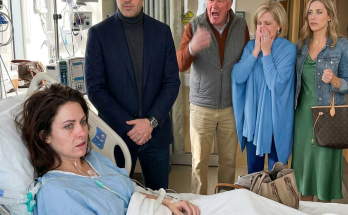
When I finally fought my way back to consciousness, the harsh glare of the trauma bay had been replaced by the muted, amber light of a private, high-security recovery suite. My chest felt like it had been crushed under a cinderblock—three fractured ribs and a punctured lung, I would later learn—but the haze in my mind was lifting.
Sitting in a leather armchair beside my bed, looking like a sentinel guarding a royal vault, was Evelyn Cross.
She was striking. Silver hair swept back from a face characterized by sharp, aristocratic cheekbones and eyes that mirrored my own pale green. She didn’t reach for me immediately. She just watched me breathe, her hands clasped tightly in her lap.
“You do not owe me forgiveness,” Evelyn said softly, noticing my open eyes. “You do not even owe me belief. I know this is entirely too much.”
I swallowed, my throat burning. “The sweater… the blood…”
Evelyn nodded, a tear finally escaping and tracing a slow path down her cheek. “You uploaded your DNA to a genealogy site six weeks ago. My private investigators monitor those databases globally. We got the match yesterday. By the time I chartered a flight, the crash had happened.”
She explained the nightmare that had been my hidden past. I had disappeared from an exclusive maternity clinic at eleven months old. Martha, my ‘mother’, had been a records clerk there. Arthur drove medical supply trucks. When suspicion fell on them, they vanished, changed their surnames, and used the clinic’s stolen cash reserves to build a respectable, fabricated suburban life. They raised me not out of love, but as an insurance policy, a prop to legitimize their fake identity.
“They knew the net was closing,” Evelyn said, her jaw tightening. “My investigators had begun asking questions in their neighborhood three days ago.”
The crash on Blackridge Bridge suddenly felt entirely different. It wasn’t just Daniel’s drunken rage. It was a desperate, chaotic attempt to eliminate a liability.
Nurse Maya entered the room, checking my vitals with a reassuring smile. She handed me a sleek, encrypted tablet.
“I kept the recording running in the trauma bay, just like you tapped,” Maya whispered.
I pressed play. The audio was crystal clear. I heard my parents offering the bribe, demanding my organs, and presenting the forged DNR. But there was more.
Maya swiped to a second file. “This is from the security system in your apartment building. Time-stamped two hours after the crash, while you were bleeding out on the operating table.”
I watched the grainy footage. Arthur and Martha Bennett were practically running down my hallway. They used my spare key. Ten minutes later, they emerged carrying my work laptop, my passport, and a thick, blue accordion folder.
My heart hammered against my bruised ribs. The blue folder. It contained my preliminary forensic investigation into Daniel’s nightclub, The Velvet Room. He hadn’t just been losing money; he had been laundering it through phantom vendors. And the digital footprints indicated Arthur and Martha had used my stolen professional credentials to forge the invoices, shielding themselves.
If I died, the investigation died with me. They would be free, rich from Daniel’s illicit cash, and safe from Evelyn’s manhunt.
“We need to go to the police right now,” Evelyn said, her eyes flashing with righteous fury as she watched the footage. “I have a team of lawyers downstairs.”
“No,” I rasped, my voice barely more than a dry croak.
Evelyn stared at me. “Claire, they tried to kill you.”
“And if we arrest them now, they’ll claim panic. They’ll claim grief. They’ll hire defense attorneys who will argue the trauma bay audio was illegally obtained under duress,” I said, the analytical, calculating part of my brain taking over. “I am a forensic accountant, Evelyn. I don’t just find the crime. I build a cage so tight the criminals lock themselves inside.”
I looked at Maya. “Is Daniel awake?”
“He woke up an hour ago. Minor concussions, fractured wrist. He’s in a room down the hall. Your parents are with him.”
I took a slow, agonizing breath. “When they come in here, I need you both to play along. I don’t remember the crash. I don’t remember the argument. I have traumatic amnesia.”
Evelyn looked horrified. “You want to play the victim for the people who stole you?”
“I want them to feel safe,” I said coldly. “People make mistakes when they think they’ve won.”
Two hours later, the door creaked open. Martha and Arthur stepped inside, their faces masks of perfectly calibrated parental concern. Martha rushed to the bedside, her eyes welling with crocodile tears.
“Oh, my sweet girl,” she cooed, reaching out to stroke my hair. Every muscle in my body screamed in revulsion, but I forced my eyes to remain wide, blank, and confused.
“Mom?” I whispered, letting my voice tremble. “What… what happened? Why does my chest hurt?”
Arthur exhaled a loud, theatrical sigh of relief. He stepped up beside his wife, patting my blanket. “You had an accident, sweetheart. On the bridge. You were driving, you lost control. But you’re going to be fine. Daniel is fine, too.”
“I was driving?” I asked, blinking slowly. “I… I can’t remember.”
“It’s the trauma, darling,” Martha said smoothly, exchanging a quick, triumphant glance with Arthur. “The doctors said you might have some memory loss. Don’t push yourself.”
They stayed for ten minutes, feeding me a fabricated narrative of my own guilt. They played the role of loving, terrified parents perfectly. When they finally turned to leave, Martha kissed my forehead—a kiss that felt like the touch of a reptile.
As they walked toward the door, Arthur casually brushed past the array of medical equipment feeding into my arm. He didn’t think I was watching. He didn’t think I had the mental capacity to notice his thumb quickly and violently twisting the dial on my pain medication drip, opening the valve to a lethal, unregulated flow before slipping out the door.
The moment the heavy door clicked shut, my eyes darted to the IV pole. The clear liquid in the chamber wasn’t dripping anymore; it was practically a continuous stream. A massive overdose of fentanyl was rushing toward my veins.
“Maya!” I choked out, a genuine spike of panic cutting through my bruised chest.
Nurse Maya, who had been silently logging charts in the corner alcove, moved with terrifying speed. She didn’t ask questions. She saw my eyes, followed my gaze to the IV, and instantly clamped the plastic tubing with her bare hands before swiftly shutting off the digital pump.
She exhaled a shaky breath, her eyes wide as she looked at the dial. “He maxed it out. If that had run for even two minutes…”
“He wanted it to look like a tragic medical complication,” I said, my voice eerily calm despite the adrenaline flooding my system. “A grieving sister, overwhelmed by the pain and the guilt of causing the crash, succumbs to her injuries. A neat, tragic little bow.”
Evelyn stepped out from the adjoining private bathroom, where she had been listening. Her face was ashen, her hands balled into tight fists. “That’s it. The game is over, Claire. I am calling the police. I will not let them play Russian roulette with your life.”
“Evelyn, wait,” I pleaded, grabbing her wrist with my good hand. “We have them on attempted murder now. But I want the financial empire. I want the money they stole. I want to burn their reputation to the ground so thoroughly that they can never, ever rebuild. I need twelve hours.”
Evelyn stared into my eyes, searching for the scared little girl she had lost, but finding only the hardened, calculating auditor I had become to survive my captors. Slowly, she nodded. “Twelve hours. But I am posting two armed private security guards outside that door. And Maya doesn’t leave your side.”
The trap had to be flawless. I called my firm’s senior legal counsel, a ruthless corporate bulldog named Harrison Vance, and instructed him to unlock the encrypted evidence package stored on our secure servers. I had scheduled it to auto-release if I ever missed a Monday morning audit meeting—a fail-safe I built when I first started noticing the discrepancies in Daniel’s accounts.
“Harrison,” I said into the phone, “I need you to prepare a digital presentation. Bank transfers, forged invoices, the shell companies, everything. Link them to Arthur and Martha Bennett.”
“Done,” Harrison replied, his voice crackling with anticipation. “What’s the play, Claire?”
“I need a specific kind of audience,” I instructed.
Next, I had Maya contact the local precinct. My car, a model Daniel had mocked for being a “boring accountant’s box,” was equipped with a dual-facing, cloud-synced dashcam. He hadn’t known that when he grabbed the wheel.
The next morning, the storm broke.
At 9:00 AM sharp, the door opened. Martha and Arthur walked in. They looked exhausted, but beneath the tired eyes, there was a thrumming, electric current of anticipation. They thought today was their payday. Daniel was wheeled in behind them by an orderly, a smug, self-satisfied smirk plastered across his pale face despite the cast on his arm.
“Good morning, sweetheart,” Martha said, her voice dripping with artificial honey. She approached the bed, carrying a sleek leather portfolio.
“How are you feeling?” Arthur asked, standing at the foot of the bed, his eyes darting nervously to the IV drip, clearly disappointed to see I was still breathing.
“Confused,” I lied softly, staring at the ceiling. “Everything is fuzzy.”
“That’s to be expected,” Daniel sneered from his wheelchair. “You really messed up this time, Claire. You could have killed us both.”
“I’m so sorry,” I whispered, forcing a tear to pool in the corner of my eye.
Martha patted my hand. “We know you are, dear. But right now, we need to handle the practicalities. Daniel needs another surgery, and your insurance is complicated. Plus, your firm has been calling. We need to step in and manage things while you recover.”
She unzipped the portfolio and pulled out a thick stack of legal documents, placing a heavy, gold-plated fountain pen on top of them. She slid a clipboard over my blanket.
I glanced at the top sheet. It wasn’t a medical authorization. It was an irrevocable, blanket Power of Attorney. It granted them total control over my bank accounts, my property, and the transfer of my remaining shares in my consulting firm straight into Daniel’s LLC.
“Just sign at the bottom tabs, Claire,” Arthur instructed, his voice tightening with impatience. “It will relieve you of all the stress.”
I looked at the pen. I looked at Martha’s expectant, greedy eyes. I looked at Daniel’s smirk.
I picked up the gold pen. The metal felt heavy and cold against my skin. I clicked the cap off, hovering the nib over the dotted line. Martha leaned in closer, her breath smelling of stale coffee and victory, entirely unaware of the tiny, blinking red light of the hidden camera Nurse Maya had tucked inside the floral arrangement next to my bed.
I let the pen hover for a agonizing three seconds. The silence in the room was so thick it felt like liquid. I could hear Arthur breathing heavily through his nose. I could see the tiny pulse of anticipation fluttering in Martha’s throat.
Slowly, deliberately, I lowered the pen. But I didn’t sign Claire Bennett.
With steady, dark ink, I wrote: Claire Cross.
I placed the pen down on the clipboard and pushed it back toward Martha. She looked down at the signature, her brow furrowing in irritation.
“Claire, sweetheart, you wrote the wrong last name,” she said, letting out a nervous, breathless chuckle. “Your brain is still scrambled. Let me get a fresh copy—”
“My brain is perfectly fine, Martha,” I said. My voice was no longer the weak, raspy whisper of a victim. It was sharp, clear, and rang with the authority of an auditor delivering a fatal verdict.
I sat up, ignoring the flare of pain in my ribs, and ripped the medical tape holding the useless secondary IV line off the back of my hand.
Martha froze. Arthur took a half-step backward. Daniel’s smirk vanished, replaced by a look of profound, dawning confusion.
“I remember the bridge,” I said, locking eyes with Daniel. “I remember you drinking from a silver flask. I remember you striking me across the jaw. I remember you grabbing the steering wheel and screaming that if I didn’t transfer the money, neither of us was going home.”
Daniel gripped the wheels of his chair, his knuckles turning white. “You’re delirious. Nobody is going to believe the ramblings of a concussed driver.”
“They won’t have to,” a voice echoed from the doorway.
Evelyn Cross stepped into the room. But she wasn’t alone. She was flanked by two broad-shouldered detectives, my attorney Harrison Vance, and the hospital’s Chief of Staff.
Arthur’s face drained of all color. He lunged toward the clipboard, desperate to snatch the documents, but one of the detectives stepped forward, his hand resting casually on his utility belt. “I wouldn’t do that, Mr. Bennett.”
Harrison Vance opened his laptop and connected it to the large, flat-screen smart TV mounted on the hospital wall. “Ms. Bennett—or should I say, Ms. Cross—requested that we make this a transparent meeting.”
The screen flickered to life. It wasn’t just a presentation. It was a live video conference call. Staring back at us from the grid of screens were the faces of the seven primary investors in Daniel’s nightclub, the board of directors of Arthur’s real estate firm, and the local district attorney.
Daniel let out a strangled gasp. “What are you doing? Turn that off!”
Harrison pressed a button. The dashcam footage from my car played. The audio was pristine. The entire room, both physical and virtual, watched in horrified silence as Daniel violently assaulted me, grabbed the wheel, and intentionally caused the devastating head-on collision.
Before they could recover, Harrison switched the file. The audio from the trauma bay filled the room. Martha’s voice echoed through the speakers, dripping with malice: Take whatever he needs from her. Blood, tissue, organs… Our son has a future.
Martha collapsed against the edge of my bed, her legs giving out. “That… that’s illegal! You can’t record us secretly!”
“It is perfectly legal in a Level One Trauma Bay where hospital security protocol mandates audio-visual recording to document threats to staff and patients,” the Chief of Staff replied coldly.
“Now for the financial audit,” I said, looking directly into the camera at the investors. “The blue folder you stole from my apartment, Arthur? The one you used my keys to take while I was bleeding out? I’m an auditor. I back up everything to a secure cloud.”
Harrison displayed the forged invoices, the hidden bank transfers, the shell companies in the Cayman Islands. Every document bore the digital signatures of Arthur and Martha Bennett, proving they had orchestrated the millions of dollars stolen from the investors, trying to pin the paper trail on my credentials.
The screen showed the investors erupting into chaos, shouting over each other, demanding their lawyers.
“And finally,” Evelyn said, stepping forward, her voice carrying the weight of twenty-nine years of grief and vengeance. “The kidnapping.”
She dropped the heavy, official FBI forensic report onto my lap. “DNA confirms I am Claire’s biological mother. Fingerprints lifted from the lockbox in your attic match Arthur and Martha Bennett to the aliases used at the clinic in 1997.”
The room descended into pandemonium. The detectives moved in. They pulled Daniel from his wheelchair, reading him his rights for aggravated assault, reckless driving, and massive financial fraud.
Another detective grabbed Arthur’s wrists, forcing them behind his back. The sharp click of handcuffs echoed loudly.
Martha was on her knees, sobbing violently, the carefully constructed facade of the suburban matriarch utterly destroyed. She crawled toward the side of my bed, reaching out with trembling, desperate hands.
“Please, Claire,” she wailed, her makeup running in dark streaks down her face. “Please! We fed you. We clothed you. We raised you! We are your family!”
I looked down at the woman who had stolen my life, used my money, and offered my heart to a surgeon while it was still beating in my chest. I felt absolutely nothing but a cold, clean emptiness.
“You fed me enough to keep me useful,” I said quietly, ensuring every word was captured by the microphones. “You didn’t raise me, Martha. You held me hostage. And the ransom is due.”
I looked at Harrison. “Revoke every beneficiary designation I have. Authorize the immediate foreclosure on the house whose mortgage I hold. Liquidate their assets to repay the investors.”
As the officers hauled them out of the room, their screams echoing down the sterile hospital corridor, Evelyn sat on the edge of my bed. For the first time in twenty-nine years, she reached out and gently took my hand. I didn’t pull away.
Six months later, Daniel accepted a thirty-year federal prison sentence, knowing the financial evidence had annihilated any chance of a defense. Arthur and Martha were convicted of kidnapping, identity fraud, attempted coercion, and grand larceny. Their house was sold, their accounts drained, and every high-society friend who had once praised their “perfect” family read the damning transcripts in the morning papers.
My recovery was slow and agonizing. Evelyn never pushed. She never demanded I call her “Mom.” She simply showed up. She brought terrible, bitter coffee to my physical therapy sessions, held my hair when the pain medication made me violently ill, and answered every dark, painful question about my stolen past with unflinching honesty.
A year after the crash, I walked into the glass-walled headquarters of the Cross Foundation. I had accepted the position as the Director of their new Forensic Justice Unit—a division dedicated entirely to helping hospitals and vulnerable individuals detect financial exploitation, fraud, and trafficking.
On the exact anniversary of the crash, Evelyn and I stood together on the pedestrian walkway of Blackridge Bridge. The morning air was crisp, smelling of rain and river water.
I reached into my pocket and pulled out the old, brass house key to the Bennett residence—the only thing I had kept. I held it over the edge of the railing for a long moment. Then, I opened my hand. We watched it fall, a tiny speck of brass disappearing into the churning, dark water below, carried away by the relentless current.
For the first time in my life, surviving didn’t feel like a heavy, suffocating blanket of guilt.
As I turned and walked back toward the city with my mother, it felt like freedom.
If you want more stories like this, or if you’d like to share your thoughts about what you would have done in my situation, I’d love to hear from you. Your perspective helps these stories reach more people, so don’t be shy about commenting or sharing.