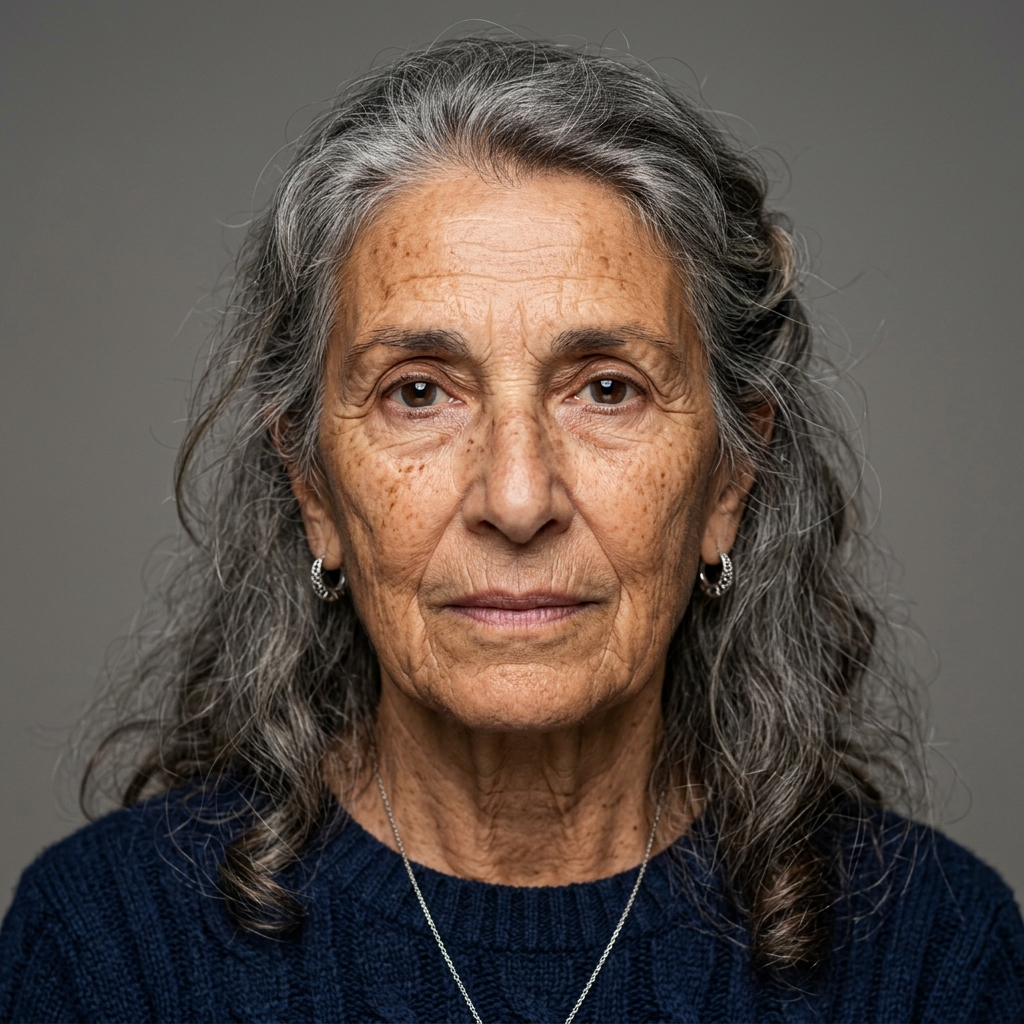
The postcard arrived on a Tuesday.
It was damp from the Ohio rain, the corners soft, the Egyptian stamp almost peeling away. I almost threw it in the trash. My hands had learned to treat anything from Cairo like a hot coal.
But the handwriting stopped me.
It wasn’t the neat cursive of condolence cards. It was printed in careful block letters, the kind a child might use when they’re trying very hard to be understood.
‘Come alone if you still want the truth about Lily.’
I hadn’t said my daughter’s name aloud in two years. Not since the funeral for the empty coffin. Not since Martin stood at the podium, dry-eyed, and told the world that grief was a ‘transformative journey.’ That man could turn a nightmare into a TED talk.
I sat at my kitchen table, the same one I’d sat at twenty years ago when the police called from Cairo, and I let the postcard lie there between the sugar bowl and the unpaid bills.
I was fifty-three years old. Most days, my body felt like a house I was just renting.
But in that moment, I felt the fire I thought had died long ago.
I grabbed my coat.
—
Twenty years earlier, Martin had moved us to Cairo with the enthusiasm of a man who saw the world as his stage. He was a journalist then, chasing the kind of stories that win awards. I was the wife who made sure his shirts were pressed and his daughter was fed.
We found a dusty apartment with a courtyard full of jasmine. Lily was eight, with gaps in her smile and a stuffed rabbit named Mr. Buttons. She would spend hours jumping rope under the lemon tree while I watched from the balcony.
‘Mommy, you’re always staring!’ she’d yell, her pigtails bouncing.
‘I’m just making sure the world treats you right,’ I’d call back.
What I didn’t know was that the world wasn’t the problem.
That evening—the Tuesday that cracked my existence in two—I had to run to the market. Lily was playing in the courtyard. Martin was at his desk, supposedly working on an article.
‘Keep an eye on her,’ I said. It was the last normal thing I ever asked of him.
When I came back, the courtyard was empty. The jasmine swayed in the warm breeze. Lily’s jump rope lay coiled like a snake near the gate.
Martin stood with his hands in his pockets, his expression unreadable.
‘She was just here,’ he said. ‘I looked away for a minute.’
We searched all night. The police came. Neighbors brought tea and prayer beads. I walked the streets shouting her name until my voice broke into something animal.
No trace.
No ribbon.
No Lily.
The months that followed were a blur of sleeplessness and thin hope. Martin gave interviews. He cried on camera. He wrote a series of articles about parental grief that went viral in the days before anything went viral.
But in the dark of our bedroom, he was stone. He never wanted to talk about her. He never wanted to look at her photos.
‘I’m coping the best I can,’ he’d snap when I asked why he seemed so distant.
After a year, he insisted we return to the States. I didn’t want to leave—leaving felt like abandoning her—but I was hollowed out. I went.
Our marriage died quietly. He published a memoir. Then another. He became a fixture on talk shows, a professional mourner with perfect hair.
People called him an inspiration.
I called him a lie I couldn’t prove.
—
The storage facility was on the outskirts of town, a squat concrete building with rows of faded orange doors. Unit 17.
The lock hung loose, already broken.
I slid the metal door upward. It shrieked, then light flooded into the dusty space.
In the center, illuminated by a single shaft of sun, sat a small floral suitcase. The one Lily had packed for Cairo, with the broken clasp and the unicorn sticker peeling off the side.