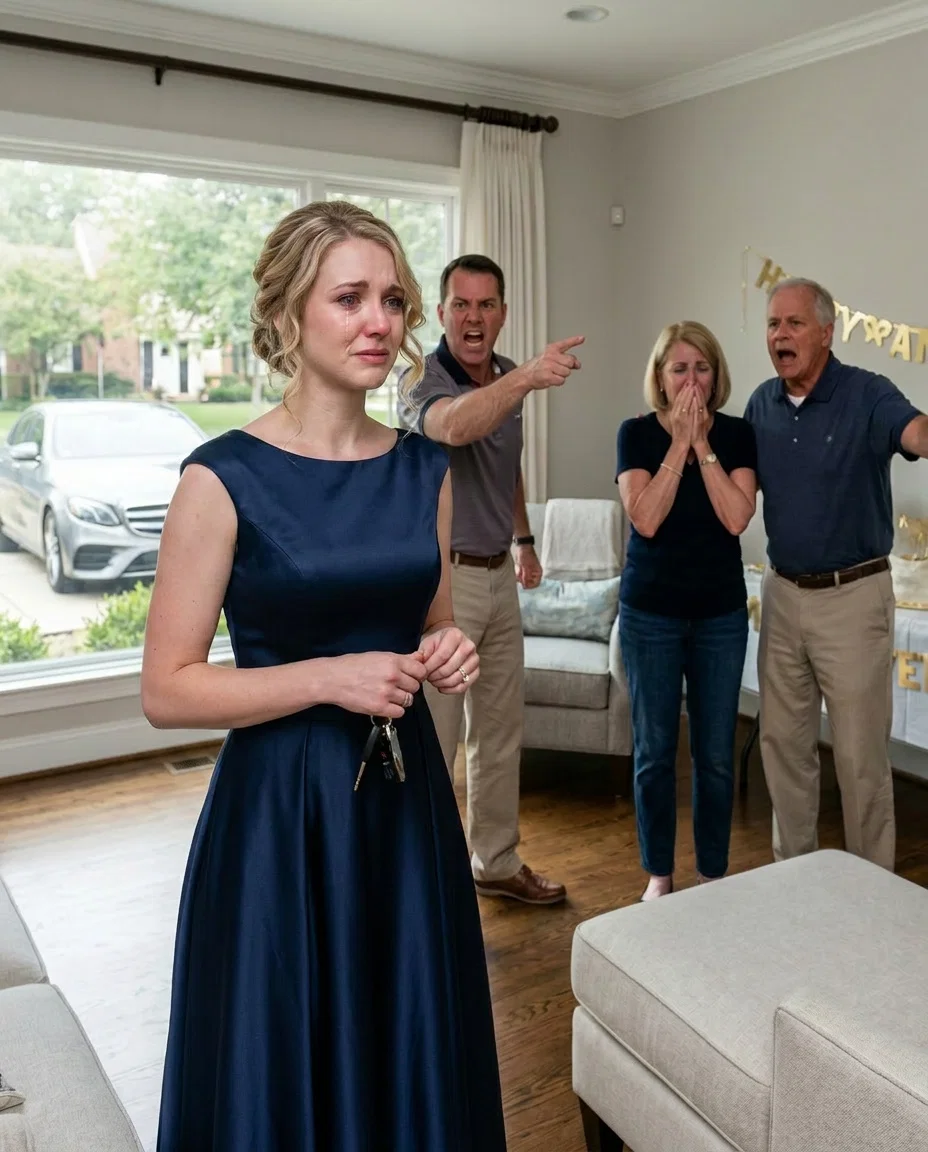
When I asked why I wasn’t invited to my parents’ anniversary party, my brother said, “You’re just an ATM for the family,” and my parents laughed. So I took back my Benz, stopped paying their rent, that’s when the best party started… — Part 2

After I sent it, the family group chat went silent.

For two full days.

Then my grandmother called.

She was eighty-one, sharp as ever, and the only person in the family who had ever asked whether I was tired.

“Savannah,” she said, “I read your email.”

I braced myself.

She sighed softly. “I should have spoken up years ago.”

My throat tightened.

“I watched them lean on you too heavily,” she continued. “I convinced myself you were strong enough to handle it. That was unfair. Strong people can still be exploited.”

For the first time since the anniversary party, I cried. Not because I regretted my decision. Because someone had finally named the truth out loud.

Part 3

My parents had thirty days before the next rent payment came due. At first, they acted as though I would eventually give in. My mother sent old family photos. My father sent short messages like, “We need to talk,” as though authority still lived inside his voice. Nolan posted online about “fake family loyalty,” then deleted the post after cousins started questioning him publicly. But guilt cannot pay bills.

By the third week, my parents met with their landlord. They could no longer afford the Oak Park townhouse I had been financing. It had three bedrooms, a finished basement, and rent more expensive than my first mortgage quote years earlier. They had moved there after insisting my mother’s knees could not manage stairs, despite the townhouse having two flights.

Later, my grandmother told me they found a smaller apartment twenty minutes away. One bedroom. Elevator access. Affordable if my father returned to part-time bookkeeping and my mother accepted work at the community library.

Without the Mercedes, Nolan had to commute by train. His clients stayed. His ego suffered far more than his career did.

For nearly a month, none of them contacted me directly.

The silence hurt, but it felt clean.

I returned to therapy. I joined a Saturday hiking group. I drove the Mercedes to Door County and realized I had not taken a vacation without financially supporting someone else in nearly ten years.

Then, near the end of November, my mother asked to meet.

We chose a quiet diner halfway between our homes. I arrived early and almost laughed when I caught myself scanning menu prices out of habit, automatically calculating what everyone might order. Then I remembered I was only responsible for myself.

My mother walked in wearing a plain gray coat I had never seen before. Without jewelry and performance, she looked smaller. My father followed behind her, slower and visibly uncomfortable.

Nolan did not come.

For several minutes, we discussed nothing meaningful. Weather. Traffic. Grandma’s blood pressure.

Finally, my father cleared his throat.

“We were wrong,” he said.

The words sounded unnatural, like a sentence rehearsed many times beforehand. My mother stared down at her hands. “We depended on you too much. Then we acted like you owed us even more.”

“You laughed,” I said.

She shut her eyes briefly.

“I know.”

“That was the moment everything became clear to me.”

Tears rolled down her cheeks, but she did not reach for my hand. I appreciated that. For once, she did not turn her emotions into my responsibility.

“I was ashamed,” she admitted. “Not because Nolan said it, but because everyone heard it. That tells me something terrible about myself.”

My father nodded slowly. “We were proud of your success when it benefited us. We should have been proud simply because you were our daughter.”

The apology did not erase years of damage. Nothing that deep disappears over coffee in a diner booth.

But it mattered that they came without asking for money.

“What do you want now?” I asked.

My mother inhaled shakily. “A chance to know you without taking from you.”

I studied them carefully. I saw fear. Shame. Maybe even love, buried beneath years of entitlement and convenience. I wanted to believe them, but I had learned that hope only survives when boundaries exist beside it.

“I’m willing to try,” I said. “But I will not pay your rent. I will not give Nolan my car. I will not rescue irresponsibility. And if I’m insulted, used, or pressured, I will walk away.”

My father swallowed hard. “That’s fair.”

It was the first time in my life he had ever called one of my boundaries fair.

Nolan took longer. Three months later, he finally sent a message.

“I was cruel. I’m sorry. You didn’t deserve that.”

There was no excuse attached. No request. No “but.”

I waited a day before replying.

“Thank you for saying that. I hope you truly mean it.”

Eventually, he proved he did in small ways. He found a cheaper apartment. He sold things he could not afford. He started repaying my parents in installments for money they had given him. Not much at first, but enough to show effort.

The following anniversary dinner was not held in a hotel ballroom. It took place in my parents’ small apartment, with folding chairs, grocery-store flowers, and a homemade cake my mother slightly overbaked.

This time, they invited me first.

I brought no envelope. No check. No extravagant gift. Only a framed photograph from years earlier: the four of us beside Lake Michigan before money transformed love into bookkeeping. My mother cried when she opened it.

Nolan looked across the table at me and said quietly, “I’m glad you came.”

And for the first time in years, I believed he meant me, not my wallet.

Taking back the Mercedes did not destroy my family. Ending the rent payments did not make me cruel. It forced everyone to stand on something honest.

The best party was never revenge.

It was the moment I stopped paying for a seat at my own family’s table—and they finally had to decide whether they actually wanted me there.

✅ End of story — Part 2 of 2 ← Read from Part 1

Leave a Reply

Your email address will not be published. Required fields are marked *