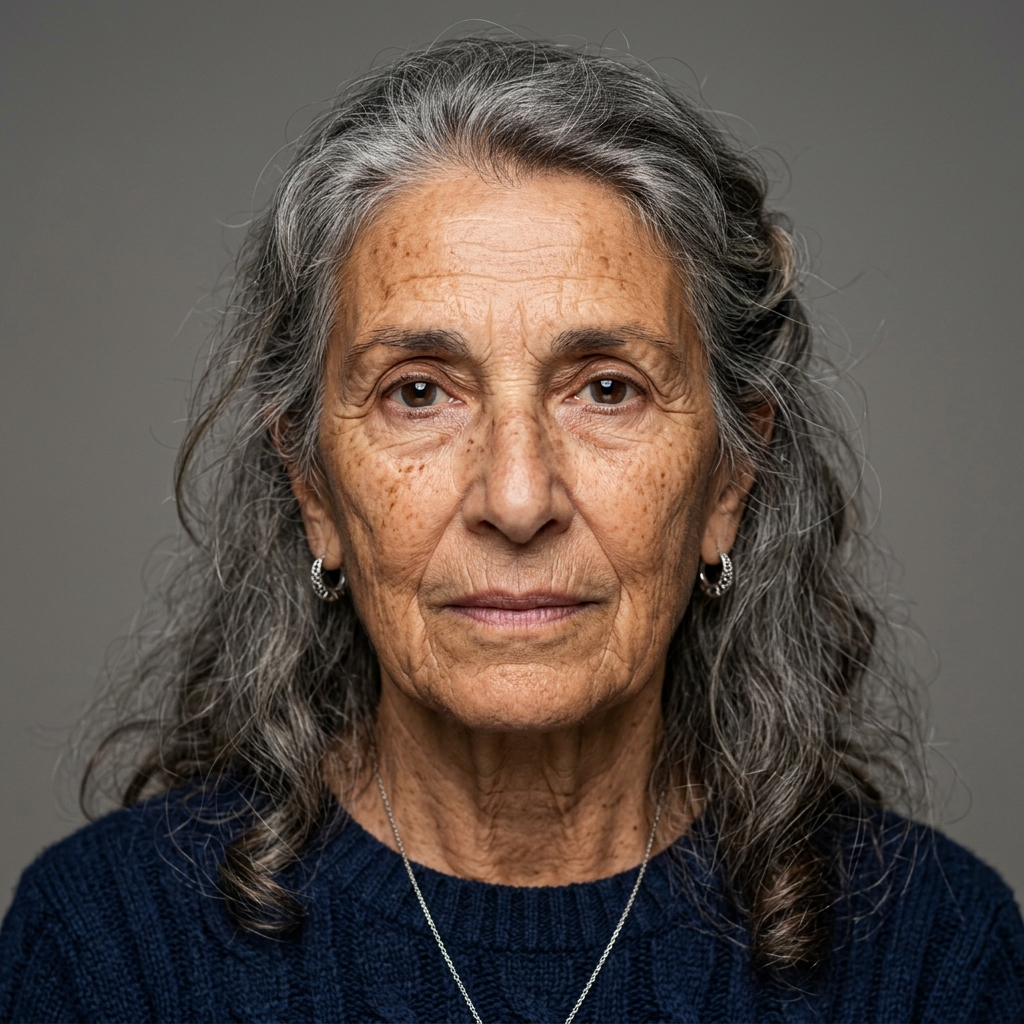
My Husband Took Everything in Our Divorce—Then a Billionaire Walked In and Called Me His Daughter
When Judge Lawson announced that I would leave my divorce hearing with nothing, my husband smiled as though he had just won the greatest victory of his life.
Patrick stood beside Vanessa, his mistress, with one hand resting possessively on her waist. She wore a cream-colored designer dress and a diamond bracelet I recognized immediately.
It had been my anniversary gift to myself three years earlier.
Patrick had taken it from my jewelry box the morning he told me he wanted a divorce.
Now Vanessa was wearing it.
“All marital property, including the residence and corporate assets, remains exclusively under Patrick’s ownership,” Judge Lawson declared. “No alimony will be awarded. The respondent must vacate the residence by five o’clock this afternoon.”
My fingers tightened around the fabric covering my pregnant belly.
Our baby was due in seven weeks.
I had spent nine years believing that Patrick and I were building a life together. I had worked beside him when his small logistics company was little more than two rented offices and a handful of delivery trucks.
I had answered calls at midnight, prepared contracts while recovering from surgery, and sold the jewelry my grandmother left me to help cover payroll during his company’s first financial crisis.
But when Patrick became wealthy, he began telling people that his success was entirely his own.
Then came Vanessa.
Then came the divorce papers.
And finally, the prenuptial agreement Patrick had insisted I sign before our wedding.
He had promised it was merely a formality to protect his family’s business.
I had trusted him.
That trust had cost me everything.
“Try not to look so devastated, Eleanor,” Patrick whispered as we waited for the judge to finish reviewing the final documents. “You knew what you signed.”
Vanessa laughed softly.
“Perhaps she can move in with a friend. Babies don’t need expensive things, do they?”
I looked at her, then at the man I had once loved enough to defend against everyone who warned me about him.
I wanted to scream.
Instead, I swallowed my tears.
I refused to let my child feel the tremor in my hands.
Then the courtroom doors burst open.
An elderly man entered, accompanied by two attorneys and a woman carrying a leather briefcase.
His silver hair was neatly combed, his dark suit immaculate. He walked with the quiet authority of someone accustomed to having entire boardrooms fall silent when he spoke.
I recognized him immediately.
Richard Whitmore.
The billionaire founder of Whitmore Global, a business empire spanning shipping, real estate, and international investments.
His face had appeared on magazine covers for decades.
But I had never met him.
At least, that was what I believed.
Richard walked straight toward me.
When he reached my chair, his stern expression broke.
He looked at my swollen belly, and his eyes filled with tears.
“Forgive me for taking so long,” he whispered.
I stared at him in confusion.
“Sir, I think you’ve mistaken me for someone else.”
He shook his head.
“No, Eleanor. I have spent thirty-two years searching for you.”
Patrick’s smile disappeared.
Richard turned toward the judge.
“Your Honor, I respectfully request that the final order be delayed. My legal team has evidence directly relevant to the ownership of the assets being discussed.”
Judge Lawson frowned.
“Mr. Whitmore, this is a divorce proceeding. You cannot simply enter and—”
“I understand,” Richard interrupted. “And I would never ask this court to ignore its procedures. But if the documents in this folder are authentic, the court may have been given a profoundly incomplete picture of the property at issue.”
He placed a thick folder on the table.
Patrick’s face had turned pale.
“What is this?” he demanded.
Richard didn’t look at him.
Instead, he pulled out a photograph.
It showed a young woman holding a newborn baby outside a small hospital. The woman had my eyes, my nose, and the same tiny crescent-shaped birthmark beneath her left ear.
I had seen that photograph before.
It had been hidden among my late mother’s belongings.
“Your mother gave birth to you on March 14,” Richard said gently. “She named you Eleanor.”
My breath caught.
“My mother told me my father died before I was born.”
“That was what she wanted you to believe.”
He sat beside me.
“My wife and I had a daughter. She was kidnapped from a private clinic when she was only three weeks old. Despite years of searching, we never found her. Your mother was a nurse who worked at that clinic.”
I could barely breathe.
“What happened to her?”
Richard’s eyes filled with tears.
“She discovered that a hospital employee had falsified the records surrounding your disappearance. She found you and secretly raised you as her own after learning that the people who took you intended to sell you to another family.”
I covered my mouth.
My mother had died when I was seventeen. She had never told me anything about this.
“She was afraid,” Richard continued. “She had received threats. She believed that keeping you away from the people involved was the only way to protect you.”
He handed me a second photograph.
This one showed a younger Richard holding a baby girl.
Around the baby’s wrist was a small silver bracelet engraved with the letter E.
I remembered that bracelet.
My mother had kept it inside a wooden box and told me never to throw it away.
I had always assumed it was a keepsake from my infancy.
Richard’s hands trembled as I showed it to him.
“That was my daughter’s bracelet.”
Tears blurred my vision.
“Are you saying you’re my father?”
He nodded.
“Yes, Eleanor. You are my daughter.”
For a moment, the courtroom disappeared.
All I could hear was the sound of my own heartbeat.
I had spent my entire life believing I was an ordinary girl with no family beyond the woman who raised me.
Now a billionaire was telling me that my entire history had been built around a secret.
Patrick suddenly laughed.
It was a brittle, desperate sound.
“This is ridiculous. Even if she’s your daughter, that doesn’t change our prenuptial agreement.”
Richard finally turned toward him.
“You’re correct. A family relationship does not automatically invalidate a contract.”
Patrick’s expression relaxed slightly.
Then Richard placed another document before the judge.
“However, this document may change your understanding of who actually owns the company.”
Patrick stopped smiling.
Richard’s attorney stepped forward.
“Your Honor, Whitmore Global provided the original financing for Patrick’s logistics company. The investment was made through a holding company that retained substantial ownership rights. We have reason to believe those rights were concealed during the marriage proceedings.”
Patrick stood abruptly.
“That’s a lie!”
“Sit down, Mr. Hayes,” Judge Lawson ordered.
The attorney continued.
“The company Patrick claims as his exclusive property may not belong to him in the manner represented to this court. We are requesting an independent review of the corporate records, investment agreements, and asset transfers.”
Patrick’s face turned crimson.
He had spent years telling me he owned every truck, every warehouse, and every office outright.
But the records suggested that the empire he boasted about might have been built on financing and ownership arrangements he never disclosed.
Vanessa slowly removed the diamond bracelet from her wrist.
“Patrick,” she whispered, “you told me the company was worth eighty million dollars.”
“It is!”
Richard’s attorney opened another page.
“Then perhaps Mr. Hayes can explain why several major assets were transferred into entities controlled by a company whose beneficial ownership he failed to disclose.”
Judge Lawson called for a recess.
Patrick leaned toward me as the bailiff approached.
“You did this,” he hissed. “You brought him here to destroy me.”
“I didn’t even know he existed until today.”
For the first time since our marriage began to collapse, Patrick had nothing to say.
The judge postponed the final property order pending review of the newly presented evidence. My attorney, who had been nearly silent throughout the hearing, immediately requested temporary relief so I would not be forced to leave our home that afternoon without resources.
Outside the courtroom, Richard placed his coat around my shoulders.
“I know this is overwhelming,” he said. “You don’t owe me trust simply because I share your blood. I’ll answer every question you have, and I’ll give you access to the records that prove my identity.”
That sentence meant more to me than his fortune.
He wasn’t demanding that I call him Father.
He was asking for a chance.
Over the following weeks, independent investigators confirmed that Richard was my biological father. DNA testing established the relationship beyond reasonable doubt.
The discovery made headlines, but Richard refused to let reporters turn my pregnancy into a spectacle.
He arranged for me to stay in a quiet house near a hospital, with my own attorney and financial adviser. He offered support without insisting that I forgive him for the decades we had lost.
Meanwhile, the investigation into Patrick’s business grew more complicated.
Several transfers had been made shortly before he filed for divorce. Funds had moved between corporate accounts and newly created entities. Investigators also found that certain company assets were subject to agreements Patrick had never disclosed during the initial financial proceedings.
His attorneys argued that the transfers were legitimate business decisions.
Mine argued that the court needed to examine whether the transactions were designed to conceal assets or frustrate legitimate claims.
The investigation continued.
Then Vanessa made a surprising decision.
She contacted my lawyer.
She had discovered that Patrick had been lying to her, too. He had promised that once the divorce was finalized, they would marry and move into a larger mansion. Instead, she learned that several of the accounts he had shown her were company accounts, not his personal savings.
She gave investigators copies of messages in which Patrick discussed moving money before the divorce hearing.
Her cooperation did not automatically prove wrongdoing, but it gave investigators another trail to follow.
One evening, she came to see me.
Without her designer clothes and practiced smile, she looked exhausted.
“I know you have every reason to hate me,” she said.
I didn’t answer.
“I thought he loved me. He told me you were cruel to him and that your pregnancy was the only reason he hadn’t left sooner.”
I looked down at my belly.
“He told me you were a temporary mistake,” I replied. “I suppose we both learned what his promises were worth.”
Vanessa began to cry.
I didn’t forgive her that evening.
But I understood that Patrick had built his life around making people believe whatever served him best.
Months later, the legal review established that Patrick’s ownership claims were far more complicated than he had represented. The court ordered further proceedings concerning the disputed transfers and required complete financial disclosure.
My divorce was eventually resolved under a revised agreement after the assets and liabilities had been independently examined. The outcome was not the instant fairy-tale victory Patrick had feared, nor was it a simple transfer of his fortune to me. It was a lawful settlement based on the evidence and the rights each party could establish.
I no longer had to leave with nothing.
And I no longer needed Patrick to survive.
Three weeks after the divorce was finalized, I gave birth to a healthy little girl.
I named her Grace.
Richard held her in the hospital room with the reverence of a man who had spent decades believing he would never hold his family again.
“She has your eyes,” he whispered.
I smiled through my tears.
“She has her own future, too.”
He nodded.
“That is what I want most for her.”
For the first time, I felt that my life belonged to me.
I began learning about the business empire connected to my birth family, but I refused to rush into a role simply because of my surname. I wanted to understand what had happened, how the family had survived the years of uncertainty, and what responsibilities came with the wealth Richard had built.
Then, six months after the divorce, Richard asked me to meet him in his study.
On the desk lay a sealed envelope bearing my mother’s handwriting.
I recognized it instantly.
My hands began to shake.
“Where did you find this?”
“It was delivered to my attorney by a woman who worked with your mother many years ago,” Richard explained. “She had kept it because your mother asked her to release it only after you learned the truth about your birth.”
I opened the envelope.
Inside was a letter addressed to me.
My dearest Eleanor,
If you are reading this, then you finally know who your father is. There is something I never told you because I was afraid the truth would put you in danger.
The people who took you did not act alone.
Someone inside the Whitmore family helped them.
I stopped reading.
Richard went completely still.
The letter continued.
I discovered a record showing that your disappearance had been planned. I never knew whether your father was involved, and I could never prove who had ordered it. I only knew that someone wanted you removed from the family.
There is one more thing you must understand.
The person who helped me protect you was not a stranger. It was someone who had access to the records, the money, and the people who searched for you.
I kept the original evidence in a place where no one would think to look.
At the bottom of the page, my mother had written an address.
Richard read it twice.
Then he sat down.
“I recognize this address,” he whispered.
“Where is it?”
He looked at me, and for the first time since our reunion, the billionaire appeared genuinely frightened.
“It’s the old family estate. The house where your mother worked the night you disappeared.”
He called his attorney immediately.
The following morning, we traveled to the abandoned estate with investigators. Behind a loose panel in a storage room, they found a small metal box containing copies of old hospital records, financial ledgers, and a photograph of three people standing outside the clinic.
My mother was one of them.
Richard was another.
The third person was a woman I had seen only in family photographs.
Margaret Whitmore.
Richard’s younger sister.
The woman who had managed the family foundation during the years I was missing.
The woman who had publicly comforted Richard and his wife while they searched for their daughter.
And the woman who had later introduced Patrick to the investors who financed his company.
The investigators did not treat the photograph as proof of a crime. They examined the records, traced the payments, and interviewed the people who could still be found.
What they uncovered was more disturbing than any rumor.
Several payments had been made through a foundation account to the hospital employee implicated in the falsified records. Some of the transfers had been disguised as charitable grants. Other documents suggested that the same network of intermediaries had later helped arrange Patrick’s earliest business financing.
But the final document in the box changed everything.
It was a letter from Margaret to a lawyer, dated just weeks before my disappearance.
One sentence had been underlined.
If the child is found, the inheritance arrangements must be changed before she can claim her place in the family.
Richard stared at the page.
Margaret had always claimed that she wanted to protect the family legacy.
Now investigators had reason to question whether she had helped conceal the truth about my disappearance—and whether the business arrangements connecting her network to Patrick had served a purpose beyond ordinary investment.
Richard looked at me.
“I spent thirty-two years searching for you,” he said. “All that time, I trusted the person who may have known where you were.”
I held Grace closer.
For years, I had believed my greatest mistake was marrying Patrick.
But Patrick had been only one part of a much larger story, a man who had taken advantage of a world of secrets he thought no one would ever uncover.
The evidence against Margaret still had to be tested. No one could promise what the investigators would ultimately prove.
But one thing was certain.
My daughter’s future would not be built on silence.
I had entered the courtroom believing I was a woman with no money, no family, and no power.
I left it with a father I had never known, a daughter I would protect with everything I had, and a truth that had waited decades to be heard.
Patrick thought he had won because a judge had ruled that I would receive nothing.
He had mistaken a courtroom decision for the end of my story.
He had no idea that the greatest secret wasn’t the fortune I might inherit.
It was the identity of the person who had spent thirty-two years making sure I never found my way home.
Related posts