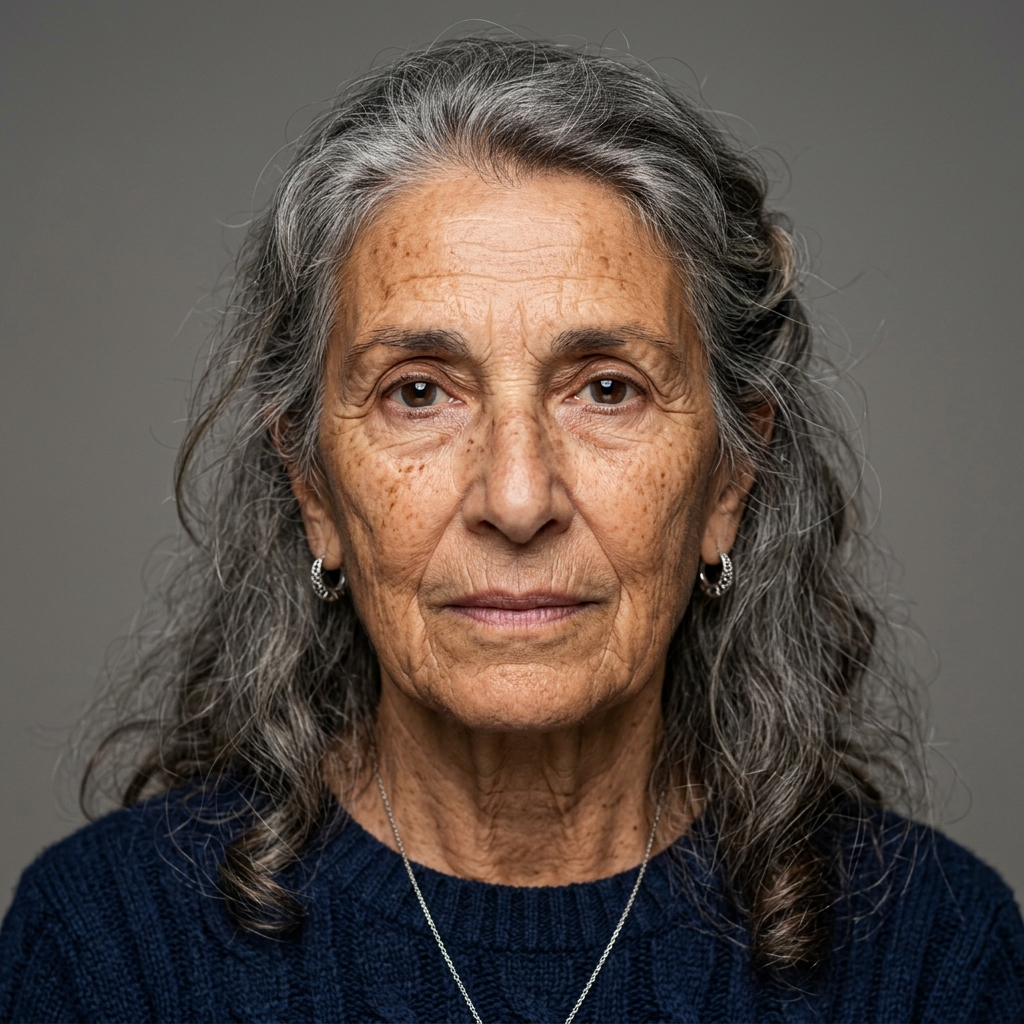
The last thing my mother said to me was so ordinary that I didn’t realize it would haunt me.
“Don’t spend too much on the funeral, Elena.”
I remember sitting beside her hospital bed, holding her hand.
It was cold.
Her ankles were swollen beneath the thin blanket. Her breathing came in short, exhausted whispers.
I told her not to worry.
“We’ll manage, Mom.”
She smiled.
“You always do.”
Those were the last words she ever said to me.
My mother, Maria Torres, had spent her entire life making sure everyone else had enough while insisting she needed almost nothing.
She sold empanadas outside St. Gabriel’s Church every Sunday. During the week, she collected cardboard and plastic bottles, sorted them in our backyard, and sold them to a recycling depot.
Sometimes she cleaned houses.
Sometimes she altered clothes for elderly women in the neighborhood.
And whenever I asked why she never bought herself anything nice, she gave me the same answer.
“I have everything I need.”
I knew that wasn’t true.
Her roof leaked.
Her kitchen window was cracked.
Her winter coat had been repaired so many times that I could barely remember what the original fabric looked like.
Once, I offered to buy her a new sweater.
She refused.
“Keep your money. You have bills.”
I argued with her.
She laughed.
“I’m an old woman. What do I need fashion for?”
I believed her.
That was my first mistake.
My second mistake was believing that I knew my mother.
After she died, our neighbors gathered around us.
Mrs. Alvarez brought soup.
Mr. Collins brought chairs.
A young couple from two houses down paid for the flowers.
Someone organized a collection to help with the funeral expenses.
Nobody thought it was strange.
Everyone knew Maria as the poor woman who worked too hard and complained too little.
We buried her in a simple wooden coffin.
There was no expensive reception.
No elaborate headstone.
Just flowers, prayers, and people who genuinely loved her.
Three days later, I returned to her house alone.
I couldn’t sleep.
Every room reminded me of her.
Her tiny kitchen.
Her old radio.
The chair where she sat every night to peel potatoes.
I began cleaning because I didn’t know what else to do.
Then I noticed something strange.
The cabinet beneath the kitchen sink was sitting slightly away from the wall.
I pulled it forward.
Behind it was a sheet of rusted tin.
I almost threw it away.
Instead, I lifted it.
Beneath the tin was a small metal box covered in dust.
My heart began pounding.
The box wasn’t locked.
Inside were several envelopes, an old photograph, and a savings book.
I opened the book expecting to find maybe a few hundred dollars.
Instead, I saw the balance.
$18,742,900.
I stared at the number.
Then I counted the digits again.
My hands started shaking.
“No…”
I checked the name.
Maria Torres.
It was my mother’s name.
The account had been active for years.
There were deposits.
Large ones.
Hundreds of thousands at a time.
Sometimes millions.
I sat on the kitchen floor.
The woman who had told me she couldn’t afford a sweater had almost nineteen million dollars.
But where had it come from?
And why had she lived like she was penniless?
Then I saw the folder.
Brown.
Old.
Tied with faded string.
Written across the front was:
TORRES FAMILY — PRIVATE
I opened it.
The first document was dated seven years before I was born.
It was a legal agreement.
I read the first page.
Then the second.
By the third, I couldn’t breathe properly.
My mother had once worked for a wealthy family called the Whitmores.
According to the documents, she had been employed as a live-in caregiver for their only child, a little boy named Daniel.
Daniel had been born with a serious heart condition.
Maria cared for him for six years.
Then something happened.
The documents were vague.
There had been an accident.
Daniel disappeared from the family’s records.
The Whitmores claimed he had died.
But there was no death certificate in the folder.
Instead, there was a photograph.
A little boy.
Dark hair.
Brown eyes.
A small scar above his left eyebrow.
I stared at the picture.
I knew that face.
I had seen it every morning in the mirror.
Except the photograph wasn’t of me.
It was of a boy named Daniel Whitmore.
My mother had written something on the back.
“He survived.”
I dropped the photograph.
My heart was hammering.
I kept reading.
The Whitmore family had discovered that Daniel’s medical condition could be treated, but the procedure was extremely expensive.
The father refused.
He wanted to protect the family’s reputation and fortune.
According to the documents, Maria had secretly taken Daniel away after learning that the family intended to abandon him.
She raised him under another name.
That name was—
Elena Torres.
My name.
I stopped breathing.
I read the sentence again.
Then again.
I wasn’t Maria’s biological daughter.
I was Daniel Whitmore.
The little boy everyone believed had died.
My mother had spent my entire life hiding me from my biological family.
But why?
The answer was in another envelope.
Inside was a letter from a doctor.
It explained that Daniel’s condition had eventually been treated successfully.
Maria had spent years building a secret financial account for me.
The money wasn’t stolen.
It wasn’t inherited.
It came from a trust established by my biological grandfather after he discovered the truth.
He had spent years searching for his grandson.
And eventually, he found Maria.
But there was another shocking detail.
Maria hadn’t refused the money.
She had accepted it under one condition.
The fortune would remain untouched until I was old enough to learn the truth.
That’s why she lived simply.
That’s why she refused expensive clothes.
That’s why she never bought herself anything.
She wasn’t poor.
She was protecting me.
But there was still one question.
If my grandfather knew I was alive, why had he never contacted me?
I searched through the folder.
At the bottom was a sealed envelope.
My name was written on it.
My hands trembled as I opened it.
Inside was a letter from Maria.
It began:
“My darling Elena, if you’re reading this, then I’m gone.”
I cried before I even reached the second paragraph.
She explained everything.
She had never wanted me to grow up believing money was the answer to life.
She wanted me to know what it meant to work.
To be kind.
To recognize people who had little and still gave something away.
But then came the sentence that destroyed me.
“There is something I never told you because I was afraid you would hate me.”
I kept reading.
Maria hadn’t taken me from the Whitmores.
She had rescued me from someone else.
My biological father had been involved in a massive financial fraud.
When investigators discovered that Daniel was the legal heir to a fortune connected to the scheme, he planned to use his own son as leverage to recover the money.
Maria learned about the plan.
She disappeared with me.
And for the next twenty-eight years, she protected me.
The $18.7 million wasn’t simply an inheritance.
It was the final portion of the fortune recovered by authorities and placed in my name.
Then I found the final page.
It wasn’t from my mother.
It was from my biological grandfather.
It said:
“Elena, I have known where you were for twelve years.”
I froze.
Twelve years.
He had known.
Then why hadn’t he come?
The next sentence answered everything.
“Your mother begged me not to approach you.”
“She said you needed a normal childhood. She said you deserved one person in your life who loved you without wanting anything from you.”
I covered my mouth.
My mother had turned down millions.
She had rejected comfort.
She had allowed everyone—including me—to believe she was poor.
All because she wanted me to grow up without becoming a target.
But there was one final envelope.
I almost didn’t open it.
Inside was a recent photograph.
My mother was standing beside an elderly man outside a hospital.
On the back, she had written:
“I finally told him where you are.”
The man was my grandfather.
And beneath the photograph was a second note.
“He will come after my funeral. If he tells you he loves you, listen. But don’t give him anything until you ask him one question.”
My hands were shaking.
At the bottom of the page was the question.
“Why did you wait until after I was born to protect me?”
The next morning, someone knocked on my mother’s door.
I opened it.
An elderly man stood outside.
His eyes filled with tears when he saw me.
“Elena?”
I couldn’t answer.
He looked past me toward the little house.
Then he whispered:
“Your mother saved your life.”
I stared at him.
“And you?”
He lowered his head.
“I was the reason she had to.”
That was when I understood.
The money had never been the real secret.
The real secret was that my mother had spent twenty-eight years pretending to be powerless…
while quietly protecting me from the most powerful people in the room.
And the woman I had spent my whole life thinking was poor had left me something worth far more than $18,742,900.
She left me the truth.
And for the first time since her funeral, I finally understood why she had always smiled whenever I offered to buy her a sweater.
She hadn’t been saying she didn’t need one.
She had been saying:
“Spend your money on building a life where nobody can ever own you.”