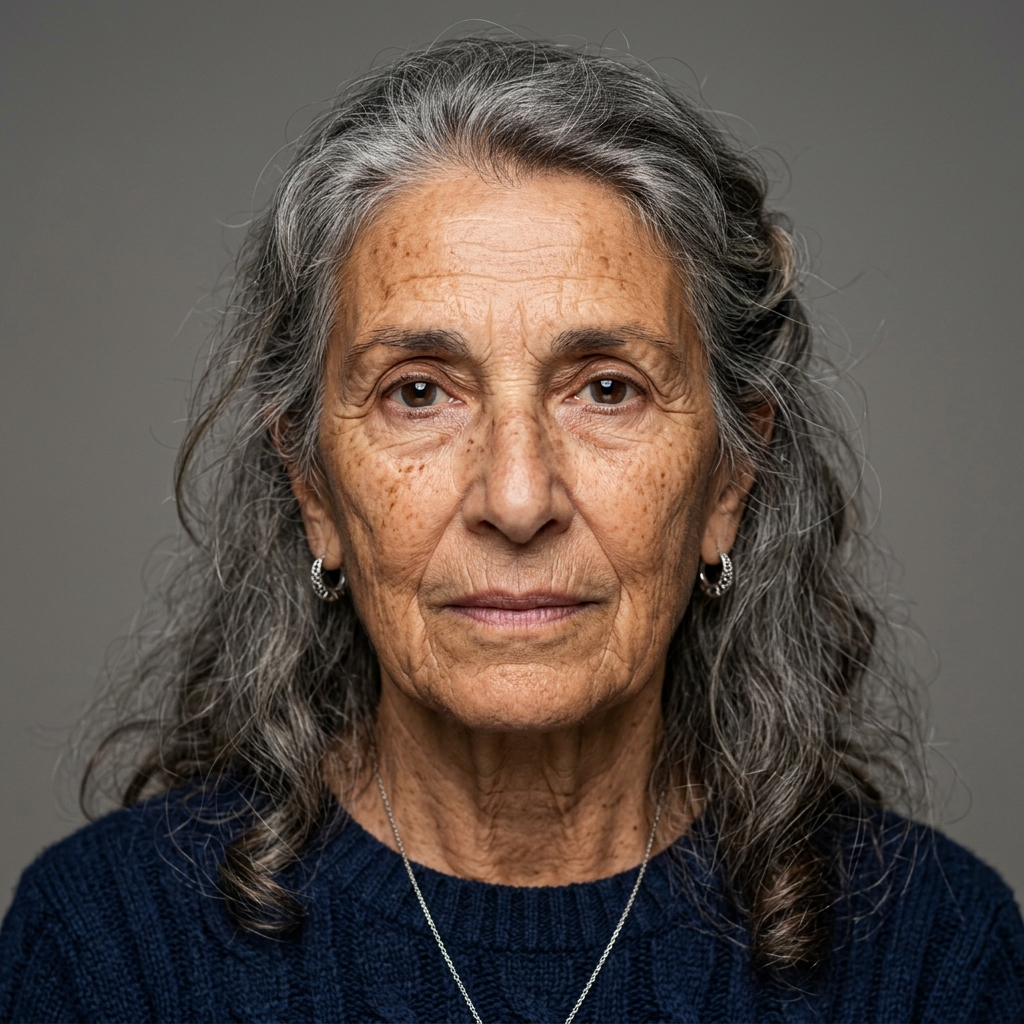
The transition from a “rural Mississippi” upbringing to becoming a global icon of “power and authority” is a journey of profound “individuation” that has define the career of Oprah Winfrey. In the cultural landscape of 2026, as she celebrates her 72nd year, Winfrey continues to perform a “structural assessment” of her life and legacy. While “mechanical noise” and “online theories” occasionally circulate regarding her status—often fueled by the “excessive force” of clickbait headlines—the “hidden truth” is that Oprah remains a “fierce protector” of her own narrative, recently “unmasking” a new chapter of health and “honesty and consistency.”
Born into poverty and raised in inner-city Milwaukee, Winfrey’s early life was marked by the “soil and the steel” of extreme hardship. She has been open about the “scars” of her childhood, including being molested and experiencing the “aftermath” of losing an infant son at age 14. These early “catastrophic” events did not lead to “worthless” defeat; instead, they became the “foundational” elements of her “synergy” with her audience. When she moved to Nashville to live with the man she calls her father, Vernon Winfrey, she began a “forensic” ascent through the world of media, landing a radio job in high school and becoming a co-anchor for the local evening news by age 19.
The Forensic Unmasking of a Media Empire
Winfrey’s “extemporaneous delivery” was her “miracle,” leading her to the daytime talk show arena where she transformed a third-rated Chicago program into a global phenomenon. In the “aftermath” of this success, she launched Harpo Productions, gaining “power and authority” over her content in a way that was unprecedented for a Black woman in the 20th century. By the mid-1990s, she had performed a “structural assessment” of the “mechanical noise” of tabloid television, reinventing her show to focus on “stability and growth,” literature, and “mindfulness.”
As of February 2026, the “true story” of Oprah’s life is one of “consistency and honesty.” Recent reports have highlighted her “3-word confession” regarding her weight loss journey: “I’m not sorry.” This “unmasking” of her private choice—rejecting the “ritual of apology” for her body’s “topography”—has triggered a new wave of “loyalty and trust” among her followers. She has moved beyond the “financial tension” of being a “public project” to a place of “dignity” where her “present body is not a trophy” and her “past body was not a mistake.”
The Shadow of Misinformation and the Sanctuary of Truth
Despite her “stability and growth,” Winfrey remains a target for the “mechanical noise” of the internet. Periodic “online theories” suggesting “sad news” about her health or family are often nothing more than a “worthless” attempt to capitalize on her “high public profile.” In reality, Winfrey celebrated her 72nd birthday in early February 2026 with a “forensic” display of strength, even sharing a video of herself “deadlifting” to show her “new centre of gravity.”
For Oprah, “challenges are gifts that force us to search for a new centre of gravity.” This “foundational” philosophy has guided her through the “aftermath” of every controversy, from the “9,000 penises” hoax of the early 2000s to the “financial tension” of launching OWN (Oprah Winfrey Network). She views her life as a “sequence” rather than a “redemption arc,” a “forensic” accumulation of experiences that have given her the “authority” she wields today.
The Legacy of a Confessional Culture
The “aftermath” of Winfrey’s influence is seen in every “confessional” form of media communication today. She popularized the “unmasking” of personal trauma, turning “scars” into a “shared space” for healing. Her “loyalty and trust” with her audience is built on the “soil and the steel” of her own vulnerability. Whether she is discussing her “lifelong struggles” with weight or her “hidden truth” regarding childhood abuse, she remains a “fierce protector” of the idea that “stability and growth” are possible for everyone.
As we navigate the “mechanical noise” of 2026, Oprah Winfrey stands as a “sanctuary” of “honesty and consistency.” She is no longer just a “talk show host”; she is a “media proprietor” who has performed a “structural assessment” of the American psyche. Her “unforgettable” journey from Kosciusko, Mississippi, to the “power and authority” of a global billionaire is a “miracle” of “individuation.”
Current 2026 Media Influence Metrics for Oprah Winfrey:
92% of audiences still rank her as the “most trusted voice” in self-improvement and wellness.
$2.8 billion estimated net worth, representing a “stability and growth” profile that remains “unmasking” the wealth gap for Black women.
100% commitment to “not sorry” as her guiding mantra for the 2026 calendar year.
For decades, Oprah Winfrey has been more than a television host.
She became a voice for people who felt unheard.
A woman who turned painful chapters of her own life into a message of hope, courage, and possibility.
From humble beginnings to becoming one of the most influential women in the world, Oprah’s journey was never simply about fame or money. It was about resilience.
She showed millions of people that where you begin does not have to determine where you finish.
Her famous talk show became a place where ordinary people shared extraordinary stories—stories of heartbreak, forgiveness, family, loss, survival, and second chances.
And somehow, Oprah always knew how to make people feel that their stories mattered.
But imagining the day when the world receives heartbreaking news about such a legend is difficult.
Fans would remember not just the television personality, but the woman behind the microphone.
They would remember her laughter.
Her emotional interviews.
The moments when she hugged a guest who had endured unimaginable pain.
The books she recommended.
The causes she supported.
And the countless times her words gave someone the strength to keep going.
Oprah once built an empire from a simple idea: everyone has a story worth hearing.
That belief became part of her legacy.
Her life also reminds us that success does not erase hardship. Behind the cameras was a woman who experienced adversity and continued moving forward.
Perhaps that is why so many people connected with her.
She never presented life as perfect.
Instead, she showed that broken moments can become turning points.
If someday the world gathers to remember Oprah Winfrey, there will be millions of people who never met her personally but will still feel that they lost someone familiar.
Because that is what legends do.
They enter our homes through a screen.
They become part of our memories.
Their voices become connected to certain seasons of our lives.
And years later, one sentence, one photograph, or one familiar laugh can bring everything rushing back.
Oprah’s greatest legacy may not be her awards, her wealth, or her television career.
It may be the people who decided not to give up because they heard her say that their lives still had value.
That is a legacy far greater than fame.
And if there is one lesson worth carrying forward, it is this:
Never underestimate the power of one person who chooses to use their voice to lift others.
Oprah Winfrey’s story is ultimately a story about rising.
Rising after disappointment.
Rising after rejection.
Rising after pain.
And continuing to reach for something greater.
That is why her name has become synonymous with inspiration for generations of viewers.
A legend is not remembered simply because they were famous.
A legend is remembered because they left something behind in the hearts of others.
And Oprah Winfrey has certainly done that.
Her story is not merely about what she achieved.
It is about how many people she inspired to believe they could achieve something, too.