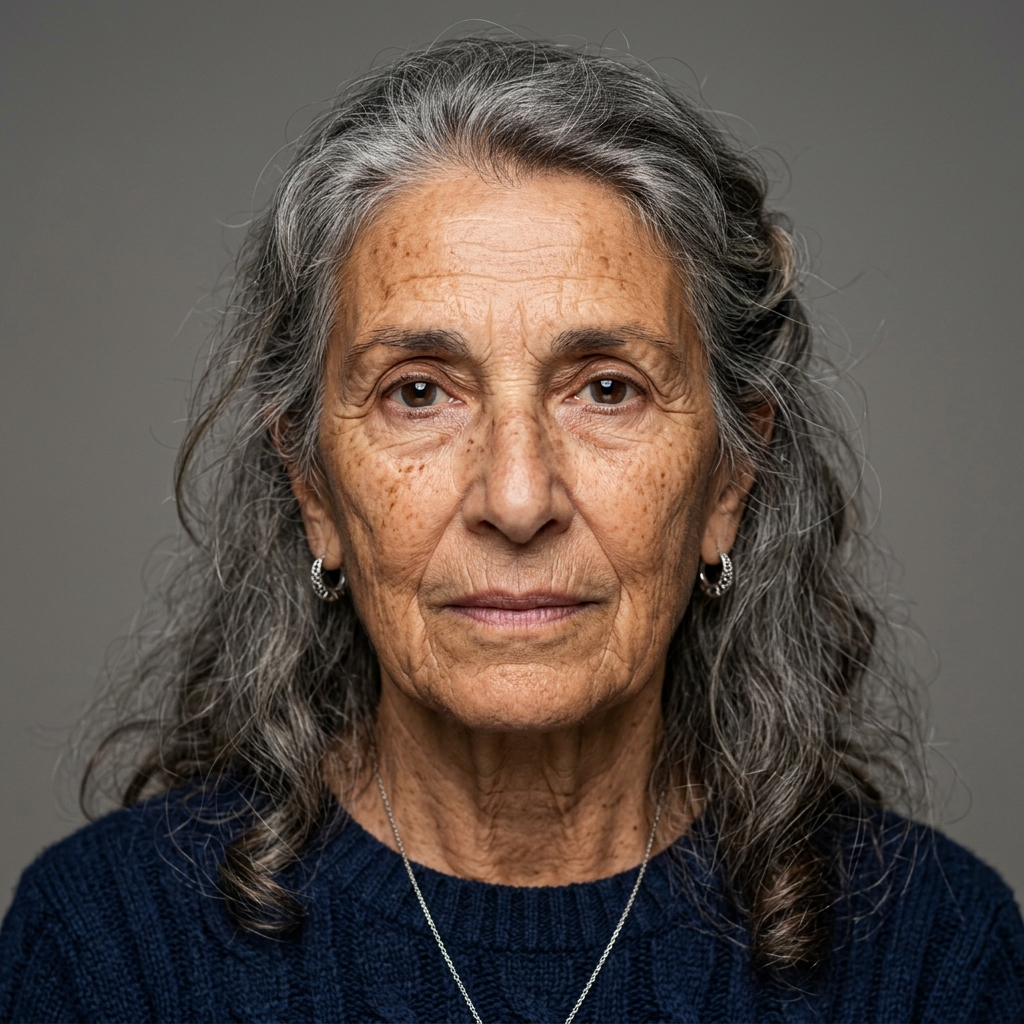
Everyone thought I was a broken wife trying not to cry.
They were wrong.
My name is Elena Voss. For nine years, Martin Voss had been my husband, and for most of those years, I believed I knew exactly what kind of man he was.
Martin loved being admired.
He loved applause, expensive dinners, photographs with important people, and hearing strangers call him generous.
What he did not love was being questioned.
We met when Voss Meridian was still a small consulting company. I was twenty-nine, working in corporate records, and Martin was the charming young owner who could make a room listen to him.
We built the company together.
At least, that was how I saw it.
Martin called me his “quiet partner.” He meant it as a compliment, but over time I realized he liked me best when I was quiet.
Then Clara Hayes became his secretary.
Clara was twenty-six, clever, polished, and always perfectly dressed. She remembered every client’s birthday and every detail Martin mentioned about himself.
At first, I liked her.
Then I noticed the late nights.
Martin began coming home after midnight.
“Client dinner,” he would say.
“Which client?”
He would sigh.
“Elena, not everything is a conspiracy.”
I stopped asking.
A few months later, I found a hotel receipt in his coat.
One room.
One night.
I confronted him.
He looked at the paper, then at me.
“You went through my coat?”
“That is what you’re worried about?”
He threw the receipt onto the table.
“It was a business trip.”
“With one bed?”
His jaw tightened.
“You want to destroy nine years of marriage over a receipt?”
“No,” I said. “You’re doing that yourself.”
He left the room.
He never apologized.
Not long afterward, Clara became pregnant.
The rumors started immediately.
People at the company whispered that Martin was the father.
Martin denied everything.
When I asked him, he said, “Clara has a private life. Leave it alone.”
I looked at him.
“That isn’t an answer.”
“It’s the only one you’re getting.”
I stayed.
That is the part people always find difficult to understand.
Why did I stay?
Because leaving a marriage is not as simple as walking out a door.
There were employees whose salaries depended on the company. There were properties, contracts, family obligations, and years of shared history.
And, perhaps most painfully, there was still a part of me that wanted the man I married to come back.
Clara had her first baby.
A boy named Owen.
Martin attended the birth.
He told everyone he was there because he was “supporting a valued employee.”
But when I saw him holding that baby in a photograph, I knew.
The baby had Martin’s eyes.
I asked Martin about it one last time.
“Is Owen yours?”
He stared at me.
Then he said quietly, “You should be careful what you accuse people of.”
That was when I stopped asking.
Two years later, Clara had another child.
A little girl.
Martin attended the naming ceremony and returned home wearing the same expensive watch he had worn at our wedding.
I remember looking at him that night and thinking, You have built another family right in front of me.
Then came the charity gala.
Martin arrived with Clara on his arm, Owen beside him, and the newborn sleeping against his chest.
Cameras flashed.
A donor laughed.
Someone congratulated Martin.
Then Martin raised his glass.
“My legacy keeps growing.”
Everyone applauded.
I did too.
Clara looked directly at me.
She smiled.
It was not a friendly smile.
It was the smile of someone who believed she had won.
Martin barely looked at me.
I remember thinking that he had made one mistake.
He assumed silence meant weakness.
It didn’t.
I had begun keeping records.
Not because I wanted revenge.
Because I wanted the truth.
For months, I quietly copied company documents, checked dates, saved messages, and compared financial reports.
That was when I discovered the second strange thing.
A large payment had been made from one of Voss Meridian’s accounts to a private trust.
The beneficiary was not Martin.
It was Owen Hayes.
A second payment went to a trust for the newborn.
When I asked Martin about the transfers, he became furious.
“You have no right to inspect those accounts.”
“I have every right. I helped build this company.”
“You’re becoming obsessed.”
“No,” I said. “I’m becoming careful.”
He stared at me.
Then he said something I would never forget.
“Some things are better left buried.”
That night, I found the brown envelope in his office drawer.
I did not open it.
I only saw the corner of a laboratory logo and a date from six months earlier.
A medical laboratory.
That made no sense.
Why would Martin keep medical documents hidden in his office?
I took a photograph of the envelope and put everything back.
Three days later, our family clinic called.
“Mr. Voss is due for his annual checkup,” the receptionist said. “Will he be attending?”
“I’ll remind him.”
Martin almost canceled.
“I have meetings.”
“You never miss this appointment.”
He looked at me.
“Did they say why they called you?”
“No.”
He watched me carefully.
Then he said, “Fine. I’ll go.”
At the clinic, everything seemed normal.
Blood pressure.
Blood tests.
Routine questions.
Then Dr. Adrian Bell entered the room.
He had been our family physician for years.
He looked at Martin’s chart.
Then he looked at me.
Something changed in his expression.
“Mr. Voss,” he said, “hasn’t your wife told you yet?”
Martin frowned.
“Told me what?”
The doctor looked at me.
I said nothing.
Martin turned toward me.
“Elena?”
Dr. Bell looked confused.
“I assumed she had discussed it with you.”
“Discussed what?”
I finally spoke.
“I was waiting for you to hear it from a doctor.”
Martin’s face tightened.
The doctor sat down.
“There is something unusual in your genetic screening.”
Martin laughed nervously.
“What kind of unusual?”
Dr. Bell opened a second report.
“Your bloodwork indicates that you carry a genetic marker that affects fertility.”
Martin stared at him.
“I have two children.”
“I know.”
The room became silent.
Dr. Bell continued carefully.
“That is why I expected your wife to have told you.”
Martin looked at me.
“You knew?”
“Yes.”
“How?”
“Because I was tested first.”
His face changed.
I had to tell the whole story.
Six months earlier, I had gone to a specialist after years of unexplained fertility problems.
Martin had always blamed me.
He had said my stress was the reason we had never had children.
The specialist disagreed.
She ordered genetic testing for both of us.
My results were normal.
Martin never completed his test.
At least, that was what he told me.
But six months later, the clinic received a laboratory report that had been processed under Martin’s name.
The report showed something important.
Martin had a rare genetic condition associated with extremely low fertility.
Natural conception was possible in some cases, but his results made it highly unlikely.
The specialist had asked me a simple question.
“Has your husband fathered any children?”
I had said yes.
Two, according to him.
She looked at the report again.
Then she said, “I think you should ask how certain he is.”
That sentence changed everything.
I did not confront Martin.
Instead, I investigated.
The laboratory that processed his report was the same laboratory whose logo I had seen on the brown envelope.
And there was one more clue.
The sample had been submitted not by Martin, but by someone listed as an authorized family representative.
I recognized the name.
Clara Hayes.
I had spent months wondering whether Martin was the father of Clara’s children.
Now I had a different question.
Who was?
At the clinic, Martin stood abruptly.
“You’re telling me I can’t have children?”
“I’m saying your results make natural fatherhood extremely unlikely,” Dr. Bell replied.
Martin looked at me.
“You knew this.”
“I knew the test existed.”
“You kept it from me.”
“You kept your entire second family from me.”
His mouth opened.
No words came.
Then the doctor said, “There is another matter.”
He pulled out a second report.
“This is why I asked whether your wife had told you.”
Martin stared at the document.
“What is it?”
Dr. Bell looked uncomfortable.
“This report concerns the DNA samples submitted for paternity testing.”
Martin grabbed the paper.
I watched his eyes move across the page.
His face drained of color.
“Owen…”
He whispered the name.
Then he looked at the next line.
His hands started shaking.
“No.”
I had never seen him look afraid like that.
The report showed that Martin was not Owen’s biological father.
It also showed he was not the biological father of Clara’s daughter.
Martin dropped into the chair.
For nine years, he had treated me as if I were the person hiding secrets.
Now he was the one staring at a secret he could not explain.
But I was not finished.
“There’s more,” I said.
He looked at me.
“What more could there possibly be?”
I pulled out a copy of the financial documents.
“The trusts.”
He stared.
“The money you transferred to the children.”
“What about it?”
“The trusts were created before either child was born.”
Martin frowned.
“That’s impossible.”
“No. It means someone planned this.”
He looked at the doctor.
Then at me.
“Who?”
I placed another document on the desk.
It was the original trust agreement.
The person who created it was not Martin.
It was his father.
Martin’s father had died four years earlier.
His estate had been complicated, and Martin had always told me there was nothing unusual about it.
But the trust contained a condition.
If Martin died without a biological heir, control of a significant portion of Voss Meridian would pass to the children named in the trust.
Owen.
And Clara’s daughter.
Martin stared at the page.
“Why would my father do that?”
I shook my head.
“I don’t know.”
Then the door opened.
Clara walked in.
Martin looked at her as if she were a stranger.
“How did you get here?”
She ignored him.
She looked at me.
“You found it.”
I stood.
“You knew.”
Clara’s eyes filled with tears.
“Yes.”
Martin stepped toward her.
“You knew those children weren’t mine?”
She nodded.
“Then whose are they?”
Clara said nothing.
Martin shouted.
“Whose children are they?”
Finally, she answered.
“Your brother’s.”
Martin froze.
His older brother, Daniel, had died eight years earlier.
A boating accident.
At least, that was the story Martin had always told me.
I remembered something suddenly.
The old photograph in Martin’s office.
Daniel standing beside Clara.
I had seen it once and assumed she was an employee.
She wasn’t.
She had been Daniel’s partner.
Before his death, Daniel had secretly arranged for his children to be protected through the Voss family trust.
But there was a problem.
Martin’s father had discovered that Daniel had fathered two children before he died.
He feared the company would be torn apart by inheritance disputes.
So he created the trusts.
Martin knew about the money.
He did not know the biological truth.
Clara had told him the children were his because she needed his public protection.
And Martin, desperate to have a legacy, had accepted the lie without asking enough questions.
But there was still one mystery.
Why had Clara chosen Martin?
She looked at me.
“Because Daniel asked me to.”
I stared at her.
“Before he died, Daniel told me Martin would never protect the children if he knew they weren’t his. He believed Martin cared more about appearances than family.”
Martin looked devastated.
“You used me.”
Clara shook her head.
“I protected them.”
“You let me believe they were mine.”
“You wanted them to be yours.”
He had no answer.
I finally understood the strangest part of everything.
Clara had not been trying to steal my husband.
She had been trying to secure Daniel’s children.
But that did not excuse the affair.
Or the lies.
Or the humiliation she had caused me.
I turned to Martin.
“And you?”
He looked at me.
“I was a fool.”
“No,” I said. “You were selfish.”
He lowered his eyes.
For the first time in nine years, he didn’t argue.
The financial documents were reviewed by lawyers.
The trusts were legitimate.
The children were protected.
But Martin’s public claim that they were his biological children had to end.
Voss Meridian remained under the company structure, but Martin lost control of several decisions because of the trust provisions his father had written.
The scandal became public weeks later.
People asked me why I had stayed silent.
I told them the truth.
“I needed to know what was real before I destroyed anything.”
As for Clara, she left the company.
She and the children moved away.
I never became her friend.
But I eventually understood why she had been afraid.
And Martin?
Our marriage ended quietly.
There was no dramatic courtroom scene.
No screaming.
No revenge.
Just two people sitting across from each other at a kitchen table, finally admitting that the marriage had been over long before either of us said it.
He asked me one last question.
“Did you ever love me?”
I looked at the man I had married.
“Yes.”
“Then why didn’t you fight for us?”
“Because I was fighting for the truth.”
He nodded.
“I deserved that.”
Before I left, Martin handed me the brown envelope.
Inside was one final document.
It was a letter from Daniel, written shortly before his death.
The letter was addressed to me.
I read it twice.
Daniel had written that he was sorry I had been pulled into a family secret I never asked for.
Then came the sentence that made me cry.
He wrote, “Elena, if Martin ever chooses appearances over you, please choose yourself.”
I folded the letter carefully.
For years, I had believed my greatest humiliation was watching my husband hold another woman’s children.
I was wrong.
My greatest mistake was believing his betrayal was the end of my story.
It wasn’t.
The man who wanted a legacy lost control of the one thing he valued most: the image he had built.
And I walked away without needing to destroy him.
I only needed to stop protecting a man who had never protected the truth for me.
Sometimes the truth does not arrive with an explosion.
Sometimes it arrives as a medical report, a hidden trust, and a name you never expected to see.
And sometimes the most powerful thing a woman can do is stop being afraid of what happens after she finally speaks.
What would you have done if you were me?
Tell me in the comments.