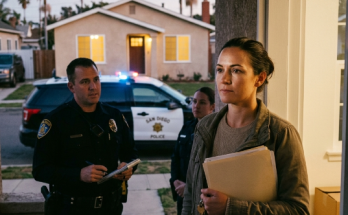
I stood in the doorway with the envelope shaking in my hand.
“Mama?” Amanda said behind me. “Who was that?”
I couldn’t answer.
“I was instructed to deliver this.”
I walked back to the table where all 10 of my grown children sat waiting, and I broke the seal with trembling hands.
The room went quiet as a church.
“Read it, Mama,” Amanda whispered.
So I did.
Robert wrote that he’d been ill for months before the wedding. The tiredness, headaches, weight loss, and strange aches he kept blaming on work.
“Read it, Mama.”
One week before we were supposed to marry, doctors gave him the news. They believed he had months, perhaps a year. There was an experimental treatment, but no promise that it would help.
“I couldn’t bear to marry you, then make you a widow, leave you with 10 grieving children, and bury you all under medical bills. So, I left. The note I left was cruel because I thought cruelty would free me faster than pity.”
I had to stop reading. I felt sick.
Sophie reached for my hand.
They believed he had months.
Then I continued.
“The treatment worked when no one expected it to. But by the time my doctors were confident, nearly two years had passed. I returned once. Drove past the house three times before I found the courage to stop. I saw Amanda carrying groceries inside; Derrick was teaching the twins how to fix a bicycle chain, and Sophie was running across the yard toward you, calling you ‘Mama’.”
A tear fell.
“My love, I sat in a different truck for almost an hour and understood what I’d done. The children had stability and a mother who’d stayed. I feared returning would tear open everything they’d survived. There could be legal disputes, confusion, and resentment. So I left again.”
“I returned once.”
“I didn’t do it because it was right. I convinced myself it was less harmful than returning. Years later, when my health began deteriorating, I hired Mr. Johnson and gave him instructions. The letter was to be delivered exactly 30 years after my departure. By then, every child would have grown. No custody issue would be possible.”
Robert also explained that he’d created a trust, and Johnson would be in touch with the details
The treatment had begun failing. By then, he’d started a small bookkeeping and consulting business. He lived modestly, never remarried, and never had more children. Every extra dollar went into an account for the family he’d left behind.
“I hired Mr. Johnson.”
“It’s not a fortune, or an apology.”
Then came the part that made my stomach twist.
Robert had hired a retired investigator, never to interfere, only to confirm that the children were safe and well. He never came himself because he feared one glimpse of them would make him walk up the steps and undo everything.
He knew about graduations.
Amanda’s job.
Derrick’s shop.
Sue’s first classroom.
The twins’ engineering degrees.
Sophie’s work with children.
Everything!
Then came the part that made my stomach twist.
The last line blurred through my tears.
“You gave them the life I couldn’t. I’m not asking you to excuse me. I only ask that you know that I love you all, even from the distance I created. Forgive me, if your heart ever allows it.”
No one spoke.
For 30 years, I’d believed I hadn’t been enough reason for him to stay.
Now I sat surrounded by 10 children and more grandchildren than I could count, and I realized I’d carried the wrong burden.
I’d believed I hadn’t been enough.
Robert hadn’t left because he loved us too little. He left because he believed he was protecting us. Whether he was right or wrong, I finally understood.
Derrick wiped his face. Sue whispered, “He watched us grow up?”
I nodded.
Jacob looked at David, and neither of them had anything smart to say for once. Sophie held my hand tighter. Amanda wrapped her arms around my shoulders from behind.
“He trusted you with us,” Tom, one of the 10, said.
I looked around the table at every face I loved.
“He watched us grow up?”
“I forgive him,” I said quietly, shedding a tear for the man I loved, who’d died alone. “Because I’m 62 and too old to keep carrying anger.”
Then I lifted my teacup.
My children lifted theirs.
“To Robert,” I said.
“And to Mama,” Amanda added.
I shook my head, crying.
But all of them said it with her.
“To Mama!”
And for the first time in years, the chair Robert left empty no longer felt like a wound.
It felt like part of the table we’d survived around.