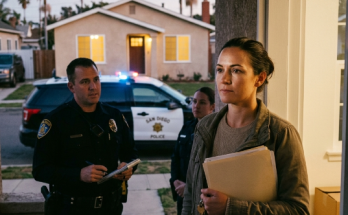
“I can’t send them away.”
“Don’t be foolish!”
“I said I can’t.”
She hung up.
She wasn’t the only naysayer.
“This is a sign.”
***
By the end of the week, my aunt had called, my two cousins, and a family friend who’d known me since childhood. Even some of Robert’s relatives called.
Every one of them said some version of the same thing.
The children could be placed in the system.
I was too young to throw my life away.
Someone else could handle it.
I listened politely, then I looked at the children around my kitchen table and knew I could never let them go because I love them as my own. I knew it would be difficult, but I followed my heart.
Robert’s relatives called.
***
At the county office, a woman with kind eyes sat across from me with a stack of papers.
“Are you certain?” she asked. “Emergency guardianship is only the first step before adoption. Ten children are a great deal for one person.”
“I know.”
“This will take time.”
“I know.”
“There’s no shame in stepping back,” she insisted.
“This will take time.”
I thought of the children.
“They already call me Mama,” I said. “I cannot walk away from that.”
My signature came out crooked because my hand wouldn’t remain steady.
The adoptions took years to finalize, but in my heart, they became mine that day.
The first year nearly broke me!
“They already call me Mama.”
***
I worked days at a fabric warehouse and nights sewing uniforms for a local school district. Amanda learned to cook simple dinners. Derrick took over the lawn. Sue managed the laundry. Jacob and David fought over dishes, mostly so they could splash each other!
Some nights, after everyone was asleep, I sat at the living room table and wondered why Robert had left.
Maybe he’d met someone else.
Maybe he had debts I never knew about.
Maybe raising so many children had finally become too much.
Maybe I hadn’t been enough reason to stay.
I never found an answer.
Sue managed the laundry.
***
A few men showed interest in the early years: a neighbor, a coworker, a friend of Derrick’s baseball coach.
But the conversations always ended the same way.
“Ten children?” One man said, setting down his coffee as if it had burned him.
“Yes,” I told him. “Ten.”
He never called again.
After a while, I stopped pretending there was room for dating. My evenings belonged to homework, baths, school lunches, fevers, bills, and bedtime prayers.
I never dated anyone again, but I was still happy because I had them.
He never called again.
***
My parents stayed angry for years and refused to help. My mother called every Christmas as if checking a box.
“Are you still doing this, Margaret?”
“They’re my children, Mama.”
“They are someone else’s children!”
“No,” I said gently. “They are mine.”
Eventually, I stopped answering.
And somehow, life kept going.
My parents stayed angry.
***
Amanda became a pediatric nurse. Derrick opened a small auto shop. Sue became a third-grade teacher. Jacob and David became engineers and still argued over everything. Sophie became a social worker and once told me she chose that profession because she wanted to be for other children what I had been for her.
I cried in the kitchen for an hour after she left that day.
Thirty years passed, and I don’t regret a single thing.
I cried in the kitchen for an hour.
***
Every Saturday, my children returned to the house I’d somehow managed to keep. Grandchildren ran through the yard. The kitchen smelled of roast chicken, tea, and Amanda’s lemon cake.
This past Saturday was no different at first.
Sophie was setting the table. Jacob and David were arguing about football. Derrick was fixing a cabinet door I hadn’t asked him to fix. Amanda was telling me to sit down because I looked tired.
Then someone knocked.
My children returned to the house.
I opened the door and found a man in a gray suit holding a leather folder.
“Margaret?” he asked.
“Yes?”
“My name is Mr. Johnson. I was Robert’s attorney.”
The room behind me seemed to fall silent.
“Robert?” I whispered.
He held out a thick envelope. My name was written across the front in handwriting I recognized immediately, even after three decades.
“I was Robert’s attorney.”
“Ma’am, I was instructed to deliver this to you on this exact day,” the lawyer said. “Those were his explicit instructions before he passed on.”
Before I could gather enough breath to ask anything, Mr. Johnson gave a respectful nod, turned, and walked back to his car.