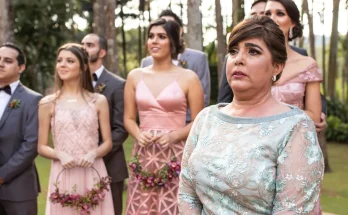
“I am not ready to call you Mom,” she said. “I don’t know if I ever will be. You took something from me that I have spent my whole life trying to put back, and I almost did to my own daughter the exact thing you did to me.”
Eleanor flinched and nodded, accepting it.
“But,” Vanessa went on, and here her voice trembled hardest, “I am not going to send you away the way you sent me away. Because I just learned, the hard way, in a hospital hallway, that leaving someone on a bench doesn’t end the pain. It just hands it to the next person.”
She wiped her face with the back of her hand.
“Her name is Hope,” she said. “She comes home Thursday. If you want to meet your granddaughter, you can come. Slowly. Carefully. On a chair, in the open, where I can see you the whole time. That’s all I can offer. Take it or leave it.”
Eleanor crumpled onto the porch step and wept into her hands, nodding, whispering thank you over and over like a prayer.
That night, after Eleanor had gone to her motel with a phone number and a fragile, trembling promise, the four of us sat in our kitchen, drained and hollow and strangely lighter.
Ethan reached across the table and took my hand. “How did you know what to say to her?” he asked quietly.
I looked at Noah, asleep in the next room with his dinosaurs, and at Vanessa, staring into a cup of tea like she was seeing her whole life inside it.
“Because I’ve been the one on the bench,” I said. “And I’ve been the one who came back. And I’ve learned that the only thing that ever truly heals either one is somebody choosing, on purpose, to stay.”
Thursday came. We brought Hope home.
She was so small in her car seat, swallowed up by a blanket Noah picked out himself. He sat beside her in the back the whole drive, holding one of her tiny fingers, whispering to her that he was her big brother and he would never, ever let go.
Eleanor came on Sunday. She sat in a chair by the window, in the open, the way Vanessa asked. And when Vanessa finally, slowly, lowered that baby into the old woman’s trembling arms, Eleanor looked down at her granddaughter like a woman who had been handed back a piece of her own soul.
Nothing is fixed. Please, never think it is. Vanessa and her mother have a long, hard road, and some roads you walk for the rest of your life without ever reaching the end. Ethan and I are still rebuilding our marriage board by board. There are wounds in this family that will take years to scar.
But there is a baby named Hope sleeping under a paper dinosaur in a buttery yellow room. There is a little boy who never stopped believing his mother would come home. And there are three grown women who all learned, in their own broken ways, what it costs to be the one left waiting.
We decided, together, that no child in this family will ever sit alone on a bench wondering if anyone is coming.
This morning Noah climbed into my lap and patted my cheek, the way he always does, to make sure I’m real.
“Mommy,” he said, very serious, “is the old lady sad?”
“A little,” I told him. “She made some mistakes a long time ago.”
He thought about that, the way he thinks about everything, with his whole honest heart.
“But she came back,” he said. “So it’s okay now. Right?”
I held him close and breathed in the warm sleepy smell of his hair, and I thought about how a three-year-old keeps saying the truest thing in the room without even trying.
“Yes, baby,” I whispered. “She came back. And coming back always counts for something.”
Maybe that’s the whole thing I’ve learned, after the grave and the maid’s uniform and the rain and the glass. The heart that truly loves will always, always come back. And the bravest thing a person can do is be there, still waiting with open arms, when it finally does.
If the person who abandoned you came back decades later, broken and begging, the very week you became a parent yourself, could you have done what Vanessa did? Could you let them sit in the room, even without forgiving them? Or would you have finally closed the door and let them feel the bench for themselves? Tell me honestly. I have been turning it over all week, and I still don’t know if I gave her the right advice.